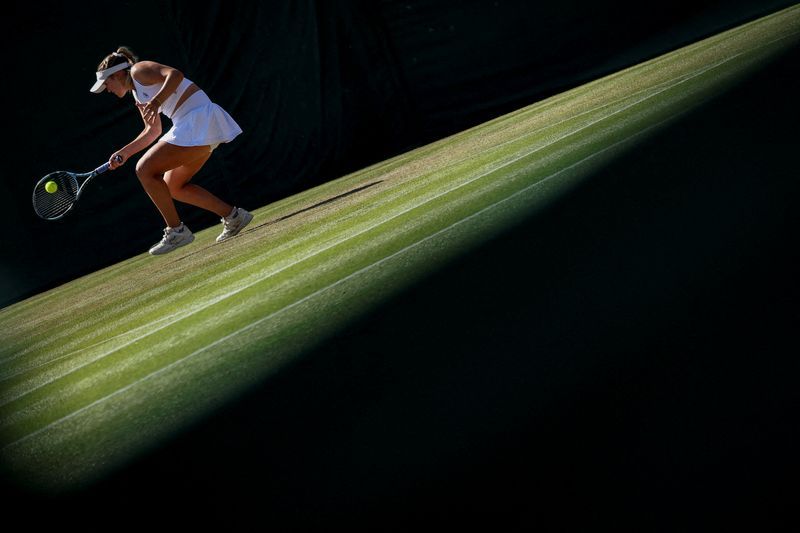
Wimbledon represents a peculiar intersection of pageantry and raw sporting competition, where 149 years of tradition coexist with an unforgiving competitive crucible that demands everything from its participants. The All England Club's hallowed grounds host approximately 675 matches across all categories, yet for all the visual splendour—players immaculate in white, spectators adorned with creative millinery, and the ceremonial presence of royalty—the true essence of the tournament emerges not from the social customs that define its public image, but from the moments of struggle that unfold beneath the summer sun.
The contrast between Wimbledon's outward serenity and the World Cup, which coincided with the tournament this year, could hardly be more pronounced. Where one competition erupts with unbridled passion and raw emotion, the other maintains an almost aristocratic composure. Yet this difference is merely cosmetic. Beneath Wimbledon's manicured surface lies precisely the same intensity: elite athletes pursuing the sport's most coveted prize through exhausting combat against the world's finest competitors. The championship is not bestowed upon those who conform most gracefully to tradition, but upon those who demonstrate superior skill, mental fortitude, and competitive hunger.
Photographers documenting this year's tournament captured something that spectators watching from the stands might easily miss—the silent desperation and fierce determination that defines championship-level tennis. These images reveal Wimbledon's true competitive soul: the moment before a crucial serve when a player gathers themselves psychologically; the laser-focused intensity of an athlete executing a decisive volley; the cathartic release following victory; and the devastating emptiness that accompanies defeat. These are the authentic snapshots of professional sport at its most unguarded.
Alexandra Eala's match against third seed Iga Swiatek provided one such defining image. The 21-year-old Filipino player, despite the significant disadvantage of facing a six-time Grand Slam champion, threw herself into every point with reckless determination. In one captured moment, Eala's fall while attempting a forehand return became a study in competitive spirit—her gritted teeth and sprawled form on the court embodying the sheer willingness to risk physical harm in pursuit of victory. These are the competitors Wimbledon is really about, even if the strawberries and cream narrative dominates the public discourse.
Photographer Toby Melville described the technical and fortuitous challenge of capturing such moments. He had positioned himself to photograph Eala's celebration of a potential victory, a common journalistic instinct. Instead, the unexpected fall created a composition that spontaneously transformed from vertical to horizontal framing, capturing one of the tournament's most viscerally competitive moments by accident. This serendipity underscores how genuine athletic drama often erupts in unexpected ways, beyond the pre-planned narrative of winners and losers.
The emotional toll of elite competition manifested in other images as well. Otto Virtanen's first-round match produced a moment of visible frustration when he walked toward the courtside barrier, seemingly desperate for escape from the pressure and expectations bearing down upon him. In that instant, the carefully maintained composure that Wimbledon etiquette demands cracked slightly, revealing the psychological strain beneath. Such moments remind observers that these athletes are not simply characters in a pageant, but individuals battling against formidable opponents and their own internal doubts.
Yet Wimbledon also celebrates those who transcend the pressure and perform under the brightest spotlights. Naomi Osaka's quarter-final run captivated audiences partly because of her fearless approach to both tennis and fashion, exemplified by her distinctive kimono-inspired dress on Centre Court. Her strutting confidence across the grass courts projected an aura of defiance against the tournament's expectations, demonstrating that individual personality and competitive excellence need not be mutually exclusive, even at an institution defined by tradition.
The interplay of light and shadow across the grounds provided visual metaphors for the competition's essence. Jannik Sinner's final against Alexander Zverev produced an extraordinary image of the eventual champion stretching mid-air to return a forehand, his elongated shadow on the grass appearing to extend his physical reach beyond natural limits. Such photographs capture the superhuman effort required to claim Wimbledon's title, the way elite athletes must transcend normal physical constraints through sheer will and training.
Similarly, the women's doubles final produced an image of winners Guo Hanyu and Kristina Mladenovic embracing, their combined shadow casting what appeared to be a single raised fist in triumph. These visual moments, whether intentional or serendipitous, reveal something profound about competitive sport: the triumph that emerges from the collision of bodies, skill, and psychological fortitude.
As the tournament concluded and the spectator stands emptied, the real evidence of Wimbledon's fierce competitive nature remained inscribed upon the courts themselves. Time-lapse photography of Centre Court revealed the cumulative wear pattern created by thousands of players' footsteps—worn patches of grass marking the geography of competitive intensity. These scars on the legendary turf tell a more honest story than any official narrative about tradition and pageantry: Wimbledon endures because the world's greatest tennis players refuse to treat it as mere ceremony, but rather as the ultimate test of their capabilities.
For Southeast Asian readers, Wimbledon's combination of tradition and relentless competition offers instructive lessons about sporting excellence. The presence of players like Alexandra Eala demonstrates that the region's athletes can compete at the highest levels of global sport, provided they possess both technical mastery and the psychological resilience to confront far more celebrated opponents. Wimbledon's real legacy, beneath its famous aesthetics, rests upon this principle: that elite competition recognises only performance, regardless of social convention or historical hierarchy.

