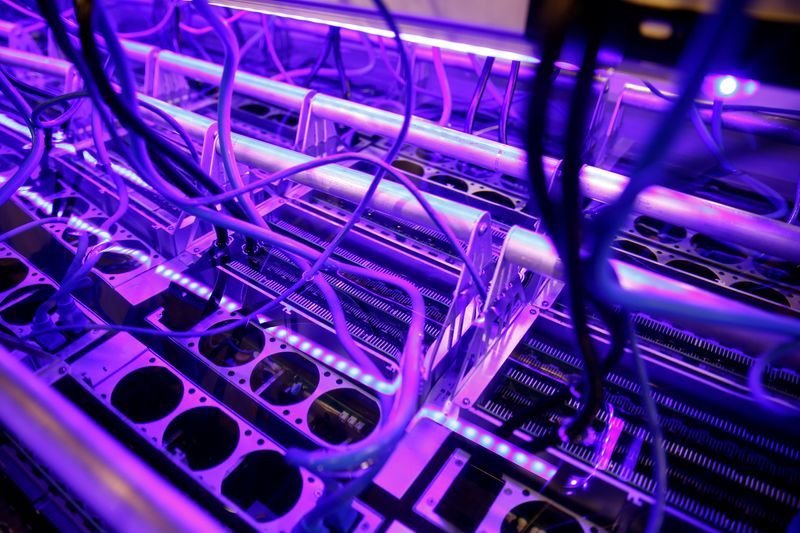
Ionic Digital, a cryptocurrency mining and artificial intelligence infrastructure company, has taken steps to enter public markets by filing for a direct listing on Nasdaq this week. The move marks a significant milestone for a firm that emerged from the wreckage of the Celsius crypto lending collapse, one of the most consequential failures in the digital asset space over the past two years.
The company's origins trace back to January 2024, when it was specifically established to acquire the cryptocurrency mining operations that Celsius had accumulated before its spectacular downfall. Celsius, a New Jersey-based cryptocurrency lender, had filed for Chapter 11 bankruptcy protection in July 2022, just one month after implementing a controversial freeze on customer accounts—a decision that prevented millions of users from accessing their digital assets. The restructuring received judicial approval in November 2023, paving the way for Ionic's formation and subsequent acquisition of these mining assets.
Unlike traditional initial public offerings that involve underwritten share offerings, Ionic has opted for a direct listing mechanism. This approach streamlines the public debut by allowing existing shareholders to sell their current holdings directly on the exchange without the creation of new shares. The structure offers insiders immediate liquidity and reduces the complexity typically associated with conventional IPO processes, though it does limit the company's ability to raise fresh capital from the listing itself.
The scale of Ionic's shareholder base reflects the restructuring arrangement with Celsius creditors. During the reorganization process, the company distributed approximately 37 million Class A shares to Celsius creditors, effectively converting them into owners of the newly formed entity. This distribution mechanism transformed former victims of the Celsius collapse into stakeholders in the revived mining operation. Now, registered stockholders are planning to sell up to 10.8 million shares through the direct listing, providing an exit opportunity for those seeking to realise their investments.
The context of Celsius's bankruptcy warrants particular attention for Malaysian investors and observers of cryptocurrency market dynamics. Celsius epitomised a broader phenomenon within the cryptocurrency lending sector during the pandemic boom, when explosive growth in digital asset valuations created a fertile environment for high-risk lending protocols. When market conditions deteriorated sharply in 2022, the cascading failures of major platforms like Terra, FTX, and Celsius revealed the structural fragility underlying much of the crypto finance ecosystem. These collapses had ripple effects across Southeast Asia, where retail investors had enthusiastically embraced cryptocurrency exposure, often without fully comprehending the underlying risks.
Ionic's recent fundraising demonstrates considerable investor appetite for the company's prospects despite its controversial origins. In the week prior to the Nasdaq filing announcement, the firm successfully raised $400 million in a funding round that valued the company at $2 billion on a pre-money basis. This valuation suggests strong confidence in the viability of its mining and AI infrastructure operations. The financing round attracted participation from established institutional investors including Attestor, Oaktree Capital Management, and Sachem Head Capital Management—signalling that sophisticated capital allocators view the business model as viable and scalable.
The decision to pursue public market listing at this juncture reflects confidence in both the underlying cryptocurrency market recovery and the specific potential of Bitcoin mining operations. Bitcoin prices have rebounded substantially from their 2022 lows, and institutional adoption has expanded meaningfully. The mining sector specifically has undergone consolidation and professionalisation, with operators increasingly focusing on operational efficiency, sustainable energy sources, and technological integration with emerging fields like artificial intelligence.
Ionic's positioning as both a mining operator and an AI infrastructure provider suggests management's view that the future value proposition extends beyond cryptocurrency extraction alone. The integration of artificial intelligence capabilities into digital infrastructure operations represents an evolving frontier, and investors may be pricing in potential revenue streams beyond traditional mining economics. This diversification could prove strategically important as the regulatory environment for cryptocurrency continues to evolve globally.
The financial advisors shepherding Ionic's public debut—J.P. Morgan, Jefferies, and BTIG—bring substantial experience navigating cryptocurrency-related listings and the complex regulatory questions they entail. Their involvement signals institutional legitimacy and suggests careful structuring to address potential regulatory and market perception challenges. The assigned ticker symbol "IOND" reflects the company's Nasdaq listing plans.
For Malaysian stakeholders, Ionic's trajectory embodies several important lessons. First, it demonstrates how cryptocurrency market volatility and concentrated risk can devastate retail investors, as the Celsius collapse illustrated. Second, it shows that bankruptcy restructuring can sometimes resurrect value from failed ventures, though creditors typically recover only partial compensation. Third, the company's successful fundraising and public market entry suggest that institutional capital remains willing to participate in cryptocurrency-adjacent businesses, even those emerging from industry failures.
The broader implications for Southeast Asian markets merit consideration. Malaysia and the region have increasingly sought to develop regulatory frameworks for cryptocurrency and digital assets. The success or failure of firms like Ionic, and how they navigate public market oversight, will likely inform evolving policy approaches. Additionally, the mining operations acquired from Celsius presumably include infrastructure in various jurisdictions, potentially including Southeast Asian locations where operational costs and energy availability have attracted cryptocurrency mining activity.
Ionic's Nasdaq entry will place the cryptocurrency mining and AI infrastructure sector under heightened public scrutiny, requiring transparent disclosure of operations, financial performance, and risk factors. For Malaysian investors interested in cryptocurrency exposure or artificial intelligence infrastructure investments, this public listing will offer a more accessible and regulated avenue than direct participation in private cryptocurrency ventures. The coming months will reveal whether Ionic can transform its inherited mining assets and fresh capital into sustained value creation, or whether it becomes another cautionary tale within the volatile cryptocurrency landscape.

