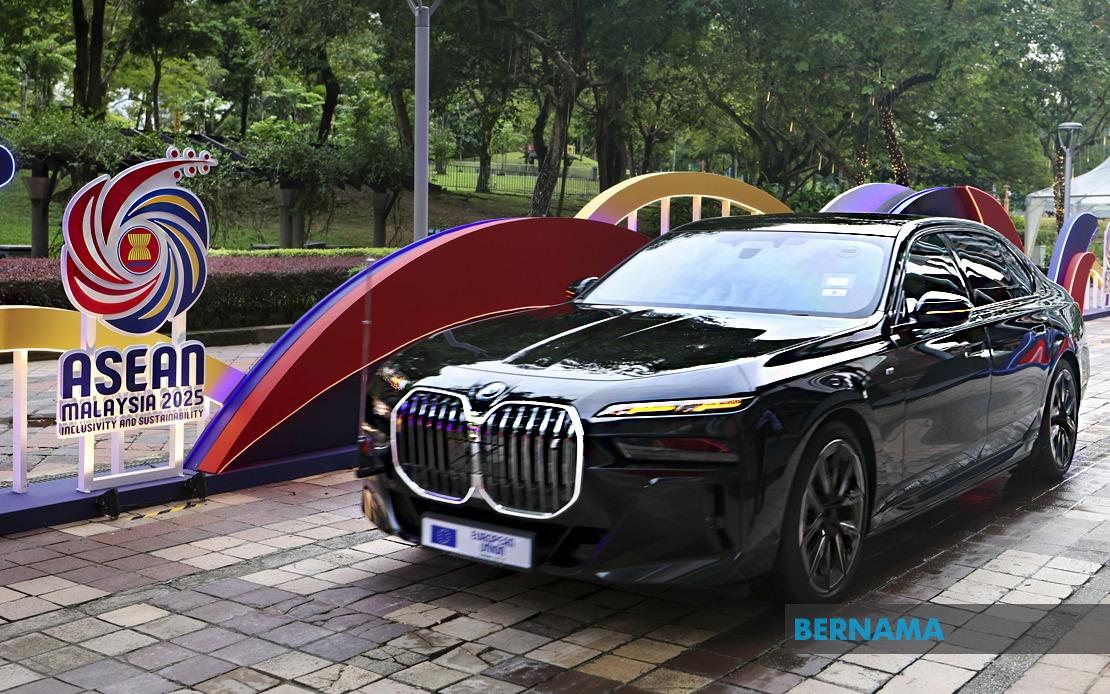
The Prime Minister's Department (JPM) moved to settle mounting speculation about a luxury BMW vehicle in the Prime Minister's recent use, confirming through a public statement that the car represents an existing government asset rather than a fresh acquisition. The clarification, issued jointly with the Ceremonial and International Conference Secretariat Division (BIUPA), addressed swirling allegations and social media rumours regarding the ownership and purpose of the vehicle used by Prime Minister Datuk Seri Anwar Ibrahim.
BIPUA maintains supervisory responsibility over the BMW as part of Malaysia's official state transport fleet, designated specifically for government logistics requirements during high-level diplomatic engagements. The department explained that this particular vehicle fills a specialized niche within the prime ministerial motorcade, responding to the unique demands of international protocol when foreign heads of state and government leaders visit Malaysia. Such visits necessitate security arrangements that exceed standard protective measures, compelling the government to maintain vehicles equipped with advanced defensive capabilities.
The security specifications embedded within the BMW reflect contemporary threat assessment frameworks that Malaysian authorities consider essential for protecting visiting dignitaries and the nation's own top leadership. The vehicle has been engineered to withstand ballistic impacts from high-calibre weapons, explosive devices, and evolving security challenges including unmanned aerial systems. These technical requirements explain why certain government assets, though expensive, remain necessary components of state security infrastructure rather than luxuries or political indulgences.
According to JPM's statement, Prime Minister Anwar's temporary use of the BMW follows security recommendations made by the Royal Malaysian Police (PDRM) after a professional threat assessment. This temporary arrangement became necessary because the Prime Minister's principal official vehicle, which was presented as a gift from Yang di-Pertuan Agong, required scheduled preventive maintenance. Rather than operate without adequate security provisions during this maintenance window, authorities determined that deploying the specialized BMW aligned with established security protocols and minimized risk exposure.
The distinction between temporary use and permanent acquisition carries significance for public perception and government accountability. By explicitly characterizing the arrangement as temporary and maintenance-related, JPM signalled that the decision reflected operational necessity rather than preference or political discretion. The department's emphasis on PDRM involvement underscores that professional security experts, not political actors, drove the choice to utilize alternative transport during the maintenance period.
The social media controversy that prompted this clarification reflects growing public attentiveness to prime ministerial spending and asset deployment in Malaysia. Citizens increasingly scrutinize government expenditure and the lifestyle trappings of senior officials, particularly following periods of intense political change and competing narratives about fiscal responsibility. The willingness of JPM to issue a detailed public response demonstrates awareness that allowing speculation to persist unchallenged risks eroding institutional credibility and feeding broader cynicism about government transparency.
For Malaysian observers, the episode illustrates the technical complexities underlying state security arrangements that rarely enter public discourse. Most citizens remain unaware of the specialized engineering, security testing, and maintenance protocols required to operate presidential-grade protective vehicles. These vehicles represent substantial capital investments that governments justify through reference to duty of care toward national leaders and visiting dignitaries, yet the investment decisions often generate controversy when the underlying rationale remains unexplained.
The incident also highlights tensions between governmental secrecy and public accountability in security matters. Authorities face inherent difficulties in disclosing detailed information about protective vehicle capabilities, security protocols, and threat assessments without compromising operational effectiveness. This tension means that public trust in such matters often depends heavily on institutional credibility and perceived integrity of explanations offered after the fact, rather than on comprehensive disclosure of security decision-making processes.
From a broader regional perspective, Malaysia's approach to prime ministerial security reflects standards consistent with other Southeast Asian governments and international best practices for protecting heads of state. The presence of armoured, ballistically-protected vehicles within official motorcades appears routine in comparable nations, suggesting that domestic controversy around this particular vehicle may reflect heightened sensitivity within Malaysia's current political environment rather than genuine anomaly in governmental practice.
The JPM clarification also reinforces the institutional hierarchy governing state assets and security decisions. By confirming BIUPA's supervisory role and PDRM's professional involvement, the department situated the vehicle deployment within established bureaucratic frameworks rather than portraying it as a Prime Minister's personal initiative. This framing serves to depersonalize the decision and anchor it to institutional procedures designed to protect any sitting Prime Minister regardless of political affiliation.

