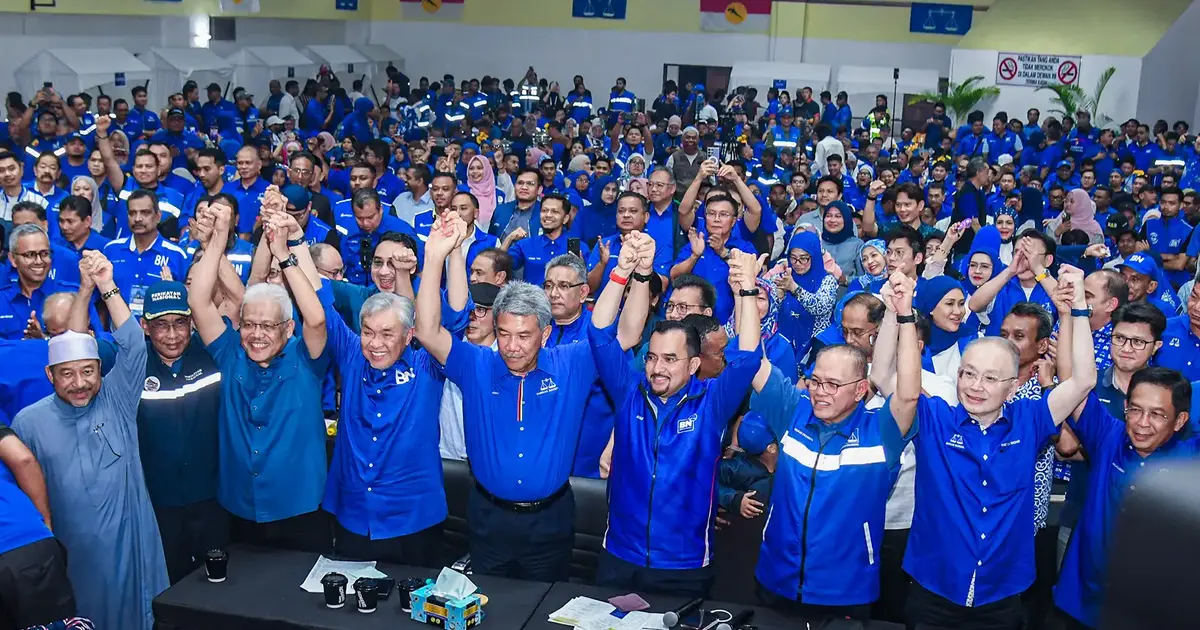
A coalition partnership between Barisan Nasional and Perikatan Nasional would require speedy resolution of structural issues, including seat distributions and the choice of prime ministerial candidate, according to political observers monitoring Malaysia's shifting electoral landscape. The complexity of orchestrating a nationwide general election, where hundreds of parliamentary and state assembly positions hang in the balance across multiple states and territories, creates pressing urgency for any potential alliance to clarify its internal mechanics before the campaign season intensifies.
Analyst Tawfik Yaakub emphasises that ironing out contentious matters at an early stage remains paramount for coalition stability. The window for resolving such disputes narrows considerably once campaigning commences, as public positioning, media narratives, and grassroots expectations become entrenched. A prolonged period of negotiation or visible disagreement between major coalition partners risks eroding public confidence and providing ammunition to opposition forces seeking to capitalise on signs of disunity.
The mechanics of seat allocation between BN and PN components present one of the most intricate challenges. Barisan Nasional itself encompasses multiple parties—UMNO, MCA, MIC, and various state-based components—each with legitimate expectations regarding their electoral footprint. Adding Perikatan Nasional, which brings together parties such as PAS and Bersatu alongside smaller allies, multiplies the permutations exponentially. Historical precedent offers limited guidance, as previous grand coalitions have often fractured over precisely these distributive disputes.
The question of which individual will become the agreed prime ministerial nominee carries symbolic and practical weight extending far beyond mere protocol. This choice signals which coalition component holds primacy and shapes the ideological direction the alliance will project to voters. The decision inevitably affects the motivation levels of each party's mobilisation machinery and influences how different voter blocs—urban, rural, Malay, Indian, Chinese, Christian, Muslim—perceive the coalition's priorities and values. Delaying this determination risks party leaders spending weeks or months testing different configurations publicly, generating confusion and cynicism among the electorate.
The electoral environment in Malaysia has become demonstrably more volatile over the past decade compared to earlier eras of political consensus. Voters exhibit greater willingness to shift allegiances between elections, split-voting patterns across federal and state contests have become more pronounced, and coalition stability cannot be taken for granted. Under such conditions, internal coalition friction translates quickly into lost votes. Voters punish perceived disunity more severely than they did in previous generations, where party loyalty and ethnic-communal bloc voting provided greater structural stability.
For Barisan Nasional specifically, managing the coalition relationship with Perikatan Nasional involves navigating competitive dynamics alongside collaborative ones. In certain states and constituencies, both entities possess electoral strength and may contest overlapping territories. Without clear agreements, these overlaps could trigger internecine contests that fragment the non-opposition vote, particularly in marginal seats where splitting the vote hands victories to competing blocs. The longer such ambiguities persist, the greater the risk that party operatives at grassroots levels will pre-emptively declare candidacies or stake claims to constituencies, making subsequent renegotiation politically costlier.
Penikatan Nasional brings particular organisational strengths, particularly PAS's grassroots infrastructure in northern and rural Peninsular Malaysia, which could prove valuable in recovering seats BN has lost to opposition parties over successive election cycles. Simultaneously, BN retains traditional advantages in certain peninsular strongholds and possesses deeper institutional networks in Sabah and Sarawak. A well-coordinated seat arrangement theoretically allows both entities to field candidates in their strongest territories whilst ceding others, maximising combined vote efficiency.
Regional dynamics also warrant early clarification. Sabah and Sarawak present particular complexities, where local parties, federal component organisations, and cross-cutting ethnic and religious cleavages create intricate political topographies. Federal-level BN-PN arrangements must translate into workable state-level coalitions, and this process becomes substantially more fraught if national-level leaders have not provided explicit guidance on state-level seat allocations and power-sharing arrangements.
The international dimension provides additional context. Malaysia's regional partners and trading partners maintain interest in political stability and predictable governance. Extended periods of coalition uncertainty can subtly influence investor confidence and diplomatic relations. While external actors typically refrain from public intervention, political stability remains a relevant factor in investment decisions and bilateral engagement patterns.
Malaysian political history offers instructive examples of how delayed coalition decisions have historically generated negative consequences. Internal friction stemming from unresolved disputes over candidacies, ministerial portfolios, or policy direction has in the past cascaded into defections, legal challenges, and legislative paralysis. The costs of mismanagement accumulate quickly once governing begins, making preventative negotiation substantially more efficient than remedial crisis management.
Beyond seat mathematics, coalition partners must develop substantive policy alignment on major issues—economic direction, religious and ethnic policy, regional integration, and constitutional matters. Superficial seat-sharing without underlying policy coherence creates conditions for post-election fracturing, as coalition members discover irreconcilable differences whilst attempting to govern collectively. Early negotiation allows testing of compatibility across multiple issue domains before both parties become formally committed to the arrangement.
The timeframe remaining before any hypothetical general election remains finite. Malaysian political cycles, whilst not constitutionally fixed, typically follow discernible patterns allowing reasonable forecasting. Deploying the available preparation time effectively through decisive seat negotiations and candid partner discussions maximises prospects for coalition cohesion. Postponing these determinations risks improvisation during campaign periods when media scrutiny intensifies and grassroots actors operate with greater autonomy, making top-down coordination progressively more difficult.

