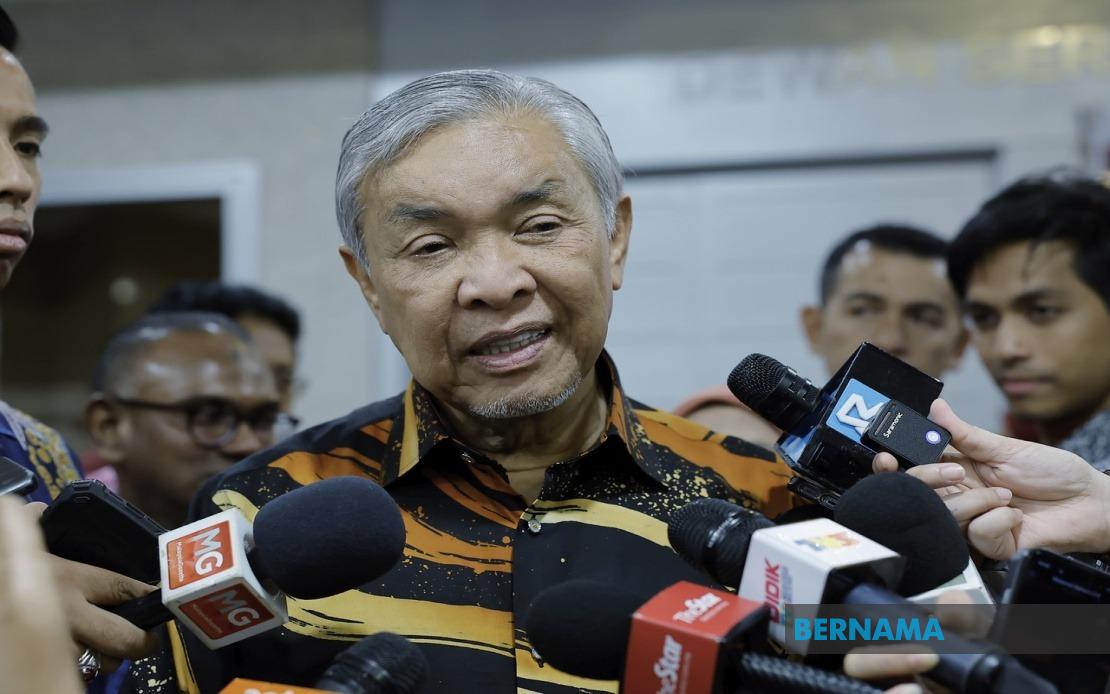
Deputy Prime Minister Ahmad Zahid Hamidi has issued a stark warning that both Barisan Nasional and UMNO will adopt an uncompromising stance towards any misconduct or poor stewardship discovered within Tabung Haji, signalling the coalition's determination to address longstanding governance concerns at the Islamic pilgrimage fund. Speaking after a Rural and Regional Development Ministry meeting in Putrajaya, the BN chairman emphasised that officials implicated in wrongdoing at government agencies and statutory bodies must face consequences without exception or political protection.
Ahmad Zahid's remarks come as Parliament prepares for a crucial debate on August 11 centred on the findings of a Royal Commission of Inquiry that has cast serious light on Tabung Haji's operational conduct over a six-year period. The timing of his statement underscores the political sensitivity surrounding the institution, which manages savings and investment funds for millions of Malaysian Muslims planning to perform the hajj pilgrimage. Any scandal involving Tabung Haji carries particular weight given its role in safeguarding the religious obligations and financial security of a substantial portion of Malaysia's Muslim population.
The Royal Commission of Inquiry, which concluded its investigation into Tabung Haji's administration and operational practices spanning 2014 to 2020, uncovered evidence of irregular transactions and deliberate concealment of information within the organisation. These findings, released publicly on July 29, have prompted widespread concern about the governance frameworks that were operating during this period and how institutional checks and balances may have failed to prevent such irregularities from occurring. The discovery of suspicious transaction patterns suggests systemic weaknesses rather than isolated lapses in oversight.
Among the RCI's most significant recommendations is a call for an independent forensic audit to scrutinise earlier investment decisions that directly contributed to a substantial erosion of Tabung Haji's asset base. This recommendation reflects serious concerns about the quality of financial stewardship and the decision-making processes that guided where and how the fund deployed its resources. For Malaysian pilgrims and their families, the depletion of assets translates directly into uncertainty about the fund's capacity to meet its obligations and protect the value of contributions accumulated over years or decades.
The decision to allocate resources to a forensic audit represents a belated but necessary recognition that routine auditing procedures had failed to identify or prevent the problematic transactions uncovered by the RCI. A forensic investigation will employ specialised accounting techniques to trace the flow of funds, identify decision-makers responsible for questionable transactions, and establish whether losses resulted from incompetence, negligence, or deliberate misconduct. The findings could form the basis for potential legal action against individuals and entities involved in poor financial decisions.
Ahmad Zahid's refusal to countenance compromise on accountability matters is particularly noteworthy given that UMNO, as the dominant party within the BN coalition, has traditionally enjoyed influence over statutory bodies and government agencies during periods of electoral dominance. His public stance suggests a recognition that protecting institutional credibility and public trust requires transparent, proportionate responses to governance failures, regardless of whether implicated individuals have previous party connections or political standing. This represents a potential shift towards institutional accountability over partisan loyalty, though sceptics may question whether such principles will be consistently applied.
The August 11 parliamentary session will provide an opportunity for lawmakers across the political spectrum to scrutinise the RCI's findings and recommendations in detail, debate the adequacy of proposed remedial measures, and question government representatives about implementation timelines. Public debate in Parliament elevates the Tabung Haji matter from an administrative concern to a matter of national importance, ensuring that the findings receive scrutiny beyond internal government channels and generating documentary records of accountability processes. This transparency can help rebuild public confidence in the institution, provided that the government demonstrates genuine commitment to implementing recommendations.
The implications of Tabung Haji's operational failures extend beyond the fund itself to the broader question of how Malaysia manages large pools of accumulated savings held in trust by religious and statutory bodies. Millions of ordinary Malaysian Muslims have contributed to Tabung Haji accumulations intended to support their spiritual obligations, placing enormous faith in institutional management. Any breach of that trust carries consequences for public confidence in similar government-administered savings and investment schemes, potentially affecting citizen willingness to participate in other mandatory or voluntary government programmes.
Regional observers will be monitoring how Malaysia handles the Tabung Haji accountability process, as the outcome could influence governance standards and accountability frameworks across Southeast Asia's Islamic finance and pilgrim fund sectors. Many Muslim-majority nations maintain similar institutions serving comparable functions, and how Malaysia addresses governance failures may establish precedents or cautionary lessons for neighbouring countries managing comparable structures. The response demonstrates whether democratic institutions can effectively oversee religious and governmental bodies, or whether sacred status provides immunity from rigorous scrutiny.
For the Malaysian political establishment, the Tabung Haji episode represents a test of whether institutional reforms and accountability mechanisms can operate independently of electoral calculations and short-term political advantage. Ahmad Zahid's declarative stance suggests recognition that credibility requires consistent enforcement of standards regardless of political affiliation or historical relationships. However, translating such rhetoric into sustained institutional practice requires sustained political will, adequate investigative resources, and judicial independence to ensure that accountability processes reach meaningful conclusions rather than becoming exercises in public relations.

