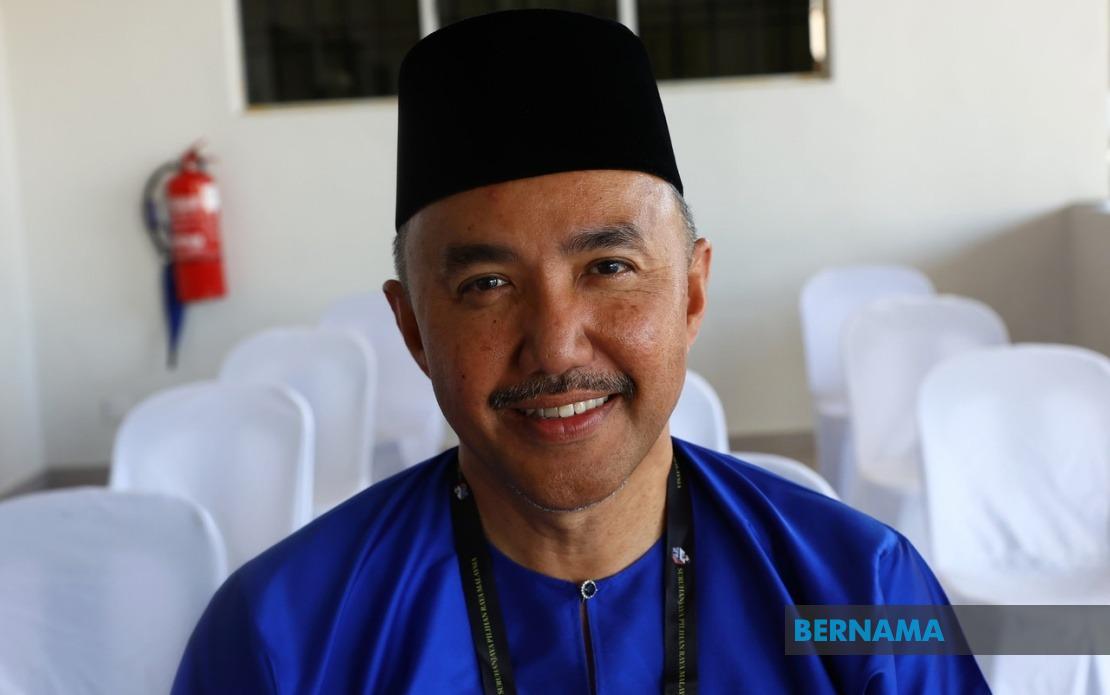
The Barisan Nasional coalition is banking heavily on its appeal to Federal Land Development Authority (FELDA) communities in the Kulai parliamentary constituency ahead of next week's Johor state election, confident that targeted government assistance and improved services over the past four years will translate into strong support at the ballot box. According to Datuk Mohd Jafni Md Shukor, the BN chairman for Kulai, the party views nearly 7,000 voters spread across four FELDA settlements as a crucial voting bloc that could determine the outcome in multiple state seats within the constituency.
The four settlements in question are FELDA Taib Andak, FELDA Inas, and FELDA Bukit Permai, all located within the Bukit Permai state constituency, together with FELDA Bukit Batu situated in the adjacent Bukit Batu state seat. Jafni, who is personally defending the Bukit Permai seat against competition from three other candidates, attributes BN's optimism to a series of deliberate policy initiatives undertaken by the Johor state government under Menteri Besar Datuk Onn Hafiz Ghazi. The coalition's strategy reflects an acknowledgement that FELDA voters represent a demographically significant and potentially swingable segment of the electorate, particularly given their history of shifting allegiances in recent state elections.
BN's confidence in FELDA support marks a notable recovery from the significant challenges the coalition faced in these communities during the 2018 state election, when dissatisfaction with various governance and economic issues led to substantial defections. However, the party notes that momentum began turning in their favour during the 2022 election, suggesting that recent governance improvements are resonating with this voter segment. Over the past four years, the Johor state government has undertaken extensive efforts to address long-standing grievances affecting FELDA communities, with particular emphasis on education support and land title resolution.
One of the state government's most significant achievements in winning back FELDA confidence has been resolving a protracted land title issue that has troubled settlers for years. According to Jafni, the government has successfully processed ownership applications with a 99.9 per cent settlement rate, a development that tangibly addresses a core concern affecting land security and economic prospects for FELDA families. This progress on land rights represents a concrete policy outcome that distinguishes BN's governance record from previous administrations and provides the coalition with a compelling narrative for why FELDA voters should renew their mandate.
Education support has emerged as another cornerstone of BN's outreach strategy to FELDA communities. The Johor government has channelled assistance to FELDA children through the Johor Education Foundation (YPJ), a programme designed to ease financial burdens on rural families and signal sustained commitment to improving opportunities for the next generation. Such targeted welfare initiatives are particularly effective in rural constituencies where education costs represent a significant household expense and where government support is frequently leveraged as a measure of political responsiveness to community needs.
Jafni's call for voters to renew BN's electoral mandate reflects a broader campaign message emphasizing developmental continuity and the need for additional time to fully implement the state government's agenda. The narrative of "one term is not enough" is strategically crafted to counter arguments from opposition parties that the current administration has exhausted its capacity for meaningful change, while also positioning a second consecutive victory as essential for accelerating development initiatives across Johor. This framing is particularly relevant in the context of post-pandemic economic recovery and the state government's broader modernization objectives.
The Bukit Permai seat that Jafni is defending presents a microcosm of the competitive pressures facing BN across the state. His contest involves four candidates: Muhammad Aidil Riduan Mohd Yusof representing Parti Bersama Malaysia (Bersama), Mohamad Shafwan Ani from the Pakatan Harapan (PH) coalition, and M. Lina Manoh fielding for Perikatan Nasional (PN). The four-way battle reflects the fractured opposition landscape in Johor and suggests that vote-splitting could potentially benefit BN, though such dynamics remain uncertain given shifting voter preferences and regional political alignments.
Jafni's 2022 victory in Bukit Permai came with a substantial 4,755-vote majority, providing the incumbent with reasonable confidence going into this election cycle, particularly given the improvements in FELDA sentiment he attributes to government action. However, the combination of competition from multiple opposition camps and the inherent unpredictability of electoral contests means that BN cannot assume retention without sustained campaigning and clear demonstration of tangible benefits to voters.
Beyond Bukit Permai, BN is also targeting victories in the Bukit Batu and Senai state seats within the broader Kulai parliamentary constituency. This ambitious multi-seat strategy indicates that coalition strategists believe the improving conditions in FELDA areas, combined with government performance on development and service delivery more broadly, could allow them to make net gains across the constituency. The three state seats collectively offer BN an opportunity to consolidate control over a significant portion of Johor's electoral geography.
The Kulai constituency represents the broader challenge facing all political camps in Johor: converting government performance and policy outcomes into electoral support among communities that have increasingly demonstrated their willingness to vote on the basis of tangible benefits and governance quality. FELDA communities, in particular, have developed a reputation as pragmatic voters who assess whether their economic circumstances and quality of life have improved under incumbent administrations, making them less amenable to abstract political messaging and more responsive to concrete policy achievements.
The timing of BN's FELDA-focused campaign reflects careful political scheduling, with early voting scheduled for July 7 and election day set for July 11. This compressed timeline means that both BN and opposition parties have limited time to mobilize supporters and counter each other's messaging, placing particular emphasis on the effectiveness of grassroots organization and pre-existing community relationships. For BN, the advantage lies in being the incumbent coalition with demonstrable government delivery; for opposition parties, the challenge involves articulating a compelling alternative vision for FELDA community development that can overcome the structural advantages of incumbency.
Looking ahead to polling day, the FELDA vote in Kulai will likely prove decisive not only for individual state seats but also for the broader question of whether BN can successfully consolidate its position as the preferred governing coalition in Johor. The coalition's confidence in FELDA support rests on the assumption that four years of targeted policy attention has sufficiently addressed community grievances and created genuine improvements in settler welfare. Whether this bet on FELDA pragmatism and responsiveness to government performance will pay dividends remains among the most closely watched dynamics in this state election.

