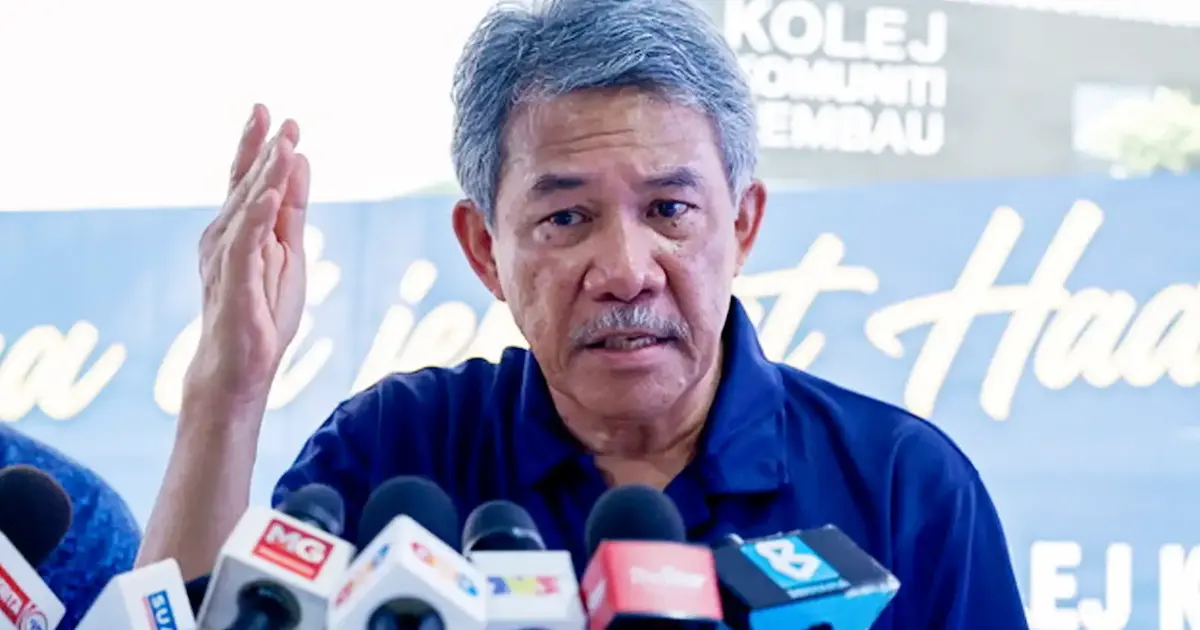
Negeri Sembilan's Barisan Nasional chairman has called on Malaysians to dismiss circulating rumours about sensitive political realignments, warning that such narratives are deliberately designed to spark anxiety among non-Malay communities. The senior party official's remarks come amid persistent speculation on digital platforms regarding potential structural changes within the coalition's leadership and orientation, particularly involving purported negotiations between Umno and its coalition partner PAS.
The chairman's statement reflects growing frustration within BN leadership over their inability to contain or effectively counter the proliferation of unverified claims that gain traction rapidly through social media channels. Rather than treating each allegation as worthy of formal denial or response, the party apparatus has adopted a posture of dismissal, arguing that engaging with every rumour would prove counterproductive and lend unwarranted credibility to speculation lacking substantive foundation. This defensive approach underscores a broader challenge facing established political organisations in the digital age—the difficulty of managing narrative when information disseminates faster than institutional responses can be formulated and disseminated.
The specific targeting of non-Malay voters in these rumours carries particular significance within Malaysia's complex ethnic and political landscape. Fabricated or exaggerated claims about inter-party mergers and realignments often exploit existing sensitivities around communal representation and political voice. By suggesting that certain coalitions might reshape themselves in ways disadvantageous to minority communities, rumour-mongers deliberately activate concerns that have deep historical roots in Malaysian politics. The BN chairman's explicit reference to this fearmongering tactic suggests that his party recognises how such narratives can mobilise opposition voters and erode confidence among traditional coalition supporters from non-Malay communities.
The reference to a purported Umno-PAS merger carries particular weight given the historical relationship between these parties. Umno, the dominant Malay-Muslim party that has anchored BN since the coalition's formation, and PAS, an Islamist party that has oscillated between coalition membership and opposition positioning, represent different ideological approaches to Malay-Muslim representation. Speculation about formal merger discussions inevitably raises questions about whether such arrangements might accelerate Islamisation policies or reduce space for secular governance frameworks that minority communities consider essential to their communal interests. Even unsubstantiated rumours about such possibilities can influence voter behaviour and party dynamics significantly.
Social media's role in amplifying these narratives demonstrates how digital platforms have fundamentally altered Malaysian political communication. Unlike the print and broadcast media environment of previous decades, where gatekeeping by established news organisations provided some filter against baseless claims, social media enables rapid peer-to-peer information sharing with minimal verification mechanisms. Political rumours, once confined to coffee shop conversations or whispered among acquaintances, now circulate instantaneously to millions. This transformation has created an information environment where traditional political actors struggle to exercise influence over public perception, particularly regarding contested claims about internal party negotiations or strategic realignments.
The BN chairman's assertion that his coalition "cannot control" such rumours reflects both a practical acknowledgment and a strategic positioning. Practically, modern political organisations lack the capacity to monitor and respond to every claim circulating across multiple platforms. Strategically, acknowledging this limitation serves to position legitimate party communications as distinct from the swirling mass of unverified speculation. By drawing this distinction, BN leadership attempts to preserve the credibility of their official statements while dismissing alternative narratives as unreliable gossip unworthy of engagement. This approach risks appearing evasive, however, particularly when specific rumours address substantive questions about party direction that voters reasonably consider important.
For Malaysian political observers and minority community leaders, the chairman's statement offers limited reassurance regarding the substantive concerns underlying these rumours. Whether genuine negotiations between Umno and PAS have occurred, what their scope might involve, and how such arrangements would affect broader coalition dynamics remain unanswered questions. Dismissing speculation without providing transparent information about actual party strategies may inadvertently reinforce the very anxieties the chairman seeks to dispel. Voters across all communities increasingly demand clarity about political intentions rather than requests for trust in the face of uncertainty.
The timing of such reassurances also matters within Malaysia's electoral cycle and the broader regional context. As coalition partners periodically reassess their relationships and voters contemplate their electoral choices, rumours about realignment naturally proliferate. In this environment, simply asking voters to ignore information sources they actively consume requires exceptional public confidence in political institutions. The chairman's intervention, while attempting to calm nerves, implicitly acknowledges that substantial portions of the electorate take these rumours seriously enough to warrant high-level party responses.
Moving forward, BN's communication strategy regarding internal dynamics and coalition relationships will significantly influence how effectively the party can manage public perception and maintain voter confidence. Periodic dismissals of rumours without accompanying substantive transparency about party direction may prove insufficient to counteract the narrative power of social media speculation. For non-Malay voters in particular, whose support remains crucial to BN's electoral viability despite demographic shifts, reassurance requires more than exhortations to ignore unofficial information sources.

