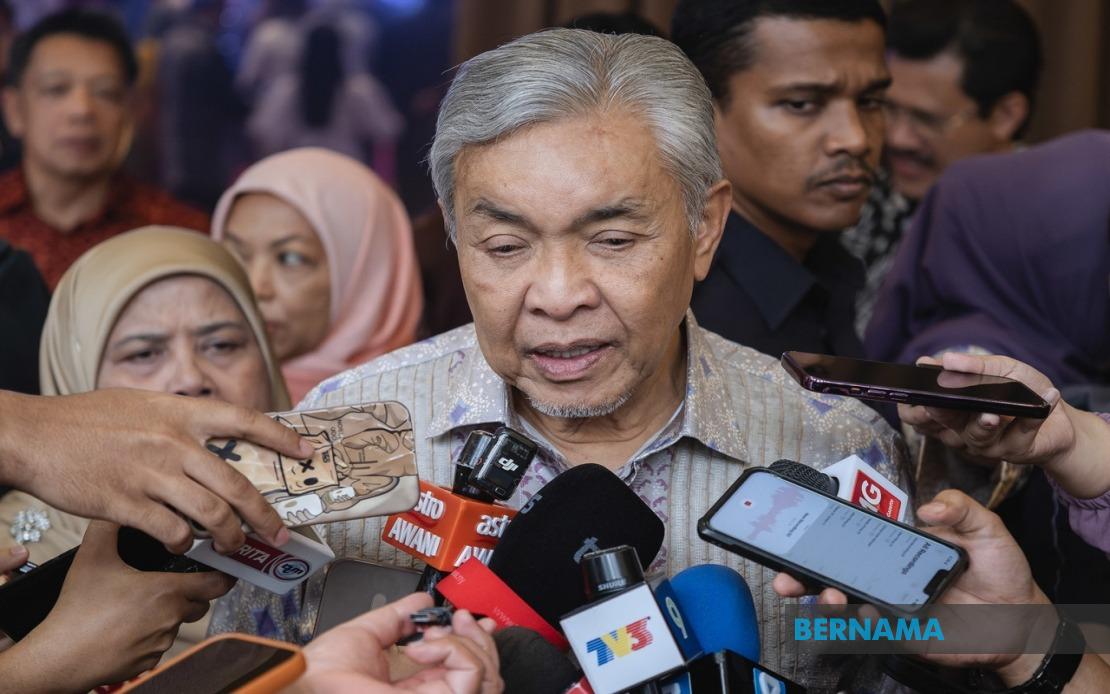
Deputy Prime Minister Datuk Seri Dr Ahmad Zahid Hamidi has declared that Barisan Nasional will maintain a strict distance from issues connected to the Negeri Sembilan royal institution and the state's Council of Justice and Laws (DKU), signalling the coalition's intent to observe constitutional boundaries during the lead-up to the upcoming state election scheduled for August 1.
Addressing reporters after attending a Ministry of Rural and Regional Development ceremony in Kuala Lumpur on June 29, Ahmad Zahid, who concurrently serves as UMNO president, underscored that this principle ranked among the key guidelines discussed with the party's Negeri Sembilan leadership as they strategise for the 36-seat contest. The statement represents an effort to reassure stakeholders that BN operations will remain squarely within political and electoral spheres, without encroaching on constitutional or judicial territory.
The coalition's commitment to non-interference assumes particular significance in Malaysia's federal system, where the nine sultanates and their associated councils occupy distinct legal and governance roles. The DKU, in particular, functions as an advisory body on matters of royal protocol, Islamic law, and constitutional questions. By explicitly pledging to avoid interference, BN is reinforcing institutional separation and avoiding potential friction that could complicate campaign dynamics or undermine public confidence in state administration.
Ahmad Zahid framed the coalition's current organisational focus around building cohesion across all layers of BN membership, recognising that internal unity will prove decisive in converting electoral support into victory. He acknowledged that the party faces a markedly different political landscape compared to the 15th state election, when BN collaborated with Pakatan Harapan component parties in a broader coalition arrangement. This time, BN will contest independently, requiring heightened discipline and coordination among its own members and elected representatives.
The shift away from cross-coalition alliances represents a significant recalibration of BN's electoral strategy in Negeri Sembilan. In the previous election cycle, the partnership with PH component parties reflected broader political realignments across Malaysia following the 2018 federal election. However, the current contest will test BN's capacity to mobilise its traditional voter base and leverage its constituent parties—UMNO, MCA, and MIC—to secure control of the state assembly without external coalition support. This approach demands stronger internal messaging discipline and resolution of any disagreements through party mechanisms rather than compromise with external allies.
The timing of Ahmad Zahid's remarks is significant, coming roughly a month before polling day. By establishing clear parameters around BN's conduct now, the coalition aims to insulate its campaign from allegations of overreach or improper interference that might damage its credibility with voters concerned about institutional integrity. Negeri Sembilan, like other Malaysian states, has experienced heightened scrutiny of political conduct, and public reassurance about respect for constitutional boundaries can positively influence voter perception.
The DKU's role in Negeri Sembilan encompasses advisory functions that occasionally intersect with political governance, creating potential for misunderstanding or accusation. By publicly renouncing interference in DKU matters, BN is drawing a clear distinction between its electoral and administrative activities on one hand and the state's constitutional and legal machinery on the other. This clarity serves both to set internal expectations for party members and to communicate externally that BN respects the autonomous operation of state institutions.
The emphasis on maintaining distance from royal and legal institutions also reflects awareness of how such controversies can escalate in Malaysia's political environment. Past incidents where political parties have been perceived as challenging or undermining royal authority have generated significant public backlash and constitutional concerns. Ahmad Zahid's explicit statement attempts to preempt any such narrative, ensuring that neither the governing coalition nor opposition parties can credibly accuse BN of overstepping institutional boundaries.
For Malaysian voters in Negeri Sembilan, the message carries broader implications about institutional governance standards. The August 1 election will determine not only party representation but also the quality of state administration over the coming term. By signalling its commitment to institutional separation now, BN is offering voters assurance that it will govern with respect for constitutional arrangements and existing power distributions, rather than attempting to concentrate authority or circumvent established procedures.
The coalition's readiness to contest the election without PH partners also reflects confidence in its independent appeal, despite the fractured nature of Malaysia's broader political landscape. BN must now demonstrate that it can mobilise sufficient voter support across the 36 constituencies without relying on tactical cooperation or coalition-based voting strategies. This places premium importance on local campaign execution, candidate selection, and UMNO's historical organizational advantages in the state.
Ahmad Zahid's remarks come as both BN and opposition coalitions intensify their ground-level campaign preparations. With voting just over a month away, all major political actors are consolidating their positions and attempting to define the election's central themes. BN's focus on internal unity and institutional propriety suggests the coalition believes that demonstrating organisational discipline and respect for constitutional norms will resonate with Negeri Sembilan voters, particularly those concerned about political stability and good governance during uncertain times.
The explicit commitment to non-interference in palace and DKU matters, while seemingly straightforward, reflects the complex interplay between electoral politics and institutional governance that characterises Malaysian democracy. As political competition intensifies, BN's early declaration of these boundaries may help establish the terms of campaign conduct and shape voter expectations about how different parties regard constitutional constraints and institutional autonomy.

