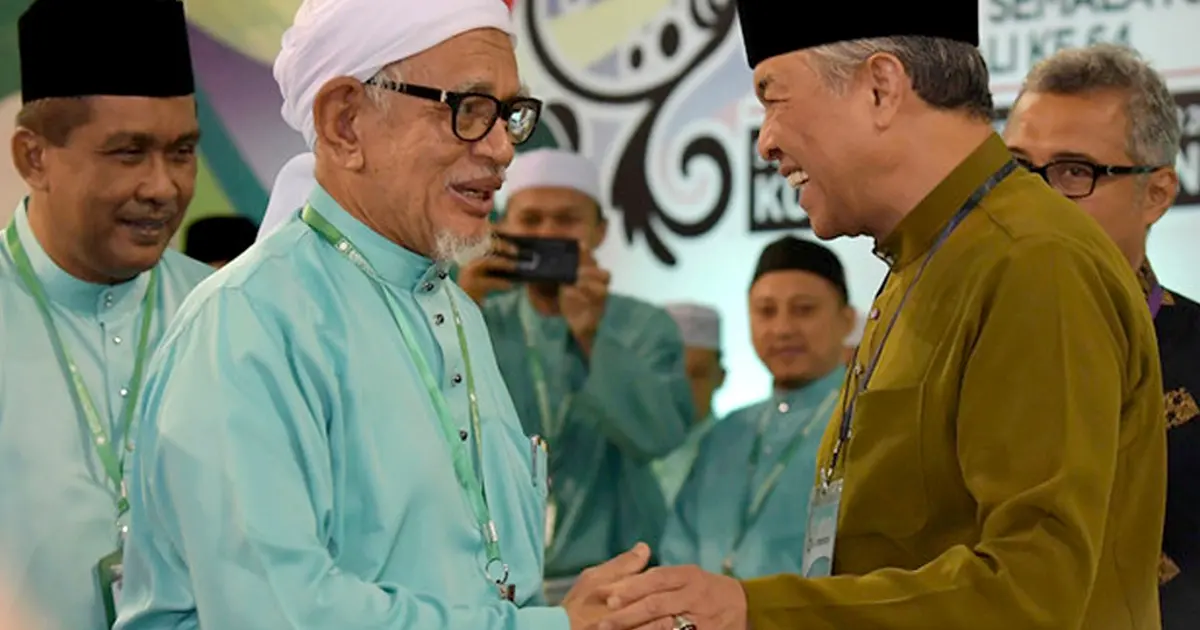
A significant political realignment could emerge in Malaysia's next general election, with a think tank analysis suggesting that the Barisan Nasional-Perikatan Nasional alliance possesses the capacity to command the Dewan Rakyat. According to Ilham Centre chief Hisommudin Bakar, the combined bloc may achieve sufficient parliamentary representation from Peninsular Malaysia alone to form a government without additional support from Sabah and Sarawak.
The projection of 122 seats represents a substantial political shift from the fractured landscape that has characterised Malaysian politics since the 2018 general election. The think tank's assessment suggests that voter sentiment and electoral demographics across the peninsula could favour the establishment of a coalition government led by the traditional establishment parties alongside the newer Perikatan Nasional grouping. This convergence marks a notable development in the post-Pakatan Harapan era, when the opposition has struggled to maintain unified challenge against multiple competing factions.
Hisommudin Bakar's analysis carries weight within Malaysian political circles, as the Ilham Centre specialises in research and forecasting of electoral trends and governance dynamics. The timing of such projections ahead of general elections influences political positioning and coalition strategies, particularly as parties assess their viability as government partners. The think tank's methodology would typically examine demographic patterns, historical voting behaviour, current polling data, and seat-by-seat analysis to arrive at such projections.
The significance of reaching a majority through Peninsular Malaysia alone cannot be understated in Malaysian politics. Historically, coalitions have depended on securing representation from the East Malaysian states, which has created negotiating leverage for Sabah and Sarawak in federal power arrangements. A BN-PN coalition achieving this threshold would potentially reduce their dependence on East Malaysian partners, though such calculations rarely materialise simply, as Sabah and Sarawak seats remain strategically valuable components of any majority government.
The Barisan Nasional coalition, anchored by the United Malays National Organisation and comprising several other parties, has undergone significant transformation following its loss of federal power in 2018. Its subsequent return to government under Muhyiddin Yassin and later Ismail Sabri Yaakob demonstrated its capacity for political manoeuvre, yet questions remain about its electoral viability at a general election compared to parliamentary procedures. The Perikatan Nasional, which emerged from political realignments during the pandemic period, has built a stronger presence in certain states and demographic segments, particularly among Bumiputera-focused voters.
The projection assumes continued consolidation of support around this alliance rather than fragmentation to other blocs. The government led by Anwar Ibrahim has faced ongoing political pressure, with coalition maintenance requiring careful management of competing interests within Pakatan Harapan and its supporting parties. Should electoral momentum shift toward the BN-PN combination, it would substantially alter the political trajectory Malaysia has followed since 2020, when multiple coalition changes occurred within a single electoral cycle.
Voter behaviour in Malaysian elections has become increasingly volatile and difficult to predict compared to previous decades. Regional variations, demographic shifts, and the influence of social media on political messaging create additional complexity for forecasters. The 2022 general election saw significant shifts in voting patterns compared to 2018, with some regions showing pronounced swings while others maintained traditional allegiances, making seat projections an inherently uncertain exercise.
For regional observers, particularly in Southeast Asia, Malaysian electoral outcomes carry implications beyond domestic politics. The stability and continuity of government formations affect Malaysia's approach to regional issues, economic policy coordination, and geopolitical positioning. A decisive electoral result in 2025 or 2026, should elections occur, would provide greater clarity for international partners regarding Malaysia's medium-term governance and policy direction compared to the fractious parliamentary mathematics of recent years.
The think tank's assessment also reflects broader patterns in Malaysian political behaviour regarding the preference for established institutions. Despite urbanisation and generational changes, significant voter segments continue to view traditional parties as legitimate agents of governance, particularly when concerns about political instability and economic management come to prominence. The BN-PN combination represents a return to more conventional power structures, which may resonate with voters fatigued by coalition instability.
However, such projections must be treated with appropriate caution, as Malaysian electoral outcomes frequently surprise analysts and commentators. Local factors, candidate selection, campaign intensity, and unexpected political developments in the months preceding elections can substantially alter seat distributions. The gap between 122 seats and a majority requires only modest changes in the electoral environment to become unrealised, making continued monitoring of polling trends and political developments essential for understanding the trajectory toward the next general election.

