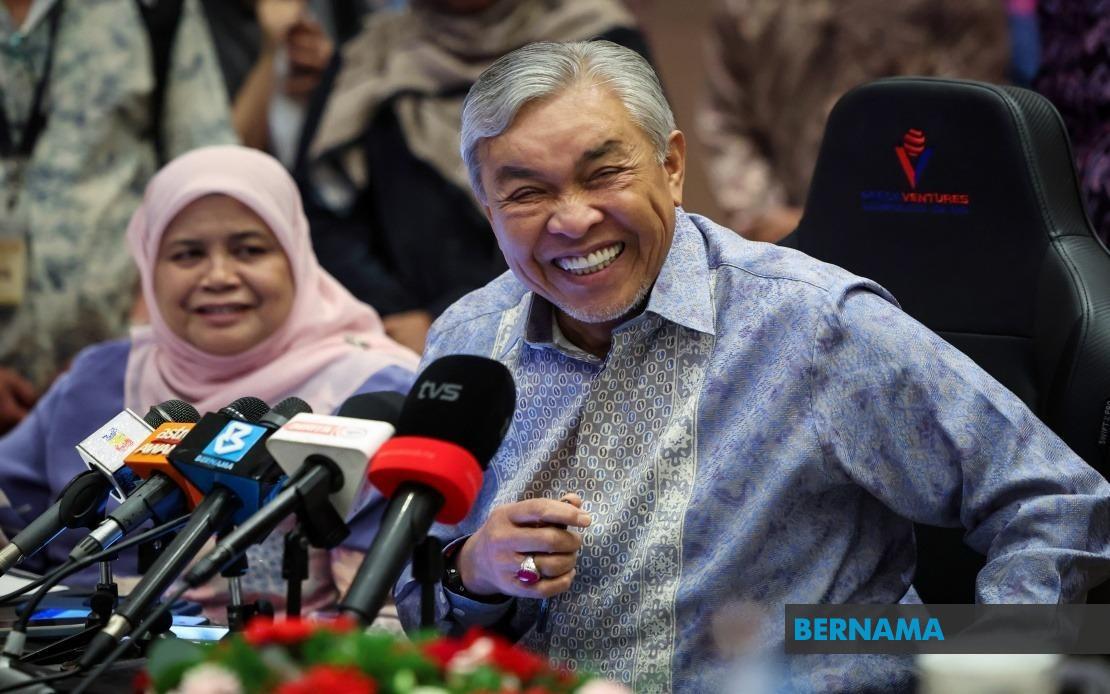
Barisan Nasional has moved to quash persistent speculation about its intentions within Malaysia's coalition government, with Deputy Prime Minister Datuk Seri Dr Ahmad Zahid Hamidi providing categorical assurances that the bloc will remain committed to the Unity Government throughout the entire 15th Parliamentary term. Speaking in George Town following a coordination meeting on rural development, Ahmad Zahid sought to dispel lingering doubts about BN's stability within the current administration led by Prime Minister Datuk Seri Anwar Ibrahim, a partnership that has remained contentious among certain quarters despite its establishment following the 2022 General Election.
The reaffirmation becomes particularly significant given the backdrop of persistent rumours and speculation regarding potential political realignments that have periodically surfaced since the formation of the coalition. Ahmad Zahid's explicit rejection of what he termed "Bangkok Move" or "Dubai Move" references—coded language within Malaysian politics denoting overseas-based efforts to engineer political upheaval—suggests that such conjecture continues to circulate within political circles despite previous denials. The Deputy Prime Minister's characterisation of BN's position as unambiguous and unchangeable underscores the coalition leadership's determination to present a unified front, especially as the administration navigates the complexities of managing diverse coalition partners with competing interests.
The constitutional and political foundations undergirding the Unity Government arrangement remain anchored in the Yang di-Pertuan Agong's decree following the 2022 election outcome, which Ahmad Zahid emphasised has never been questioned or reconsidered by BN leadership. This invocation of the monarchy's role carries substantial weight within Malaysia's constitutional framework, where the ruler's authority carries symbolic and practical significance in political arrangements. By tethering BN's commitment to this royal directive, Ahmad Zahid positioned the coalition's dedication as a matter of constitutional propriety rather than mere political expediency, thereby rendering withdrawal or destabilisation attempts as fundamentally problematic on constitutional grounds.
Ahmad Zahid's assertion that "political stability" constitutes the paramount consideration for continued coalition participation reflects a pragmatic calculation within BN's strategic thinking. The coalition recognises that the current arrangement, whilst imperfect and occasionally contentious, provides greater stability and ministerial positioning than potential alternative configurations might offer. This stability dividend becomes increasingly valuable as Malaysia confronts persistent economic headwinds, inflationary pressures, and the necessity for sustained policy implementation across multiple parliamentary sessions. The Deputy Prime Minister's emphasis on sincerity in commitment suggests an awareness that mere formal adherence to coalition arrangements proves insufficient without demonstrated good faith and substantive cooperation.
The operational tensions within the coalition remain evident despite these reassurances, as evidenced by complications arising during the Negeri Sembilan state election campaign. A Barisan Nasional polling district centre in Klawang suspended operations in protest after the coalition declined to field a candidate for a particular state seat, instead allowing candidates from partner coalitions to contest. Ahmad Zahid's characterisation of this matter as something being "resolved" indicates ongoing coordination challenges within BN structures, particularly at the state level where local grievances occasionally override national coalition discipline. The Deputy Prime Minister's acknowledgment that resolution would occur within nine days preceding the poll suggests these are manageable operational issues rather than fundamental schisms.
The Klawang contest itself exemplifies the complex electoral mathematics confronting Malaysia's fractured political landscape, with Pakatan Harapan, Perikatan Nasional, and Bersatu each fielding candidates rather than the more traditional two-way contests of earlier electoral periods. Such fragmentation creates scenarios where coalition calculations become increasingly intricate, requiring sophisticated vote-splitting assessments and occasional strategic withdrawals. Ahmad Zahid's participation in discussions with the Negeri Sembilan UMNO leadership regarding the Klawang controversy demonstrates BN's commitment to managing such difficulties through internal channels rather than allowing them to escalate into broader coalition disputes.
Speculation regarding a potential "Perikatan Barisan Nasional" alliance combining BN and Perikatan Nasional has periodically emerged, particularly during campaign periods when politicians deploy rhetoric designed to signal openness to alternative arrangements. Ahmad Zahid's statement that no formal discussions have occurred between BN and PN leadership regarding such a configuration, despite campaign-trail references, suggests that these remain largely rhetorical positioning exercises rather than serious negotiating proposals. The Deputy Prime Minister's caveat that any such arrangement would require careful consideration by relevant parties essentially preserves BN's optionality whilst maintaining the current coalition's primacy. This rhetorical flexibility allows BN to signal dissatisfaction with certain aspects of the Unity Government whilst simultaneously maintaining commitment to existing arrangements.
The broader political context reveals that Malaysia's coalition government remains simultaneously stable and fragile—stable in that no serious toppling attempts appear imminent, yet fragile in its dependence upon sustained alignment among diverse and occasionally competing interests. BN's positioning within this arrangement becomes increasingly important as the coalition approaches the latter stages of the parliamentary term, when member parties typically reassess their strategic positioning ahead of the next general election. Ahmad Zahid's emphatic statements therefore serve multiple purposes: reassuring international investors and domestic economic stakeholders that political continuity will prevail, maintaining discipline within BN's own ranks, and signalling to coalition partners that BN remains a committed participant rather than a dissatisfied member seeking exits.
The lighter moment when Ahmad Zahid responded with traditional Malay pantun verse to Prime Minister Anwar's earlier poetic commentary on unity and cooperation carries symbolic resonance beyond mere personal warmth between leaders. Pantun, a traditional form of Malay poetic expression emphasising wit, cultural connection, and indirect communication of serious points, became a vehicle through which two potentially competing leaders could acknowledge their substantial differences whilst simultaneously affirming their commitment to continued collaboration. This cultural exchange suggests that beneath the formal political statements lie personal relationships sufficiently robust to withstand the strains of coalition governance and electoral competition.
Regional considerations also influence BN's calculation regarding coalition commitment. Southeast Asia's broader political environment, increasingly characterised by democratic instability and frequent government transitions in neighbouring jurisdictions, positions Malaysia's relative political continuity as a competitive advantage for economic development and regional standing. BN's commitment to maintaining governmental stability therefore resonates beyond purely domestic political considerations, carrying implications for Malaysia's positioning within regional economic frameworks and diplomatic relationships. International investors and trading partners value governmental predictability, making BN's public reinforcement of coalition stability a strategic investment in Malaysia's economic reputation.
The Deputy Prime Minister's repeated assertion that BN's position admits no doubt or ambiguity appears designed to exhaust the reservoir of speculative commentary that periodically surfaces regarding coalition stability. By providing categorical, unambiguous statements rejecting alternative scenarios and emphasising constitutional and historical foundations for the current arrangement, Ahmad Zahid seeks to establish this position as immutable rather than contingent upon changing circumstances. Whether such assertions will prove sufficient to permanently quieten speculation regarding potential political realignments remains uncertain, particularly as various political actors maintain incentives to explore alternative configurations as the parliamentary term progresses. Nevertheless, Ahmad Zahid's pronouncements establish clear markers against which BN's future conduct will be measured, creating political costs should the coalition subsequently alter its declared course.

