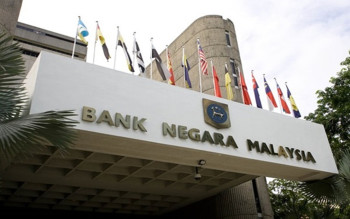
Bank Negara Malaysia has clarified that counsel extended to the Lembaga Tabung Haji represents a direct expression of the central bank's financial stability mandate enshrined in the Central Bank of Malaysia Act 2009. The statement, offered in response to ongoing inquiries, underscores the regulatory rationale behind BNM's involvement with the pilgrimage fund despite the institution falling outside its formal supervisory purview.
The central bank's constitutional remit to safeguard overall financial stability extends beyond the traditional banking sector to encompass non-bank entities that occupy strategically important positions within Malaysia's financial ecosystem. Through its surveillance and monitoring functions, BNM continuously assesses risks that could reverberate across the broader financial system, particularly those emanating from major non-bank financial institutions that maintain significant operational and structural interconnections with banks and other regulated entities.
That monitoring capability underpins BNM's authority to deliver prescriptive advice when circumstances warrant intervention. The Financial Stability Executive Committee, established under the same legislative framework, provides an institutional mechanism through which the central bank coordinates with government bodies and other supervisory agencies to address emerging financial risks at a systemic level. This committee's existence formalises what might otherwise appear to be advisory overreach, grounding it instead in explicit statutory responsibility.
Tabung Haji's position within Malaysia's financial architecture makes it precisely the type of institution that falls within BNM's purview of concern. The fund manages assets exceeding tens of billions of ringgit on behalf of millions of Malaysian Muslims saving for hajj pilgrimage, creating both balance-sheet significance and public trust implications that demand careful regulatory attention. Any deterioration in the fund's financial health could cascade through consumer confidence in Islamic financial institutions more broadly and create instability in household savings behaviour.
BNM's decision to provide counsel directly to both Tabung Haji's Board of Directors and the Minister of Religious Affairs reflects a precautionary governance approach designed to maintain institutional soundness before problems materialise into systemic events. Rather than waiting for formal supervisory mechanisms or crisis intervention, the central bank employs early-warning guidance to help the pilgrimage fund correct its trajectory and preserve its financial integrity. This preventive posture aligns with modern financial stability frameworks adopted internationally.
The substance of BNM's concerns materialised in the form of five separate warning letters dispatched to Tabung Haji's leadership and the religious affairs ministry, each addressing the mounting divergence between the fund's asset base and its accumulated liabilities. These communications escalated from advisories into formal cautions, signalling the central bank's growing alarm at gaps that threatened to undermine the institution's capacity to meet its obligations to contributors. The warnings reflected technical analysis of fundamental balance-sheet deterioration rather than speculative concern.
BNM's warnings proved prescient when the Auditor-General's office independently flagged the same deficiency in the 2017 Financial Statements Report, providing external validation of the central bank's risk assessment. The dual identification of problems by two major government oversight bodies intensified pressure on Tabung Haji's management and the government to address root causes rather than manage symptoms. This convergence of institutional concern elevated the issue from internal central bank preoccupation to a matter of broader public governance.
The government's response came through the establishment of a Royal Commission of Inquiry into the pilgrimage fund, formally announced in 2021 with members appointed on January 20, 2022. The RCI's subsequent investigation into Tabung Haji's operations and the circumstances creating its financial predicament represented acknowledgment that the institution's difficulties extended beyond routine administrative management. The commission's mandate encompassed examining governance structures, investment decisions, and the adequacy of regulatory oversight mechanisms.
When the RCI submitted its report to the Yang di-Pertuan Agong on August 30, 2022, it concluded a formal investigation process that had consumed over a year of intensive fact-finding and analysis. The presentation to the sovereign indicated the gravity with which the institution treated the inquiry's findings, positioning the RCI's recommendations as guidance requiring consideration at the highest levels of state governance. The RCI's work provided the detailed evidentiary foundation upon which any subsequent remedial action would rest.
BNM's reassertion of its advisory role must be understood against this backdrop of institutional concern spanning multiple oversight bodies and culminating in a royal-level investigation. The central bank's position is that its involvement represented responsible discharge of fiduciary duty to financial stability rather than overreach into matters beyond its remit. By grounding its actions in legislative mandate rather than discretionary preference, BNM establishes a principled framework for explaining why non-bank institutions operating at scale warrant central bank attention.
The broader implication for Malaysia's financial regulatory architecture is that systemic risk monitoring increasingly encompasses non-traditional financial institutions that may lack formal regulatory licensing but possess sufficient scale and interconnectedness to matter. BNM's claims about Tabung Haji signal that the central bank intends to exercise its financial stability mandate proactively across institutional boundaries when circumstances justify intervention. This approach reflects global best practices in macroprudential regulation that emerged in response to the 2008 financial crisis.
For depositors and contributors to Tabung Haji, BNM's articulation of its supervisory interest provides some assurance that the fund's condition receives scrutiny from Malaysia's principal financial authority. Though BNM cannot compel compliance from the pilgrimage fund as it does with licensed banks, the central bank's warnings and advice create documented accountability chains that make it harder for management to ignore emerging problems. The RCI process and BNM's statutory mandate together establish multiple overlapping oversight mechanisms designed to protect the fund's financial position and the interests of millions of Malaysian Muslims dependent upon it.

