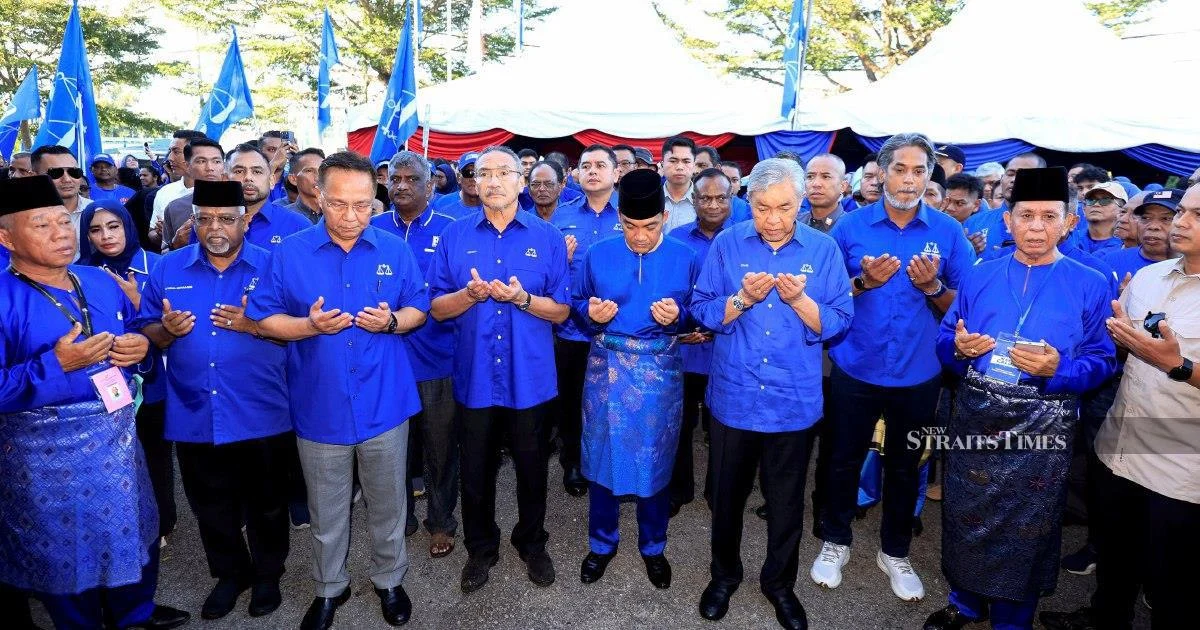
Barisan Nasional's most prominent figures converged on Simpang Renggam District Council this morning, delivering a carefully choreographed show of unity behind Datuk Onn Hafiz Ghazi as the coalition intensifies its campaign ahead of the Johor election. The high-profile turnout underscores BN's determination to project strength and cohesion at a critical juncture, when the electoral landscape across Malaysia has grown increasingly unpredictable following recent political upheavals.
The gathering in Simpang Renggam, strategically located in Johor's central district, represents more than a routine campaign stop. It signals to both party members and voters that the BN machinery remains well-oiled and committed to retaining its traditional stronghold. Johor has long been considered a BN bastion, but recent electoral trends across Malaysia have forced the coalition to treat every contest with fresh urgency, particularly as younger voters and urban constituencies increasingly fragment their support across multiple political formations.
Onn Hafiz's position as Johor's Menteri Besar makes him a focal point for BN's state-level ambitions. His leadership has been generally regarded as stable within the party structure, though the broader political environment in Malaysia remains turbulent. The decision by senior BN leaders to physically attend the Simpang Renggam event, rather than merely issuing statements of support, carries symbolic weight that should not be underestimated. In Malaysian politics, such presence-based endorsements often matter as much to grassroots members as policy announcements do.
The timing of this mobilisation reflects calculation within BN's hierarchy. Recent months have witnessed shifting political alignments across Southeast Asia's largest economies, with coalitions regrouping and repositioning themselves. Malaysia's own federal landscape has undergone significant transformation since the last general election, prompting state-level organisations like BN Johor to recalibrate their strategies. An election in Johor now carries implications that extend beyond the state itself, potentially influencing calculations at the national level regarding coalition stability and ministerial compositions.
For ordinary Johor residents, the appearance of BN's top echelon in their district carries both practical and symbolic meanings. At the practical level, it suggests that the coalition views Johor as sufficiently important to warrant concentrated resource deployment. Symbolically, it communicates that the state government remains integrated within the national power structure and continues to enjoy backing from federal-level decision-makers. In Malaysian electoral contests, such visibility of central leadership often translates into voter perception of competence and access to resources.
The Simpang Renggam venue itself merits attention. The district council represents local governance machinery that Johor voters encounter in their daily lives. By choosing this location rather than a major stadium or convention centre, BN's organisers appear to be emphasising grassroots engagement and direct community interaction rather than holding a spectacular rally designed primarily for media consumption. This approach suggests a strategy focused on consolidating existing support networks rather than attempting dramatic new voter recruitment.
Onn Hafiz's tenure as Menteri Besar has encompassed periods of relative stability for Johor, though he has faced the same economic pressures that affect all Malaysian states. Agricultural challenges, industrial development concerns, and rising cost-of-living pressures have all featured in Johor's political discourse. The gathering today implicitly represents BN's assertion that these challenges are best managed under its continued stewardship, leveraging the resources and experience that both state and federal BN structures can mobilise.
The broader context involves Malaysia's ongoing political realignment. BN itself underwent significant internal restructuring following electoral setbacks in 2018, and the subsequent political manoeuvres at federal level have created both opportunities and vulnerabilities for state-level operations. Johor's relative stability under BN management contrasts with more volatile political environments in other states, potentially providing the coalition with a compelling narrative for voters concerned about governance continuity and predictability.
Opposition formations across Malaysia have meanwhile been refining their own strategies, and Johor represents territory where they have gradually increased their competitive presence. The BN show of force in Simpang Renggam should be understood partly as a response to this incremental challenge. By demonstrating senior leadership engagement and commitment, BN aims to reinforce the perception that Johor remains its domain and that voting patterns favouring the coalition reflect settled preferences rather than fluid contingencies.
The gathering also serves internal party functions that extend beyond public messaging. Assembling multiple senior figures reinforces hierarchical structures within BN and provides opportunities for coordination among party components. UMNO, MCA, and MIC—the three primary BN constituents—must maintain working relationships despite their own internal tensions and electoral competition in specific constituencies. Joint appearances like today's serve partly to demonstrate that the coalition's organisational framework, while sometimes creaky, continues to function coherently.
For Malaysian political observers, the Simpang Renggam event exemplifies how state-level electoral contests have become increasingly tied to national political calculations. The success or failure in Johor will likely influence perceptions regarding BN's overall electoral viability and the stability of the current federal administration. Conversely, any national-level political shifts could directly impact Johor's state government, creating a complex feedback loop between elections at different levels.
Moving forward, the intensity of this early campaign activity suggests BN expects a genuinely competitive contest in Johor. The decision to deploy senior leadership so prominently indicates that the coalition recognises the stakes involved and believes sustained organisational effort will prove necessary to maintain control. Whether this high-energy approach translates into electoral success will depend on how effectively BN converts senior leader visibility into tangible voter mobilisation and policy messaging that resonates with Johor's diverse electorate.

