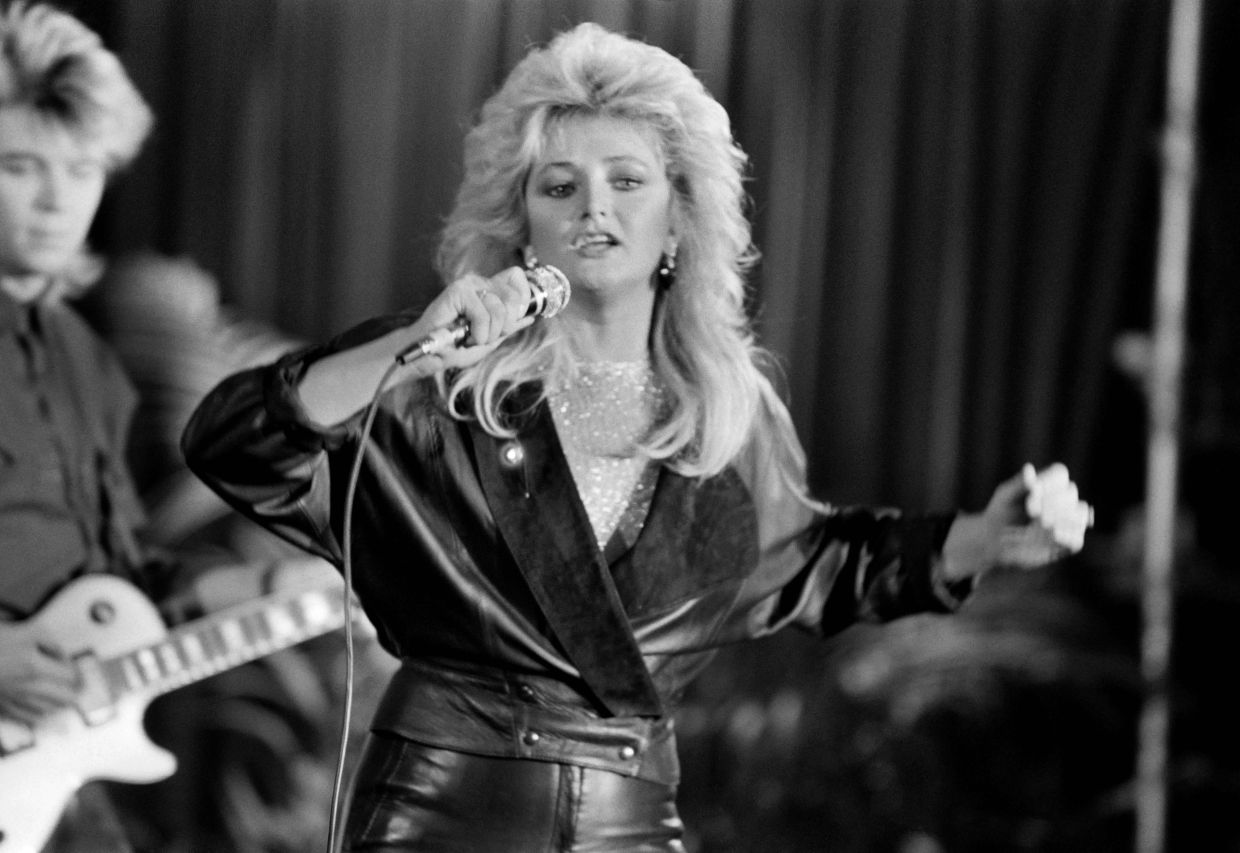
Bonnie Tyler, the Welsh pop phenomenon whose 1983 power ballad 'Total Eclipse of the Heart' transcended generational boundaries to become one of the defining songs of the 1980s, has died at 75. Tyler passed away unexpectedly in a hospital in Portugal while receiving treatment for an illness, her family announced on Thursday. She had been hospitalised in May in Faro, where she maintained a home, following emergency intestinal surgery and had subsequently been placed in an induced coma.
Tyler's death marks the end of a career that extended far beyond the monolithic success of 'Total Eclipse of the Heart'. The song, which spent four weeks atop international charts, accumulated more than one billion streams and inspired a music video that surpassed one billion views, became the cornerstone of her legacy. Yet the trajectory of her influence reveals something peculiar about popular culture: a single track, meticulously crafted in the early 1980s, continued to gain new audiences decades later, particularly during actual solar and lunar eclipse events in 2017 and 2024, when listeners worldwide rediscovered its bombastic, emotionally operatic appeal.
The magnitude of 'Total Eclipse of the Heart' lies not merely in its commercial performance but in its aesthetic audacity. When music publication Stereogum reassessed the song in 2020, they characterised it as an 'extinction-level event rendered in musical form', describing it as 'pop music as heart-pounding, chest-thumping, blood-gargling, heavens-falling passion explosion'. The track exemplified the maximalist production philosophy of its creator, Jim Steinman, who borrowed the iconic opening lyrics—'Turn around, bright eyes'—from his 1969 student musical 'The Dream Engine' at Amherst College. Steinman's influence on Tyler's sound proved transformative, as he incorporated the architectural grandeur of 1960s producer Phil Spector's approach, layering orchestral elements with contributions from E Street Band members Roy Bittan on piano and Max Weinberg on drums.
Beyond the epochal 'Total Eclipse', Tyler constructed a respectable musical career that demonstrated genuine artistic range. She earned three Grammy nominations throughout her career and achieved chart success with earlier singles including 'Lost in France' in 1977 and the No. 3 hit 'It's a Heartache' in 1978. Her later work proved creatively adventurous, encompassing soundtrack contributions such as 'Holding Out For a Hero' from 1984's 'Footloose' and collaborations across diverse genres. In 2019, she released 'Between the Earth and the Stars', featuring duets with established artists including Rod Stewart, Cliff Richard and Status Quo's Francis Rossi, demonstrating that her vocal prowess remained compelling even as mainstream attention had long since shifted elsewhere.
Tyler's enduring cultural presence also manifested through the song's remarkable capacity for reinvention and reinterpretation. The track has been covered multiple times across different eras and styles—English singer Nicki French recorded a version in 1995, while Irish-British boy band Westlife released their interpretation in 2006. The song appeared in unexpected cinematic contexts: Cate Blanchett performed it while attacking Billy Bob Thornton with a vehicle in the 2001 film 'Bandits', it featured in a wedding sequence in 2003's 'Old School', and One Direction performed it on the British version of 'The X Factor' in 2010. This sustained presence across media suggested that 'Total Eclipse of the Heart' had achieved the status of genuine cultural artefact, a rare distinction for any contemporary pop song.
Tyler's recognition in her final years reflected this enduring significance. She represented Britain at the Eurovision Song Contest in 2013, performing 'Believe in Me', a ballad written by American songwriter Desmond Child alongside British songwriters Lauren Christy and Christopher Braide. Though she finished 19th in that competition, the selection demonstrated that broadcasters and national authorities still recognised her standing as a musical representative. More substantially, Queen Elizabeth II awarded Tyler an MBE in 2023 for her services to music, an honour that crystallised the profound impact she had exerted across five decades of performance.
The story of Tyler's rise to stardom began in circumstances far removed from the glamorous recording studios where she would later craft her masterpieces. Born Gaynor Hopkins in 1951, she grew up as the daughter of a coal miner in public housing in Skewen, Wales, a settlement roughly seven miles from Swansea, in a home featuring an outdoor toilet—a detail that illustrated her working-class Welsh origins. She shared childhood with three sisters and two brothers, and developed her musical sensibilities by absorbing the work of transformative vocalists including Janis Joplin, Nina Simone, Tina Turner, Wilson Pickett and Otis Redding. As she later recounted in her memoir 'Straight From the Heart', she would sing these artists' songs into a hairbrush for extended periods, developing the distinctive husky vocal tone that would become her signature.
A critical moment arrived in 1976 when Tyler underwent surgery to remove nodules from her throat, a procedure that paradoxically solidified rather than diminished her distinctive vocal character. She initially performed under the stage name Sherene Davis while fronting a soul band before talent scout Roger Bell discovered her potential and facilitated her relocation to London for demo sessions. After a period of waiting for label interest, RCA Records signed her, and under the professionally crafted name Bonnie Tyler, she released her debut album 'The World Starts Tonight' in 1977, which contained the chart hit 'Lost in France' and earned her a breakthrough artist nomination at the Brit Awards.
Tyler's path to 'Total Eclipse of the Heart' involved a crucial artistic decision. After achieving moderate success and then experiencing a commercial decline, she signed with Sony Records. Upon witnessing Meat Loaf perform 'Bat Out of Hell' on BBC television, she was sufficiently impressed to request collaboration with the song's composer and producer, Jim Steinman. This fateful partnership introduced her to 'Total Eclipse of the Heart', which became the debut single for her fifth studio album 'Faster Than the Speed of Night'. The song emerged from Steinman's conceptualisation of a prospective musical adaptation of the classic German film 'Nosferatu', a gothic horror foundation that shaped the track's dramatic emotional intensity. Steinman's methodical production approach—recording multiple takes and selecting the most compelling before layering additional instrumentation—resulted in a sonic architecture that continued to captivate listeners four decades later.
The visual presentation of 'Total Eclipse of the Heart' became inseparable from its sonic identity. Shot in a forbidding gothic former asylum in Surrey, the legendary music video featured an array of striking imagery: slow-motion sequences of released doves, proliferating candles, dancing ninjas, leather-clad greasers, Tyler herself draped in exaggerated shoulder pads characteristic of 1980s excess, fencers executing elaborate choreography, gymnasts performing acrobatic movements, wind machines creating atmospheric turbulence, and shirtless male performers wearing swimming goggles drenched in water. The production became a staple of early MTV programming and contributed significantly to the song's cultural penetration during an era when music video presentation could substantially amplify a track's commercial and artistic impact.
While Tyler never replicated the commercial magnitude of 'Total Eclipse of the Heart', she demonstrated consistent professionalism and artistic curiosity throughout her subsequent decades of performance. The 2013 album 'Rocks and Honey', recorded in Nashville, exemplified her willingness to explore country-inflected material, featuring a collaboration with established country musician Vince Gill on the track 'What You Need From Me'. Her career trajectory—from Welsh coal-mining communities to international recording sessions, from 1980s peak prominence to sustained relevance as a nostalgia-driven cultural figure—reflected the peculiar transformations that popular music can facilitate. For Malaysian and Southeast Asian audiences, Tyler's career illustrated how a single exceptionally crafted recording could transcend temporal and geographical boundaries, remaining culturally resonant even as musical fashions shifted dramatically around it.

