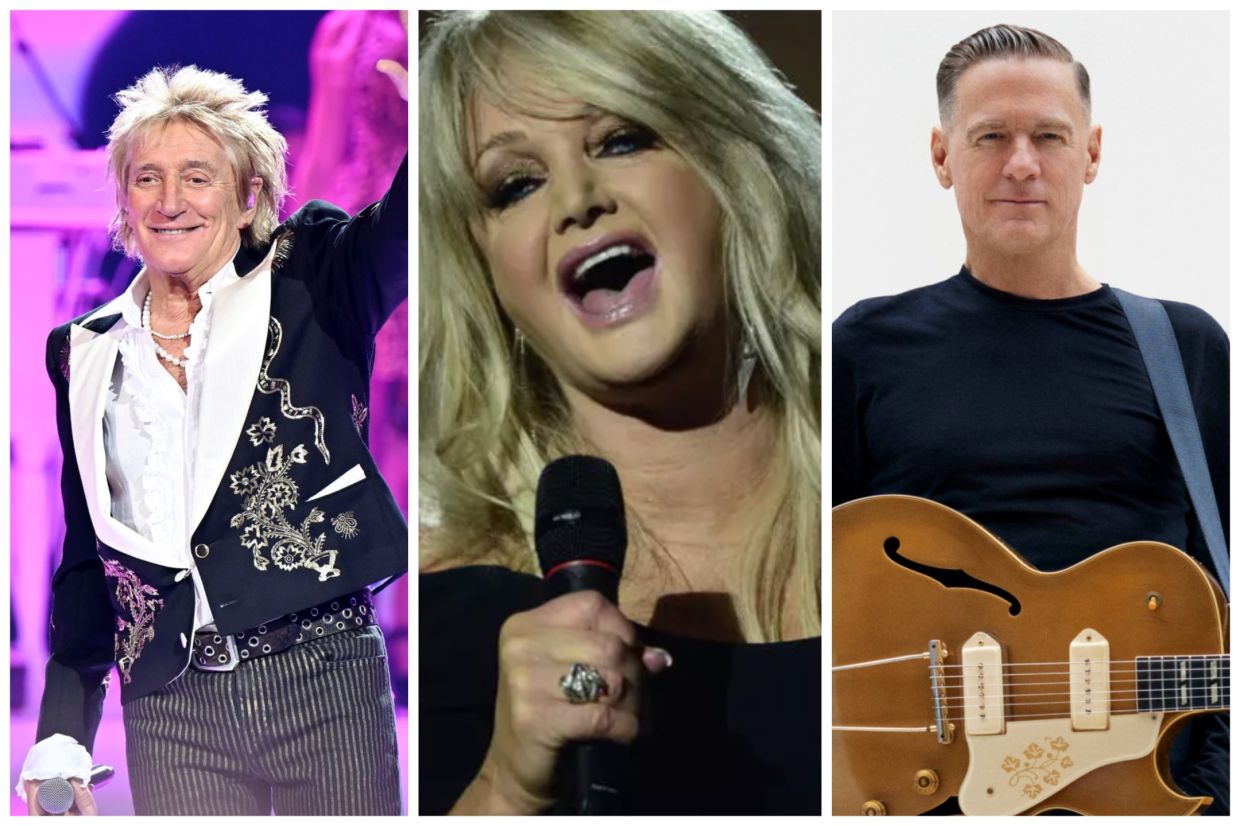
Bonnie Tyler, the distinctive Welsh vocalist whose husky rendition of "Total Eclipse of the Heart" became a global anthem for generations of rock fans, has died at the age of 75. Her family announced her passing through Facebook on Thursday, stating that she had unexpectedly succumbed in a Portuguese hospital to an illness for which she had been receiving treatment. The news triggered an outpouring of tributes from across the music and entertainment world, with fellow artists and public figures reflecting on her immense cultural impact and the enduring power of her voice.
With her instantly recognisable raspy vocals, voluminous blonde hair, and theatrical stage presence, Tyler embodied the spirit of 1980s rock music like few others. She was the quintessential power ballad performer—a category she helped define during an era when dramatic, emotion-laden love songs dominated radio and MTV screens worldwide. Her signature husky tone, developed unexpectedly following throat surgery early in her career, became her most treasured artistic asset and a voice that millions could identify within seconds. Beyond the music itself, Tyler represented a particular brand of blue-collar authenticity in an industry often criticised for its pretension, maintaining throughout her life a refreshingly grounded demeanour despite achieving international stardom.
Prime Minister Keir Starmer expressed sadness at her passing, describing Tyler as "one of Britain's greatest recording artists" whose work "continues to touch lives" across generations. The official acknowledgement from Downing Street underscored her significance not merely as an entertainer but as a cultural figure whose contributions to British music held lasting national importance. This recognition reflected how Tyler had transcended the typical boundaries of pop celebrity to occupy a more permanent place in the cultural landscape.
Rod Stewart, the fellow British rock vocalist, took to Instagram to share personal memories, noting that he and Tyler "shared similar styles of vocalising" and cherished her as "a good pal, a true soul stirrer." His tribute carried particular weight given that both artists operated within similar sonic territories during overlapping periods of their careers. Catherine Zeta-Jones, the Welsh-born Hollywood actress, shared that Tyler had performed at her wedding and remembered her as "an extraordinary woman with vocals to match." Cliff Richard recalled her "infectious zest for life" and global reach, while Canadian singer Bryan Adams acknowledged her exceptional vocal abilities and thanked her for her rendition of a composition he had co-written. Katherine Jenkins, the classical crossover artist and fellow Welsh performer, hailed Tyler as "a true Welsh legend whose unmistakable voice inspired generations and put Wales on the world stage with such power, passion and authenticity."
Tyler's journey from modest coal-mining country to international acclaim represents a distinctly post-war British narrative. Born Gaynor Hopkins in Neath, Wales in 1951, she emerged from a working-class household where her father laboured in the coal mines while her mother managed the home. One of six siblings, she left school at 16 and initially found employment in a local grocery shop, singing only during her leisure hours. Her path into professional music began in 1975 when talent scout Roger Bell discovered her performing in a Swansea nightclub, leading to her recruitment by RCA Records. The industry obliged her to adopt stage names twice—first as Sherene Davis to avoid confusion with Mary Hopkin, then finally as Bonnie Tyler, the identity under which she would achieve legendary status.
A pivotal moment in Tyler's early career came when she underwent surgery to remove nodules from her vocal cords. Rather than derailing her ambitions, the operation—and her insufficient vocal rest afterwards—resulted in the development of her signature sultry, gravelly tone that would become her greatest artistic asset. This transformation illustrated how adversity sometimes produces unexpected creative dividends. Throughout the late 1970s and 1980s, Tyler released material that built her reputation, eventually leading to mainstream breakthrough success with increasingly ambitious production and songwriting partnerships.
Her magnum opus, "Total Eclipse of the Heart," released in the early 1980s, ascended to become one of rock music's most enduring ballads. The song's theatrical production, soaring orchestral arrangements, and Tyler's emotionally wrought vocal delivery created something that transcended typical radio fodder. Remarkably, in 2026—more than four decades after its original release—the track surpassed one billion streams on Spotify alone, demonstrating its extraordinary resilience across generations and technological platforms. The accompanying music video, a cinematic production featuring dramatic lighting and conceptual visuals, accumulated over one billion views on YouTube, testament to the song's cultural penetration in the music video era. The recording itself achieved sales exceeding six million copies globally, cementing its position among rock's most commercially successful compositions.
Following this initial triumph, Tyler continued recording prolifically throughout the 1980s and beyond, releasing 17 studio albums across her career and earning three Grammy Award nominations. A 1984 release represented her work at the commercial and creative peak. In 2013, she represented the United Kingdom in the Eurovision Song Contest, competing for international recognition in a competition that would have represented the culmination of any artist's career aspirations. Throughout her professional life, Tyler remained influenced by performers such as Tina Turner and French rock legend Johnny Hallyday, artists who similarly combined vocal power with theatrical presentation.
For decades, Tyler maintained a lifestyle that reflected her unpretentious values and Welsh working-class roots. Married to former judo athlete Robert Sullivan, she divided her time between her native Wales and the Portuguese Algarve, resisting the geographic and social displacement that often accompanies mega-stardom. She famously rejected the celebrity isolation embraced by some of her contemporaries, famously stating that she lived "a very normal life" without bodyguards and remained "always happy to take a selfie in front of the salad counter." This deliberate maintenance of ordinariness, combined with her retention of her Welsh accent despite decades of international touring and recording, represented a defiant assertion of identity against homogenising pressures within the entertainment industry.
Recognition of Tyler's contributions extended beyond commercial and critical success. In 2022, Queen Elizabeth II appointed her a Member of the Order of the British Empire in recognition of her services to music, an honour that acknowledged her lasting impact on British culture and her role in promoting Welsh talent internationally. Her question about whether she could ever tire of performing her most famous composition—answering emphatically that she would always cherish singing it—revealed the genuine passion that sustained her throughout six decades in the music industry. The passage of time had not diminished either the song's power or her willingness to deliver it authentically to audiences worldwide, a testament to her professional integrity and love of her craft.

