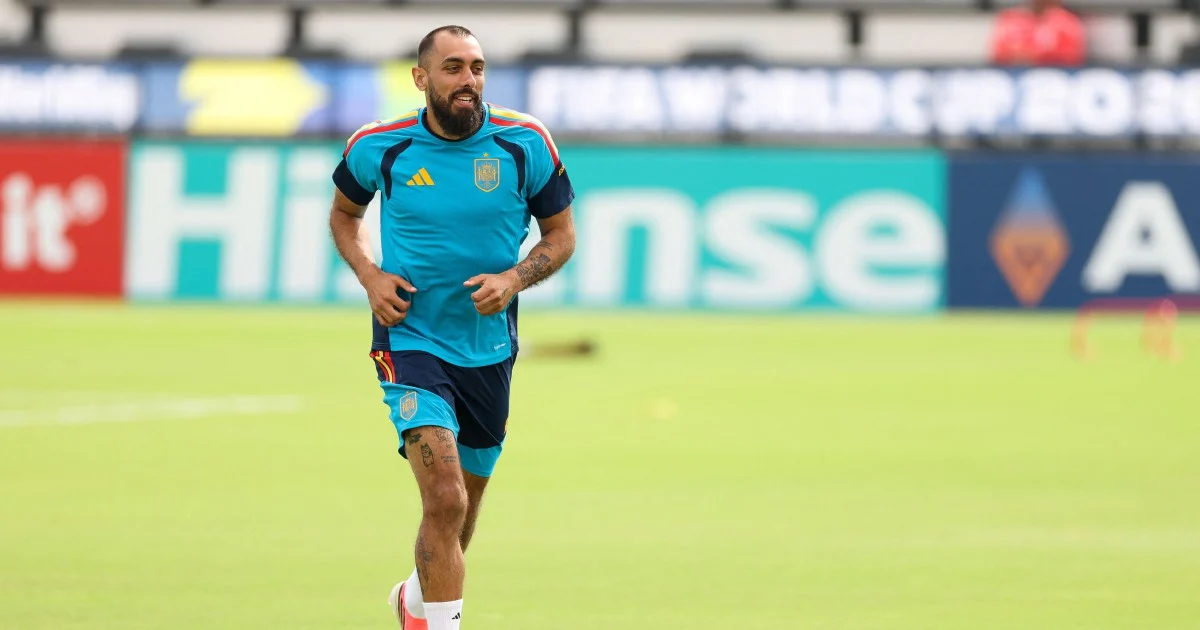
Borja Iglesias has established himself as an unconventional presence in professional football, combining his abilities as a World Cup striker with a willingness to address social and political issues that most players deliberately sidestep. Operating in a sport historically defined by careful neutrality and image management, the Spanish forward has become known for speaking frankly about matters ranging from the Gaza conflict to discrimination based on sexual orientation, earning himself the somewhat tongue-in-cheek designation as "the alien of football" for his refusal to follow the industry's unwritten playbook.
The label reflects deeper tensions within professional athletics, where commercial interests, sponsorship obligations, and club politics typically enforce a form of self-censorship among athletes. Traditional sports culture has long discouraged players from using their platforms for anything beyond promoting their teams and products. Iglesias fundamentally rejects this constraint, viewing his public standing as an opportunity rather than a liability. His approach signals a generational shift among younger athletes who question whether neutrality itself constitutes a form of compliance with prevailing power structures.
Beyond mere rhetoric, Iglesias has incorporated personal expression into his physical presentation, painting his nails as a visible declaration of individuality and non-conformity. In a sport where appearance typically adheres to narrowly defined masculine norms, such gestures acquire symbolic weight. This willingness to present himself differently demonstrates an internal consistency between his public statements and personal choices, suggesting his activism stems from genuine conviction rather than calculated public relations strategy.
The Spanish footballer's advocacy surrounding Gaza represents particularly significant terrain, given how Western sports institutions have demonstrated reluctance to engage substantively with Middle Eastern geopolitics. Major clubs and leagues have historically maintained strategic ambiguity on such matters, preferring to avoid alienating any segment of their global fanbase or sponsor network. Iglesias's willingness to voice positions on this contentious issue distinguishes him from the vast majority of professional athletes, who calculate that silence carries fewer reputational risks than engagement.
His outspokenness regarding homophobia addresses another persistent blind spot in football culture. Despite decades of evolution in broader society, professional football remains a space where LGBTQ+ issues receive minimal acknowledgment from active players. The relative absence of openly gay footballers in elite competitions reflects both systemic barriers and a locker-room culture that has historically been inhospitable to such visibility. Athletes who challenge homophobic attitudes risk ostracism from teammates, criticism from conservative fan segments, and complications with sponsors. Iglesias's willingness to address these dynamics frontally sets him apart from peers who might privately hold progressive views but refuse public articulation.
The nickname "the alien of football" carries interesting implications about how sport constructs normalcy. The designation simultaneously acknowledges Iglesias as exceptional while subtly pathologizing his choices as aberrant. It suggests that basic expressions of political conscience and social concern fall outside acceptable parameters for footballers, rendering those who engage in such discourse fundamentally foreign to the sport's established culture. This framing itself warrants scrutiny, as it implies that athlete activism itself constitutes deviance rather than representing a legitimate exercise of human agency and moral reasoning.
For Malaysian and Southeast Asian readers, Iglesias's approach offers a template for reconsidering how athletes in the region navigate activism. Across much of Asia, political sensitivities and cultural conservatism create formidable barriers to athlete speech. Yet Iglesias demonstrates that sustained commitment to principle, combined with demonstrated competence in one's primary domain, can generate space for expression even within conservative institutional environments. His example may gradually inspire other footballers throughout the region to reconsider whether silence truly serves their interests or their communities.
The commercial consequences of such outspokenness warrant serious consideration. Brands have traditionally avoided association with athletes perceived as controversial, and Iglesias presumably faces sponsorship limitations or brand collaborations rejected on political grounds. This economic pressure represents a genuine cost structure that few athletes can afford. Yet his persistence despite such constraints suggests that for some competitors, the integrity of living according to stated values outweighs financial optimization. Whether broader athlete populations will embrace similar calculations remains uncertain, but Iglesias at minimum demonstrates that such choices remain feasible.
Football's institutions have generally failed to provide supportive frameworks for athlete activism on social justice matters. Governing bodies and clubs typically adopt restrictive interpretations of neutrality policies, penalizing players who speak out while permitting or even encouraging corporate political expression. This asymmetry creates a distinctly unequal playing field where systemic power holders maintain freedom to shape discourse while individual athletes face sanctions for similar conduct. Iglesias's continued presence in professional competition despite his activism subtly challenges these enforcement mechanisms.
The broader significance of Iglesias's approach extends beyond individual authenticity to encompass questions about what football could become if athletes felt genuinely empowered to use their platforms as engaged global citizens. Imagine a sporting landscape where players routinely addressed humanitarian concerns, where ownership and administrative structures actively supported rather than silenced athlete expression on matters of justice. Such transformation would require fundamental reconceiving of sport's social role and explicit rejection of the false dichotomy between athletic excellence and civic engagement.
Ultimately, Iglesias represents a challenge to established sport culture not primarily through dramatic gestures but through consistent, quotidian refusal to compartmentalize his identity into "athlete" and "person." By refusing to adopt the customary masks that professional sport demands, he implicitly asserts that such separation proves both unnecessary and corrosive to authentic human flourishing. Whether other athletes will follow similarly remains undetermined, but his example creates precedent that such resistance, while demanding considerable courage, remains available as a choice.

