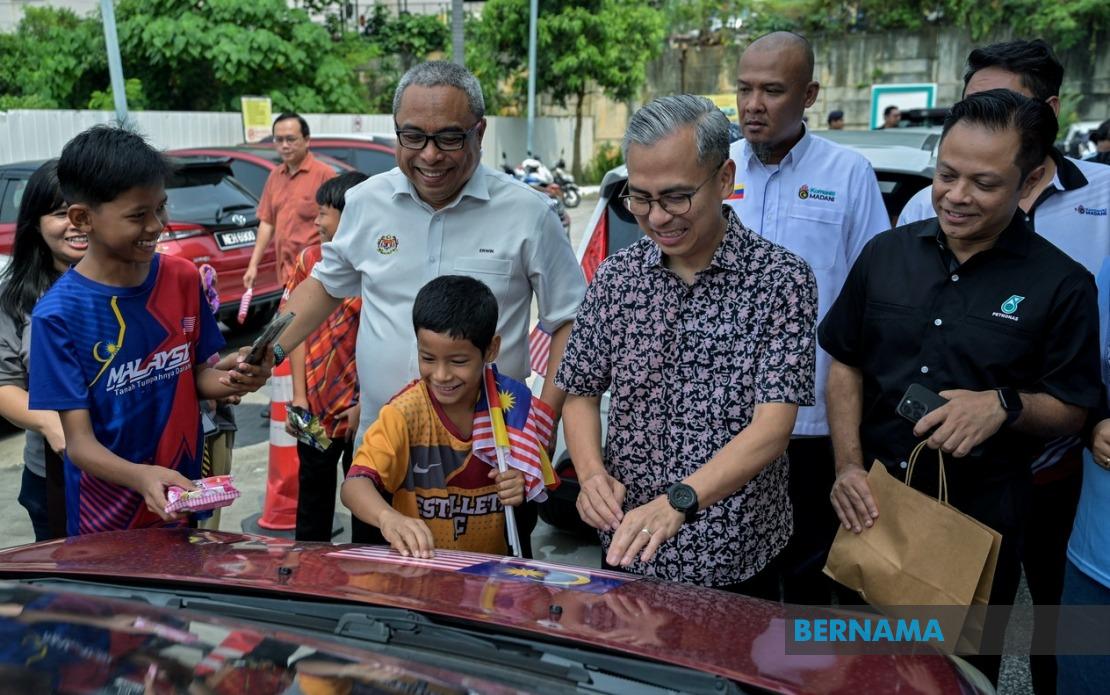
The federal government has settled on the Borneo Convention Centre Kuching as the official venue for Malaysia Day 2026, marking a significant geographical shift from the peninsula-based celebrations of previous years. Communications Minister Datuk Seri Fahmi Fadzil disclosed the decision to the media on August 9, noting that the selection emerged from the inaugural preparatory committee meeting held the previous Monday. The choice signals renewed commitment to honouring East Malaysian states as focal points for national commemorations, with Sarawak playing host to one of the country's most important annual events.
The venue assessment process formed a crucial component of the planning exercise, with Fahmi emphasising that the BCCK possesses adequate spatial capacity to accommodate the scale of festivities typically associated with Malaysia Day observances. He drew a direct comparison to the PICCA Convention Centre in Butterworth, which served as the setting for last year's celebration, suggesting that the Kuching facility meets or exceeds the infrastructure standards required for such a major national gathering. The Communications Ministry's confidence in the venue reflects thorough evaluation of its facilities, accessibility, and suitability for hosting dignitaries, media contingents, and citizen participants.
Coordinating the overall arrangements is Datuk Seri Abdul Karim Rahman Hamzah, Sarawak's Minister for Tourism, Creative Industry and Performing Arts, who assumes the role of co-chairman for the 2026 festivities. This appointment underscores the collaborative approach between federal and state governments in delivering a coherent national celebration. The inclusion of Sarawak's tourism and cultural leadership in planning the event reflects strategic intent to leverage East Malaysian perspectives and cultural dimensions within the broader Malaysia Day narrative.
The organisational momentum is already building, with Fahmi confirming that the planning committee has scheduled its next major session for August 24 to refine logistical and ceremonial details. This structured timeline suggests that authorities intend to avoid the rushed preparation that sometimes characterises late-stage event planning. The deliberate spacing of meetings allows for comprehensive consultation with stakeholders, venue operators, and participating agencies to ensure that all dimensions of the celebration—from cultural programming to security arrangements—receive adequate attention and coordination.
Beyond Malaysia Day preparations, Fahmi also addressed infrastructure improvements for the approaching National Day celebration scheduled for August 31 in Putrajaya. Prasarana Malaysia Bhd, the federal public transport operator, has pledged to operate 24-hour services specifically to facilitate citizen movement to and from the capital during the festivities. This commitment represents an expansion of previous years' transport arrangements, directly responding to challenges that citizens faced in returning home after celebrations concluded.
The enhanced public transport initiative carries particular significance for Malaysian inclusivity during national observances. By ensuring round-the-clock connectivity, Prasarana's commitment removes a logistical barrier that previously discouraged attendance from those residing in distant suburbs or satellite cities. For working professionals, families with young children, and elderly citizens, the availability of late-night or early-morning transport options substantially improves the feasibility of participating in Putrajaya celebrations without requiring accommodation away from home.
Fahmi indicated that complementary infrastructure enhancements will accompany the expanded transport services, collectively designed to elevate the citizen experience during major national events. These broader facility improvements extend beyond transportation to encompass other critical services that participants encounter during large-scale gatherings. The Communications Ministry's emphasis on these improvements demonstrates awareness that national celebrations ultimately succeed through attentiveness to practical participant needs rather than ceremonial grandeur alone.
The strategic emphasis on transport accessibility and venue capacity reflects evolving government thinking about national celebrations in an increasingly mobile, dispersed population. Rather than viewing Malaysia Day and National Day as events restricted to specific demographic segments or geographic clusters, the current planning approach treats nationwide participation as both achievable and desirable. This philosophy particularly resonates in Malaysia's multicultural, multi-religious context, where inclusive celebration formats strengthen national cohesion.
For Sarawak specifically, hosting the 2026 Malaysia Day celebration carries symbolic weight beyond the immediate event. It positions East Malaysia's capital as worthy of major national honour, acknowledging Sarawak's fundamental role in the Malaysia federation since 1963. The selection also provides economic and tourism benefits to Kuching, drawing national media attention and government delegations to the state during a celebratory period. Such occasions frequently stimulate local business activity and international media coverage that promotes regional tourism and investment potential.
The decision to locate the 2026 celebration in Sarawak also reflects broader political considerations within Malaysia's federal system. By rotating major national commemorations between peninsular and East Malaysian venues, authorities signal equitable distribution of national prestige and investment. This practice acknowledges that modern Malaysia comprises geographically and culturally distinct regions whose contributions to national identity warrant equal recognition and celebration infrastructure.

