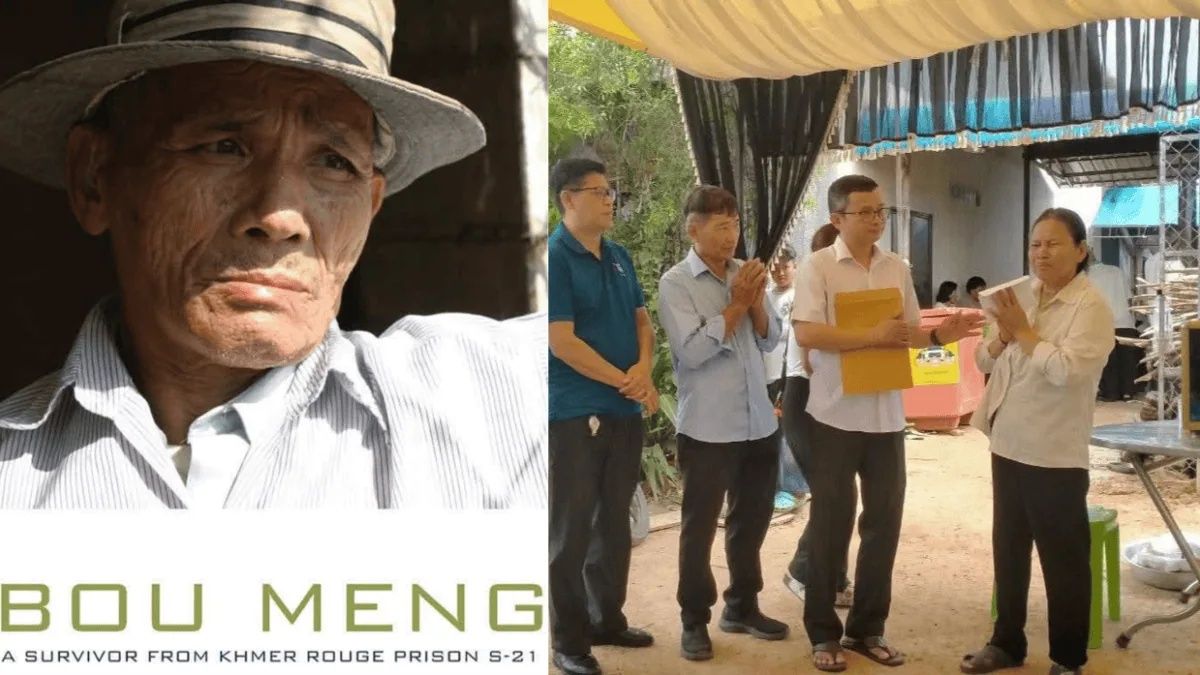
Cambodia has lost one of its most vital witnesses to the Khmer Rouge atrocities with the death of Bou Meng, who survived the horrors of Tuol Sleng prison—the regime's most notorious interrogation and execution centre. He passed away on Friday, August 14, 2026, at the age of 85, leaving behind an extraordinary legacy as one of only seven documented survivors from a facility that processed roughly 14,000 prisoners, nearly all of whom perished.
The Tuol Sleng Museum, which now preserves the memory of those murdered within its walls during the 1975–1979 genocide, announced Meng's passing with deep recognition of what his death represents. Beyond the loss of an individual life, the institution acknowledged the departure of a living archive—someone whose personal recollections bridged the gap between historical documentation and human testimony. In Cambodia's ongoing efforts to ensure accountability for one of the twentieth century's darkest chapters, such witnesses have become increasingly precious as time claims more survivors each year.
Meng's imprisonment at the facility, then known as S-21, began in 1977 when he and his wife were arrested and brought to the converted schoolhouse that had become a machine for extracting confessions and executing perceived enemies of the revolutionary state. His family was torn apart immediately: his children were separated and sent to a labour camp for young people, a fate that typically meant death. He never reunited with his wife or offspring, carrying that profound loss for the remaining five decades of his life. The brutal severing of family bonds was systematic under the Khmer Rouge, a psychological weapon deployed alongside physical torture.
What distinguished Meng's story and secured his survival was an accident of fate rooted in his artistic abilities. While thousands around him were subjected to interrogation, torture, and execution, Meng's skills as a painter made him valuable enough to keep alive. The regime occasionally required artwork, and his utility as a craftsman provided a thin thread of reprieve in an environment designed to crush human dignity and extract forced confessions. This arbitrary nature of survival—where a single skill could mean the difference between life and death—underscores the randomness of genocide and the fragility of human existence under totalitarian systems.
Meng's decision to testify at the Extraordinary Chambers in the Courts of Cambodia (ECCC), the hybrid tribunal established to prosecute surviving senior Khmer Rouge leaders, represented a courageous choice to convert his suffering into accountability. He gave evidence against Kaing Guek Eav, known as Comrade Duch, who commanded S-21 and oversaw the torture and deaths of an estimated 14,000 to 17,000 people within its confines. Duch's trial, conducted in the mid-2000s, marked the first major prosecution of a Khmer Rouge figure and set legal precedents for the tribunal's subsequent cases. Meng's testimony provided firsthand accounts of conditions, interrogation methods, and the systematic nature of the killing machinery—evidence that mere documents and statistics could never fully convey.
For the latter part of his life, Meng transformed his role from victim to educator, dedicating himself to guiding visitors through the Tuol Sleng Museum. Walking those corridors where he had once faced torture, he shared his narrative with tourists, school groups, and researchers from around the world. His presence gave visitors an irreplaceable dimension to understanding the genocide—the ability to hear directly from someone who had endured the regime's worst practices and survived to tell about it. In an era of historical revisionism and generational forgetting, such personal testimony carries weight that academic study alone cannot achieve.
Meng's death carries particular significance for Southeast Asia's broader reckoning with twentieth-century political violence. Cambodia's Khmer Rouge period remains one of the region's most studied genocides, yet survivors continue to diminish in number. Each passing limits the tribunal's capacity to gather new testimony and constrains the living memory available to successive generations of Cambodians who increasingly learn about these events only through school curricula and museums. For countries throughout Southeast Asia grappling with their own legacies of authoritarian violence and mass atrocities, Cambodia's experience—and figures like Meng—serve as reminders of both what can happen and what justice, however imperfect and delayed, can accomplish.
The Tuol Sleng Museum's statement recognised that Meng's greatest contribution extended beyond the courtroom. His willingness to relive trauma by recounting it to strangers demonstrated a profound commitment to ensuring the genocide was neither forgotten nor minimised. He understood that bearing witness was itself a form of resistance against the forces of historical denial and collective amnesia. In choosing education over silence, Meng exemplified how survivors can transform personal catastrophe into a tool for building societies more conscious of the dangers of unchecked authoritarianism and mass violence.

