Brazil secured passage to the 2026 FIFA World Cup's knockout stage with a pulsating 2-1 victory over Japan at Houston Stadium, extinguishing the Asian nation's hopes of a historic first World Cup Round of 16 appearance in the process. The match unfolded as a tactical masterclass in contrasts, with Japan's disciplined defensive setup frustrating the heavily favoured South American side through much of the opening period before Brazilian intensity and late-game composure ultimately prevailed in the humid Texas heat.
Japan's approach to the encounter demonstrated why defensive organisations have become increasingly viable at modern World Cups. The Samurai Blue, under Carlo Ancelotti's guidance, deployed a restrictive 5-4-1 formation that systematically suffocated Brazil's rhythm and prevented the Selecao from establishing the expansive, fluid attacking patterns that have defined their football for decades. Despite Brazil's overwhelming possession advantage, Japan's compact shape and disciplined positioning left the Brazilian midfield perpetually searching for penetrative passes, with wide-area opportunities proving difficult to manufacture against such organised resistance.
The deadlock was broken in the 29th minute when Kaishu Sano capitalised on a defensive lapse that would prove costly for Brazil's World Cup ambitions. After intercepting a wayward pass from Danilo deep in midfield, Sano surged forward with purpose and composure, unleashing a precisely struck low drive from the edge of the penalty area that travelled beyond the reach of goalkeeper Alisson and nestled into the far corner. The goal marked Sano's maiden international strike and represented a reward for Japan's unwavering commitment to their defensive strategy throughout the opening half.
Japan's lead at the interval placed them tantamingly close to achieving something no Japanese national team had accomplished at a World Cup: a knockout-stage victory. The prospect of advancing further in the tournament, combined with the psychological advantage of scoring against such elite opposition, provided genuine hope that the Samurai Blue might upset football's traditional power hierarchy and inspire a nation that has long pursued World Cup respectability. Brazil, by contrast, faced the uncomfortable reality of requiring a second-half transformation if they were to salvage their tournament credentials.
The interval proved transformative for Brazil's tactical approach and intensity. Emerging for the second half with markedly increased aggression and purpose, Brazil unleashed sustained waves of attacking pressure that systematically dismantled Japan's defensive composure. The Selecao's wide players became increasingly effective, generating numerous dangerous crossing opportunities that filled the penalty area with red shirts and forced Japan's goalkeeper Zion Suzuki into a succession of demanding interventions.
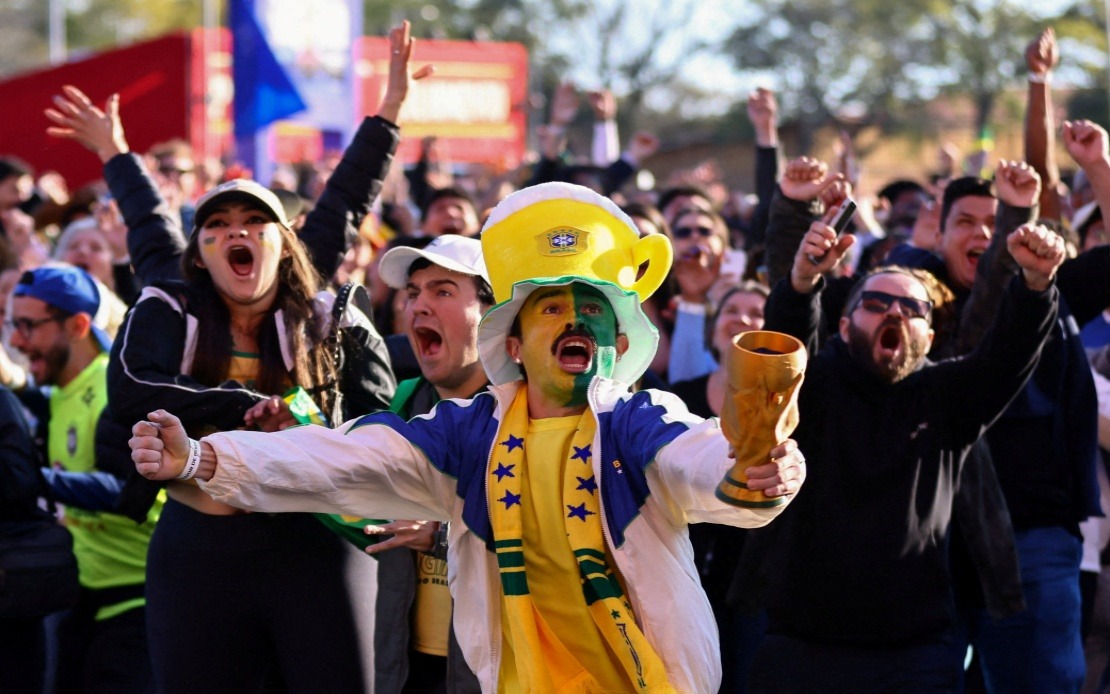
Brazil's persistence yielded immediate dividends in the 56th minute when midfielder Casemiro rose majestically at the far post to meet a precisely delivered cross from Gabriel Magalhaes, powering a header past Suzuki to restore parity. The equaliser shifted momentum decisively in Brazil's favour, with Japanese resistance beginning to show visible cracks under relentless Brazilian pressure. The Brazilian contingent among the Houston crowd responded with celebratory roars, sensing that their team had weathered the storm and seized control of the encounter's narrative.
The match's denouement arrived in genuinely dramatic fashion during stoppage time, with both teams having invested emotionally and physically into what had developed into an absorbing contest. Bruno Guimaraes, who had been instrumental in Brazil's second-half resurgence, orchestrated the decisive moment in the 90+5th minute by driving purposefully towards Japan's penalty area before executing a weighted pass of exquisite precision into the path of Gabriel Martinelli. The winger's subsequent finish, guided past a desperately outstretched Suzuki despite the goalkeeper's brave attempt to deflect the effort, delivered a heartbreaking conclusion to Japan's World Cup journey.
The late goal encapsulated the difference between two teams operating at distinct levels of composure and technical execution under extreme pressure. While Japan had demonstrated tactical intelligence and organisation throughout, Brazil's superior depth of talent and experience in high-pressure situations ultimately proved decisive. Martinelli's strike extinguished Japanese hopes of a historic result and underscored a familiar pattern in World Cup football: that disciplined underdog performances, however admirable, frequently succumb to the sustained pressure and quality that elite football nations can generate.
Brazil's advancement to the Round of 16 confirms their status as tournament contenders, though the narrow margin of victory and Japan's competitive showing will have provided cautionary lessons about complacency in knockout football. The Selecao will now prepare to face either Norway or Ivory Coast in the next round, continuing their quest to claim a sixth World Cup title. Japan, meanwhile, departs with dignity and the knowledge that they pushed one of football's traditional powerhouses to the brink, leaving supporters hopeful that future tournaments might yield the breakthrough result that has eluded Asian football at the World Cup's highest levels.

