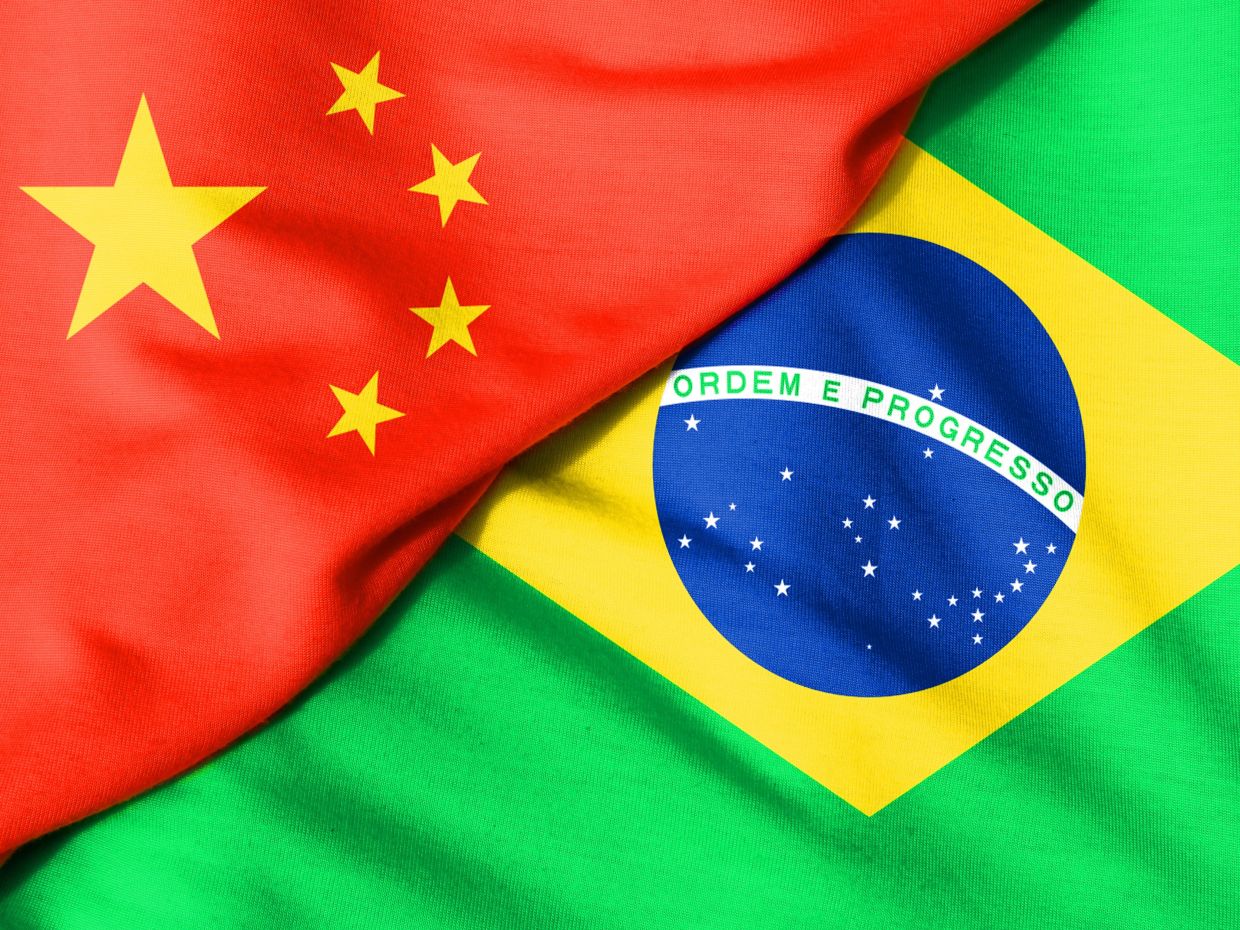
Brazil stands on the brink of entering China's sovereign debt market, with treasury officials confirming that the country's debut yuan bond issuance will likely occur before 2024 closes. The transaction represents far more than a simple fundraising exercise; rather, it signals a deliberate strategic pivot toward establishing Brazil as a recurring participant in Chinese financial markets and, crucially, creating a sovereign benchmark that domestic companies can reference when seeking their own yuan financing.
Francisco Segundo, the deputy secretary for public debt at Brazil's National Treasury, characterised the issuance as primarily qualitative rather than quantitative in nature. With external debt representing just four per cent of the federal government's total debt stock, Brazil is not desperate for the capital itself. Instead, the real prize lies in building institutional infrastructure and investor relationships that will unlock pathways for Brazilian corporations seeking cheaper funding abroad. The yuan bond market has proven substantially less expensive than traditional dollar-denominated alternatives, with foreign issuers this year averaging coupon rates of 1.97 per cent compared to the 4.5 to 5.5 per cent range typical in dollar markets. Deals in yuan tend to be modest and shorter-dated instruments, typically representing roughly one-fifth of what an equivalent borrower would raise in dollars, with maturities clustering at three to five years.
The Brazilian government formally applied in June, with Finance Minister Dario Durigan personally delivering a letter of intent to Pan Gongsheng, governor of the People's Bank of China, who promptly assured Brazil of the central bank's willingness to facilitate the transaction. However, some ambiguity surrounds the precise amount Brazil intends to raise. Durigan initially suggested the debut could reach five billion yuan, equivalent to approximately US$735 million, while Treasury Secretary Daniel Leal later indicated the target might extend to ten billion yuan, or roughly US$1.48 billion. This discrepancy is not merely bureaucratic—it determines whether Brazil will set a new record for sovereign yuan issuances. Indonesia currently holds that distinction after raising seven billion yuan in July, the largest sovereign panda bond debut on record.
Secundo indicated that regulatory approval for the issuance has been secured, with only procedural matters remaining. These include engaging a Chinese credit rating agency—notably, one that has never previously evaluated Brazil's creditworthiness. Treasury officials have not disclosed either the tenor structure of the offering or the intended use of proceeds, leaving investors to contemplate these details as markets prepare for the transaction. When pressed on timing, Segundo acknowledged the inherent uncertainties: while the goal is to complete the issuance this year, guarantees cannot be provided, leaving open the possibility of a delayed launch into 2025.
What distinguishes Brazil's strategy is an explicit commitment to return repeatedly to the yuan market rather than conduct a single, isolated transaction. This approach reflects painful lessons from Brazil's experience in European debt markets, where prolonged absences created severe distortions in the sovereign's euro curve. By maintaining regular presence and building consistent liquidity, Brazil aims to avoid repeating that costly pattern. The underlying theory rests on an empirically validated observation: when a government establishes a robust sovereign curve in a foreign currency, corporate borrowers tend to follow swiftly. Alexandre Lowenkron, who heads Bocom BBM, a Brazilian banking entity controlled by China's Bank of Communications, cited data demonstrating that between 50 and 60 per cent of corporate issuances in a given currency window typically concentrate in the period immediately following a sovereign market entry. This crowding effect amplifies the benefits of establishing a reference rate that companies can benchmark against.
Suzano, a major pulp producer and the only Latin American corporate issuer of panda bonds, has already tested this dynamic. Since 2024, the company has raised 2.6 billion yuan across three separate transactions, including an initial green bond priced at 2.8 per cent. The pricing advantage proved substantial: Emilio Yeh, Suzano's chief financial officer for Asia operations, noted that the company achieved coupon rates more than 50 basis points below its dollar curve even after accounting for currency swaps. Yet throughout those transactions, investors repeatedly pressed Suzano's team about Brazil's sovereign issuance timeline, sensing that government entry would validate the market and potentially tighten pricing further. Yeh emphasised that the sovereign bond will serve as an anchor for market expectations and pricing, cementing a reference point that corporate borrowers desperately need.
Chinese institutional investors screen potential borrowers according to three primary criteria: absolute scale of the issuer, credit rating, and what Lowenkron termed "China flavour"—meaning some operational connection or business presence within China itself. This last criterion favours companies with established supply chains, operational assets, or revenue streams in the mainland. Brazil as a sovereign entity falls short on one critical dimension: all three major international rating agencies classify Brazil as sub-investment grade, below the threshold that many large institutional funds are mandated to respect in their portfolio construction. This constraint limits the potential investor base for Brazilian debt. However, major Brazilian corporations enjoy a ratings advantage. Vale, the mining giant, carries a credit rating two notches above Brazil's sovereign rating, while Suzano similarly sits one notch higher. Petrobras, the state-controlled energy company, has been held at the sovereign's rating by most agencies, though Fitch's standalone assessment of the company would place it in investment-grade territory. These disparities highlight how a rising sovereign rating could directly benefit the country's major corporates by removing rating-related constraints on their foreign investors.
Durigan highlighted in June that Brazilian companies themselves have explicitly requested government action on yuan issuance. The motivation is twofold: establishing yuan financing channels would make corporate deals feasible where they currently are not, and reducing exposure to exchange-rate volatility, a persistent drag on corporate hedging costs. By issuing in yuan, both the government and its corporate sectors can create natural currency matches between liabilities and potential revenue streams, eliminating costly hedging arrangements. The broader context matters: Brazil's corporate sector has grown increasingly global in scope, with operations spanning multiple continents and earning revenue across multiple currencies. Being confined to dollar-based financing represents a strategic disadvantage in an era where financial markets are diversifying across multiple reserve currencies and regional settlement mechanisms.
The timing of Brazil's entry into the yuan market carries geopolitical undertones. As China seeks to internationalise the renminbi and reduce global reliance on dollar-denominated instruments, welcoming Brazil—Latin America's largest economy and a fellow BRICS member—signals mutual commitment to alternative financial architecture. For Brazil, the move acknowledges Beijing's growing importance as both a trading partner and source of capital. The relationship offers tangible benefits: access to deeper capital pools, lower funding costs, and the potential to attract Chinese direct investment tied to infrastructure and commodity sectors. Yet it also reflects a calculated pragmatism: Brazil is not forsaking its traditional relationships with dollar-based investors or European markets, but rather diversifying its financial toolkit.
Looking forward, the success of Brazil's sovereign yuan issuance will reverberate across Latin America. Other major emerging markets in the region are watching closely, assessing whether the returns justify the diplomatic and regulatory effort required to access Chinese debt markets. Suzano's achievements as a pioneering corporate borrower have demonstrated the viability of panda bonds for Latin American companies, but the absence of sovereign curve reference has constrained broader participation. A Brazilian sovereign issuance, if executed successfully and sustained through repeated market visits, would fundamentally alter the calculus for regional peers. It would establish yuan financing as a genuine, liquid alternative to traditional dollar markets, with direct implications for the cost of capital across Latin America's commodity and industrial sectors. For Brazilian investors and policymakers, the issuance represents both a near-term funding opportunity and a long-term repositioning of the country within emerging financial markets increasingly centred on Asian hubs rather than traditional Western financial centres.

