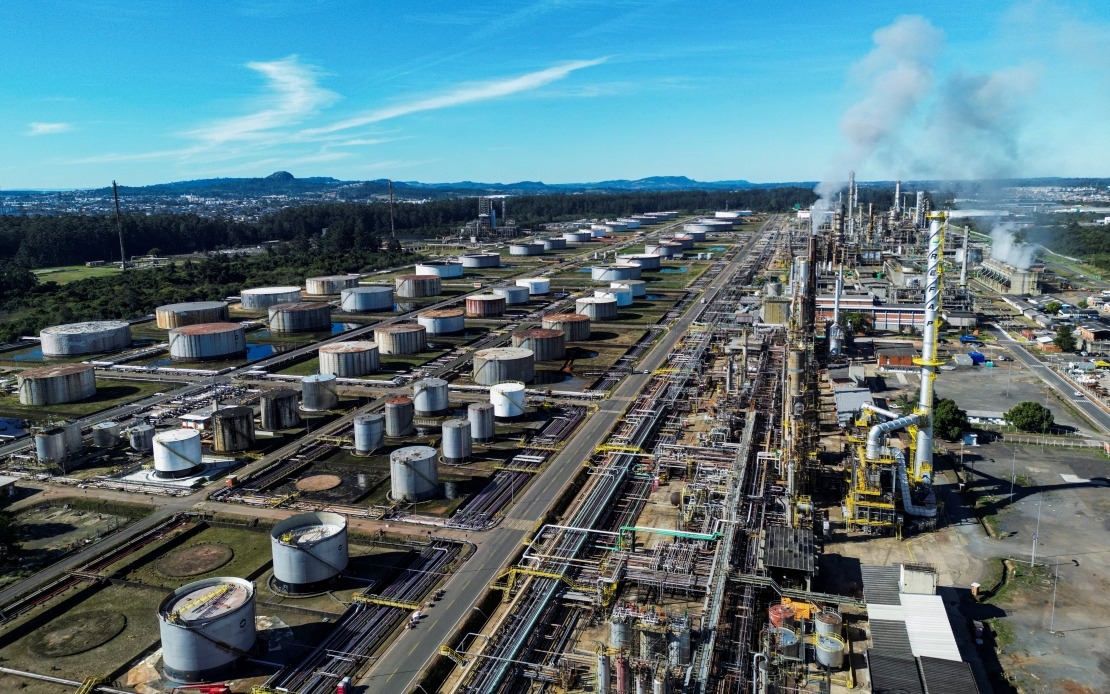
The Brazilian government has moved swiftly to challenge a new protectionist measure from Washington, condemning a blanket 25 per cent tariff on select Brazilian goods effective July 22 as economically unjustified and structurally unfair. The decision by the Trump administration, stemming from findings by the Office of the United States Trade Representative (USTR), represents the latest flashpoint in a deteriorating trade relationship between two major Western Hemisphere economies. President Luiz Inacio Lula da Silva's administration wasted no time in announcing it would activate Brazil's domestic "Reciprocity Law" to impose equivalent penalties on American imports, signalling a willingness to escalate the dispute rather than seek accommodation.
Beyond tariff retaliation, Brasilia has made clear it will pursue formal remedies through the World Trade Organisation's dispute settlement mechanism, challenging the legitimacy of an investigation it argues violates fundamental multilateral trade principles. The presidential office framed the situation as one in which the USTR's conclusions lack grounding in internationally recognised rules, essentially rejecting American assertions that Brazilian commercial policies constitute unfair trade practices. This stance reflects deepening frustration with what Brazilian officials view as selective application of trade law, particularly when domestic political considerations—rather than genuine economic grievance—appear to be driving American trade actions.
The mathematical basis for Brazil's defence centres on stark asymmetry in the existing relationship. Lula's government points out that 76 per cent of all US imports enter Brazil completely tariff-free, while the average effective tariff applied to American goods in Brazil stands at just 3.1 per cent. These figures underscore Brazilian claims that any trade imbalance favours Washington, not the reverse. The underlying data supports this assertion: last year, US exports to Brazil exceeded imports by nearly US$42 billion, representing Washington's third-largest bilateral trade surplus globally, trailing only the Netherlands and the United Kingdom. Such disparity complicates the USTR narrative and adds credibility to Brazilian accusations of protectionism masquerading as fair-trade enforcement.
The Trump administration's decision does carve out significant exemptions designed to minimise disruption to American consumers and manufacturers. Coffee, beef, oranges, orange juice, and aerospace components—commodities either unavailable in sufficient American quantities or integral to US supply chains—have been exempted from the new duties. These carve-outs reveal the selective nature of the tariffs and their capacity to function as political instruments rather than blanket trade barriers. The exemptions also hint at potential negotiating leverage for Brazil, suggesting room for sector-by-sector discussions if Brasilia chooses to pursue bilateral negotiations alongside its WTO complaint.
The current dispute carries deeper historical roots that extend back to July 2025, when the Trump administration first levied a more aggressive 50 per cent tariff on Brazilian goods. That initial action explicitly cited alleged political persecution of Jair Bolsonaro, Lula's predecessor, following Bolsonaro's conviction on charges related to an attempted coup after his 2022 electoral defeat. The invocation of Bolsonaro's legal troubles as justification for trade action blurred the boundary between commercial disputes and partisan politics, a manoeuvre that infuriated Brazilian officials. Although some of those earlier tariffs were subsequently rolled back, the latest 25 per cent duties suggest a hardening of the American position rather than a thaw in relations.
Lula has directed blame for the escalating trade war directly at Bolsonaro and his family, framing the American tariffs as an extension of political interference in Brazilian affairs. This positioning gains additional resonance given the timing of the announcements relative to Brazil's October presidential election. With Lula expected to seek re-election in a polarised contest against conservative Senator Flavio Bolsonaro—the former president's son—the trade dispute has become inextricably linked to domestic electoral dynamics. The Trump administration's actions, whether intentionally or not, inject external pressure into Brazil's internal political competition, complicating Lula's ability to demonstrate effective management of Brazil's international economic relationships.
US Secretary of State Marco Rubio's public statement on social media platform X characterised the tariffs as Brazil's own making, blaming Lula for allowing ego to override negotiating pragmatism and for failing to engage in good faith discussions. This framing shifts responsibility for the escalation onto the Brazilian side, a narrative that will resonate in American political circles but rings hollow in Brasilia and throughout Latin America. The accusation of intransigence appears designed primarily for domestic American consumption, reinforcing the administration's stance that tough measures were necessary because Brazilian obstinacy left no alternative. However, the mathematical evidence regarding trade flows undermines Rubio's characterisation and strengthens Brazil's position in any multilateral forum.
The implications for Southeast Asian nations merit consideration, as the Brazil-US tariff dispute illustrates broader patterns in American trade policy under the Trump administration. The willingness to weaponise trade measures for political purposes, to cite dubious rationales for protectionist action, and to target allies alongside strategic competitors creates an uncertain environment for all trading partners. Regional economies dependent on predictable access to American markets—particularly in agriculture, electronics, and manufacturing—face heightened risk of similar tariff action. The precedent of using trade enforcement mechanisms to address political grievances sets a troubling template that other administrations might emulate.
Brazil's invocation of its Reciprocity Law and commitment to WTO proceedings signals a preference for institutional responses over ad hoc negotiations. This approach reflects the calculation that bilateral bargaining with the Trump administration, given its demonstrated willingness to link trade disputes with political demands, carries unacceptable risks. By elevating the matter to multilateral institutions, Brazil seeks to reframe the dispute as one between the USTR's investigation protocols and established international law, removing it from the personalised calculus that currently characterises US-Brazil relations. The WTO's dispute settlement process is lengthy but provides a venue where Brazilian arguments regarding trade symmetry and fair competition can be aired before an impartial panel.
The exemption of strategic commodities from the tariffs creates negotiating space that could eventually facilitate a resolution, though the current political temperature suggests such discussions remain distant. Brazil's agricultural sector, which benefits from the exclusion of coffee, beef, and citrus products, gains temporary relief from immediate duty increases. However, the continued threat to other sectors—including manufacturing and services—keeps pressure on the Lula administration to respond decisively. The challenge lies in calibrating retaliation sharply enough to impose real costs on the Trump administration and its supporters while avoiding an escalatory spiral that ultimately damages Brazilian consumers and export-dependent industries more severely than American ones.
Looking forward, the trajectory of this dispute will depend substantially on whether American policymakers prioritise political messaging over economic substance. Should the Trump administration view tariff escalation as primarily a tool for signalling toughness ahead of 2026 midterm elections, further increases appear likely regardless of Brazilian responses. Conversely, if the administration eventually recognises that the mathematical foundations for trade grievances are weak and that agricultural exemptions limit the sanctions' effectiveness, room for negotiated settlement may emerge. Brazil's dual-track approach—combining tariff retaliation with WTO action—positions the country to respond to either scenario while maintaining pressure for eventual resolution.

