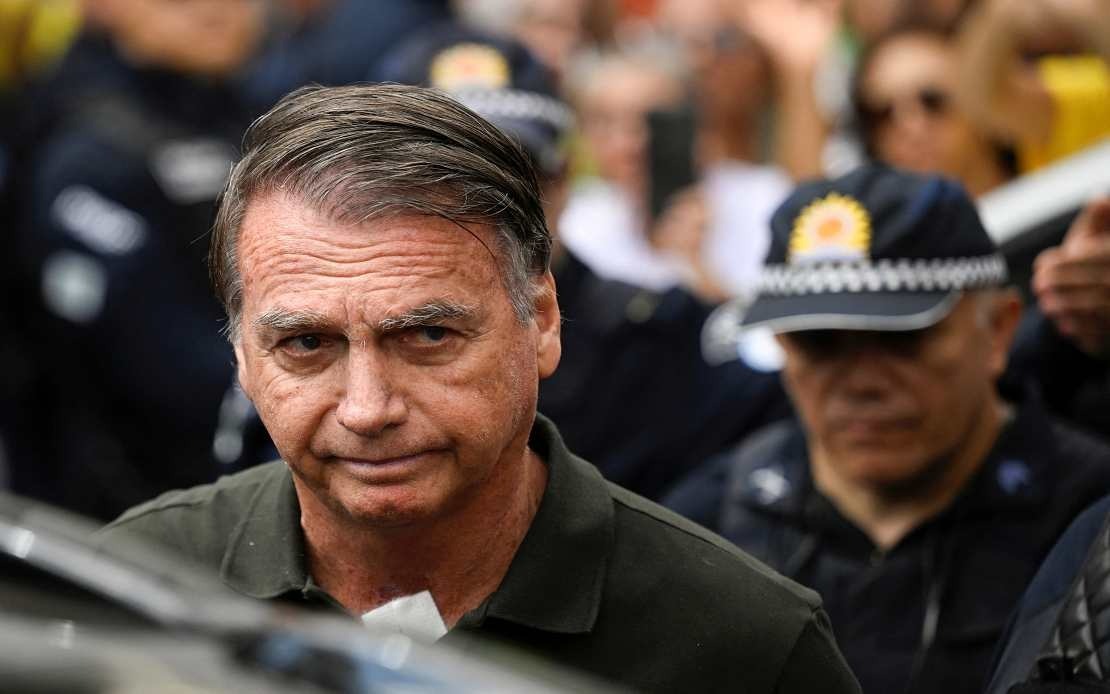
A Brazilian federal court has prevented Argentine President Javier Milei from carrying out a planned visit to former Brazilian president Jair Bolsonaro, who is serving his sentence under house arrest in Brasília. Judge Alexandre de Moraes rejected the request on July 19, citing newly enforced restrictions that were imposed just hours earlier. The blocked meeting was originally scheduled for July 25 and represented a significant political moment, as both leaders command considerable influence within South America's right-wing political movements.
Milei had organised his Brazil trip to demonstrate solidarity with Flávio Bolsonaro, the former president's son, who is preparing a presidential campaign ahead of the October election. The Argentine leader's presence at Bolsonaro's residence would have served as a high-profile endorsement of Flávio's candidacy and a symbolic show of support from a key regional ally. However, the court's intervention has prevented this alliance-building opportunity from materialising, illustrating the tight judicial oversight that constrains Bolsonaro's political activities during his house arrest.
The timing of Judge Moraes's decision to tighten Bolsonaro's conditions is particularly significant. On Friday, July 18, the judge issued a new order that specifically prohibits the former president from receiving visits of a political or electoral character until the conclusion of the presidential election in October. The restriction also extends to banning Bolsonaro from disseminating political messages through third parties, effectively isolating him from active participation in his son's campaign despite his physical presence in Brazil.
The catalyst for this legal manoeuvre was a handwritten letter penned by Bolsonaro that his son published across social media platforms. In the correspondence, the former president explicitly expressed his backing for Flávio's presidential aspirations. Court officials determined that this action constituted a direct violation of Bolsonaro's existing house arrest terms, which had previously allowed some flexibility in his communications. The judge characterised the defence's appeal for permission to meet Milei as lacking legal merit and dismissed it as moot given the broader context of electoral interference.
Bolsonaro's current situation stems from a lengthy prison sentence exceeding 27 years, handed down following his conviction in connection with an alleged attempted coup. The formal sentence is being served under house arrest conditions rather than in a conventional detention facility, ostensibly due to health considerations. This arrangement, however, comes with stringent limitations that have grown progressively more restrictive as the electoral calendar approaches, suggesting judicial authorities remain deeply concerned about his capacity to influence political outcomes from his residence.
The electoral landscape that prompted these measures features incumbent President Luiz Inácio Lula da Silva preparing to contest the October election for another term. Political analysts anticipate that Flávio Bolsonaro will emerge as one of Lula's primary challengers, setting up a significant ideological and personal rematch between Brazil's centre-left and far-right political camps. For Malaysian observers, this dynamic parallels regional concerns about former political figures maintaining behind-the-scenes influence whilst formally removed from office.
The court's decision to prevent Milei's visit underscores the judiciary's determination to prevent the former president from leveraging international relationships to bolster his son's electoral prospects. By restricting visits from prominent foreign allies, particularly those who share ideological alignment with the Bolsonaro family, the court aims to physically and symbolically isolate the former leader's influence on campaign activities. This approach reflects broader questions about the extent to which judicial bodies should intervene in political activities, even when the subject is technically under legal restrictions.
For Argentina and the broader South American political context, the blocked meeting represents a diplomatic snub of sorts. Milei's position as Argentina's current leader, combined with his strong rightist credentials and ideological kinship with Bolsonaro, made his endorsement particularly valuable. The court's intervention thus has consequences beyond Brazil's borders, signalling to regional allies that judicial constraints on Bolsonaro remain robust and that attempts to circumvent them through high-level visits will face resistance.
The escalating nature of the restrictions imposed on Bolsonaro suggests that Brazilian judicial authorities view the approaching election with considerable seriousness regarding potential interference from the former president. Each restriction tightens the circle of his available activities, effectively converting his house arrest from a relatively permissive arrangement into something approaching solitary confinement from a political standpoint. The message is unambiguous: regardless of family ties or sympathetic international support, Bolsonaro's capacity to shape electoral outcomes will be severely curtailed through October.
This episode also highlights the intersection of law and politics in Brazil's post-2022 environment. Rather than simply applying existing rules, the judiciary has actively expanded restrictions through creative interpretation of house arrest conditions. For observers in Malaysia and Southeast Asia, where questions about judicial independence and political impartiality frequently surface, Brazil's approach offers both cautionary tales and instances of institutional resilience, depending on one's perspective regarding the appropriateness of such judicial activism in electoral contexts.

