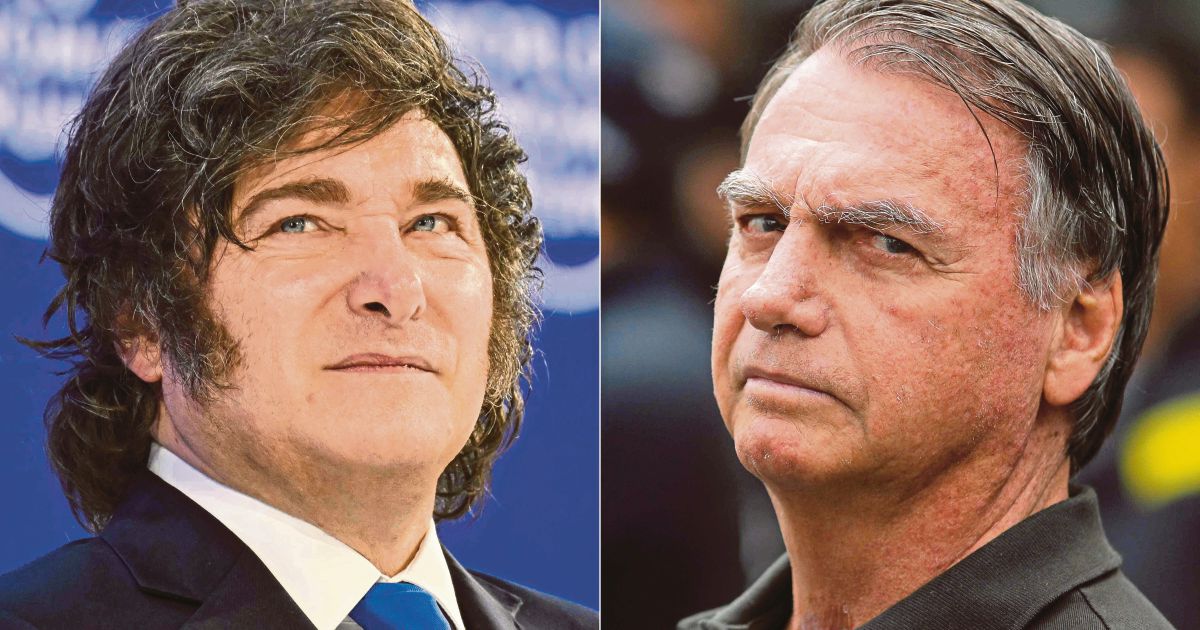
Brazil's highest court has turned down a request by Argentine President Javier Milei to visit Jair Bolsonaro, the former Brazilian leader currently confined to his home pending legal proceedings, according to a ruling reviewed by news agencies on Saturday. The decision underscores the deepening judicial and political complications surrounding Bolsonaro's situation, while also reflecting broader tensions in South American leadership dynamics as ideologically aligned right-wing figures navigate the continent's complex legal landscape.
Bolsonaro, who served as Brazil's president until 2022, has faced mounting legal troubles since his electoral defeat to leftist Luiz Inácio Lula da Silva. The Supreme Court imposed house arrest restrictions on him as investigations expanded into accusations spanning from electoral law violations to alleged involvement in a purported coup plot. These mounting charges have progressively isolated Bolsonaro within Brazil's political establishment, transforming him from a sitting president into a legally constrained figure facing multiple judicial battles simultaneously.
Milei, who took office as Argentina's president in December after running on an anti-establishment platform emphasising libertarian economic principles and aggressive opposition to leftist governance, has cultivated a notable alliance with Bolsonaro. The Argentine leader has publicly championed right-wing movements across South America and cultivated relationships with conservative figures, positioning himself as a counterweight to the region's dominant leftist governments. His desire to visit Bolsonaro reflected this ideological kinship and represented an attempt to demonstrate solidarity with a fellow right-wing leader.
The court's refusal carries significant implications for how Brazilian authorities are managing Bolsonaro's detention and the broader question of who may interact with him. House arrest, while less restrictive than imprisonment, comes with considerable limitations on movement and social contact. By blocking a high-profile international visitor, Brazil's judiciary appears determined to enforce strict adherence to these restrictions and prevent any scenario where a presidential visit might be construed as diminishing Bolsonaro's legal constraints or lending him international legitimacy during his predicament.
For Malaysia and Southeast Asia, this episode illuminates how judicial systems in major emerging economies are increasingly asserting independence from political interference, even when it affects powerful former leaders and international relations. The Brazilian court's decision demonstrates that even proximity to sitting presidents—let alone former ones—does not guarantee exemption from legal accountability or special privileges in access to detained individuals. This principle has relevance across the region, where questions of executive immunity and separation of powers remain contested.
Bolsonaro's current circumstances represent a dramatic reversal of fortune. Once commanding Brazil's executive apparatus and capable of reshaping the nation's political trajectory, he is now subject to judicial constraints that restrict his freedom and control his associations. His lawyers have consistently challenged these measures, arguing that the restrictions exceed legal bounds, yet the Supreme Court has repeatedly upheld the confinement orders. This pattern suggests that Brazil's judiciary, particularly its top tribunal, has resolved to maintain pressure on the former president through legal proceedings rather than allowing the political sphere to provide him shelter.
The timing of Milei's request and the court's swift rejection also raise questions about coordination between Brazil's judicial system and executive branch. While Brazil's Supreme Court operates with substantial independence, such a high-profile denial to a neighbouring president would typically involve considerations beyond purely legal reasoning. The messaging appears clear: Brazil's authorities are neither permitting nor facilitating efforts to mobilize international support around Bolsonaro or to project an image of him as a victim of political persecution deserving external validation.
Milei's position in this situation is delicate. As a newly elected leader building Argentina's international relationships, being rebuffed by Brazil's judiciary creates an awkward diplomatic moment. Argentina and Brazil are critical partners in South American affairs, and friction in state-to-state relations—even over matters involving private citizens—can complicate broader bilateral cooperation on trade, security, and regional initiatives. The court's decision thus carries ramifications extending beyond Bolsonaro himself to Argentina-Brazil relations and the apparent cooling of right-wing solidarity across South America.
The broader context involves the resurgence of left-leaning governments throughout Latin America in recent years, alongside more fragmented right-wing movements. Bolsonaro had emerged as a symbolic leader for conservative factions across the region, yet his legal troubles have substantially diminished his capacity to exercise this influence. Milei represents a newer iteration of right-wing leadership, but his own governance challenges and Bolsonaro's predicament suggest that ideological alignment provides limited protection against domestic judicial processes or international complications.
As Bolsonaro's trials progress, the restrictions on his movement and association will likely remain a contentious issue. His legal team may continue arguing that house arrest is disproportionate or unconstitutional, and sympathetic figures may attempt various means to demonstrate support. However, Brazil's Supreme Court has signaled through this ruling that it will police boundaries around Bolsonaro's contacts carefully and deny requests that could undermine the legal process or grant him platforms to rehabilitate his image through international backing.
This incident also reflects how the international community, including fellow leaders, can find themselves constrained by judicial decisions in other sovereign nations. Diplomatic protocols sometimes assume that sitting heads of state enjoy certain courtesies, yet Brazil's ruling confirms that fundamental principles of equal protection under law—even for former executives—supersede traditional diplomatic niceties when the judiciary deems it necessary.

