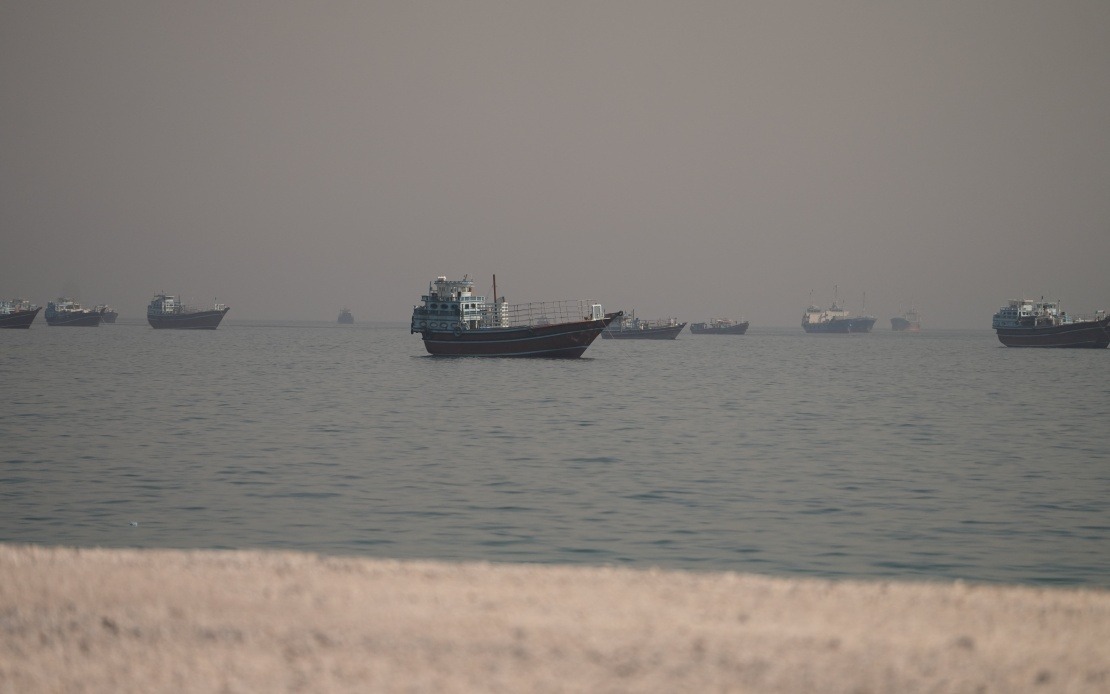
Britain and France have signalled their willingness to establish a multinational military presence aimed at protecting international maritime commerce through the Strait of Hormuz, one of the world's most strategically vital waterways. The announcement, made jointly by Prime Minister Keir Starmer and President Emmanuel Macron on Friday, represents a coordinated Western response to growing concerns about shipping safety in the region, though it is certain to provoke strong objections from Iran, which has consistently opposed external military involvement in the strategic corridor.
The Strait of Hormuz remains central to global energy security, with roughly one-fifth of the world's petroleum passing through its narrow channel annually. Any disruption to traffic in these waters has immediate repercussions for energy prices and supply chains worldwide, making the security situation there a matter of genuine international concern rather than mere regional dispute. The joint statement from London and Paris explicitly framed their initiative as essential to maintaining global economic stability, underscoring how maritime access through this bottleneck affects prosperity far beyond the Middle East.
A notable element of the European plan involves cooperation with Oman, whose agreement to work with Britain and France provides crucial regional legitimacy and practical support for any multinational operations. Oman's position as a littoral state gives it particular standing in discussions about maritime security in the strait, and its willingness to coordinate with Western powers suggests that at least one regional actor sees value in international involvement to safeguard commercial shipping. This diplomatic groundwork demonstrates that the European initiative is not entirely unilateral, though gaining broader regional buy-in remains challenging.
The two European powers have explicitly committed themselves to respecting state sovereignty and upholding international law as guiding principles for their proposed mission. The statement references their dedication to regional stability and close cooperation with regional partners, suggesting an effort to frame the initiative as support for existing legal frameworks rather than as military adventurism. This language reflects awareness that any perception of Western powers imposing their will on the region could backfire politically and complicate diplomatic efforts to build consensus around maritime security measures.
Iran's response to this announcement will be closely watched across Southeast Asia and beyond. Tehran has repeatedly and forcefully rejected what it characterises as outside interference in matters concerning the strait, arguing that security in these waters falls exclusively within the purview of the littoral states themselves. Iranian officials have issued successive warnings against extra-regional military deployments, framing such actions as violations of regional sovereignty and provocations that could escalate tensions rather than resolve underlying disputes about maritime access and commercial rights.
For Malaysia and other Southeast Asian economies, the implications of instability in the Strait of Hormuz extend well beyond immediate diplomatic considerations. A significant proportion of regional trade flows through or depends upon smooth passage through this corridor, meaning that disruptions there directly affect shipping costs, supply chain reliability, and ultimately consumer prices across the region. Malaysian manufacturers reliant on petroleum products and other energy-intensive inputs would face immediate cost pressures if maritime friction in the Persian Gulf region intensified or if insurance premiums for transiting vessels increased sharply.
The broader context of this announcement involves recurring incidents that have heightened concern about maritime safety in the strait over recent years. Various shipping incidents, some attributed to Iranian actions or allied forces, have created perceptions of heightened risk among international maritime operators. While causation remains contested between Iran and Western powers, the practical effect has been genuine nervousness among shipping companies and their insurers about transit through the waterway, leading to increased costs that eventually flow downstream to consumers and businesses throughout global supply chains.
The European initiative also reflects the geopolitical realignment occurring in the Middle East, where traditional power structures and alliances have shifted considerably. The involvement of France and Britain, major European military powers with historical interests in the region, signals broader Western determination to maintain influence over critical global chokepoints and to resist what some policymakers view as attempts by regional actors to weaponise control over key sea lanes. This commitment carries costs and risks, not least the possibility of miscalculation or escalation if such a multinational force encounters determined opposition from Iranian or aligned forces.
Implementing this proposed multinational mission would require substantial logistical, financial, and political commitment from participating nations. Decisions about command structure, rules of engagement, force composition, and operational parameters would need to be negotiated among the various partners involved, with each bringing distinct national interests and strategic perspectives. Oman's role would be particularly important in facilitating practical coordination and providing local knowledge that external powers inevitably lack when operating in unfamiliar waters and complex political environments.
The declaration also reflects ongoing international legal debates about freedom of navigation and the rights of coastal states to control activities in their territorial waters. While the Strait of Hormuz includes international waters through which merchant vessels have legal rights of passage, the precise boundaries of these rights and the extent to which coastal states can regulate traffic remain subjects of disagreement between nations. The European position emphasises traditional international law principles protecting unrestricted commercial shipping, whereas Iran asserts greater coastal state authority over activities in adjacent waters.
Looking ahead, the success of any multinational force would depend heavily on whether it can prevent incidents and maintain stability without unnecessary provocations. The challenge lies in establishing a credible deterrent against actions that might disrupt shipping while avoiding actions that could themselves trigger the very incidents such a force aims to prevent. This delicate balance has proven difficult to maintain in other maritime regions, suggesting that the path ahead will involve complex navigational challenges beyond the literal maritime variety.
For Malaysian policymakers and business leaders, developments in the Strait of Hormuz warrant close attention despite their apparent geographic remoteness. The region's economic interconnectedness means that security concerns affecting critical sea lanes ultimately reach Southeast Asian shores through higher costs, supply disruptions, and broader regional instability. How the Western powers, Iran, and regional states navigate these competing interests over coming months will shape not only Middle Eastern geopolitics but also the commercial environment facing Malaysian exporters and importers.

