Fay Manners' return to the Eiger North Face this summer differed fundamentally from her previous ascent of the iconic Swiss Alpine wall. Rather than retracing the steps of climbers who had come before her, the 39-year-old British mountaineer came armed with ambition to forge something entirely new. Alongside Swiss partner Roger Schaeli, Manners spent thirteen grueling days establishing Solar Eclipse, a 2,952-foot route comprising 33 pitches of previously unclimbed terrain. In doing so, she became the first British woman ever to open a new route on this legendary wall—a distinction that carries weight far beyond the sporting achievement itself.
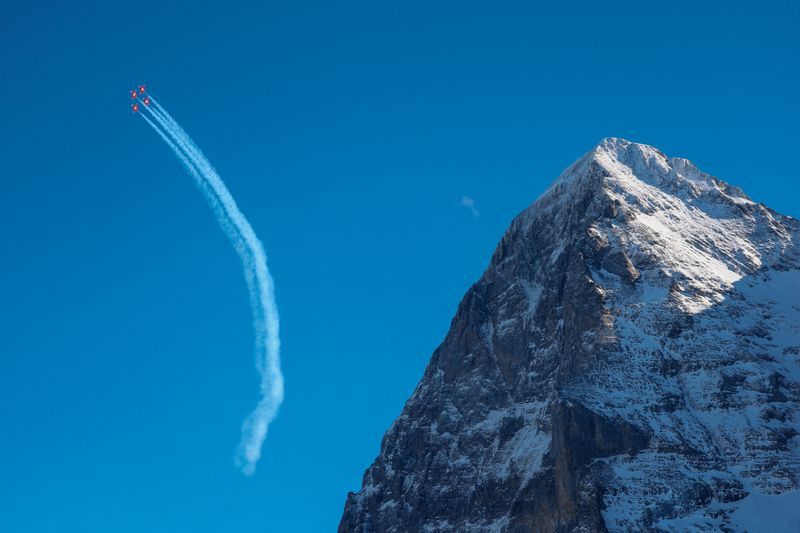
The Eiger's North Face looms as one of the Alps' most formidable climbing challenges. Stretching approximately 5,900 feet above the valley floor, this vertical expanse of rock and ice remains perpetually exposed to violent weather systems and the constant hazard of rockfall. Its fearsome reputation was forged through tragedy and determination: between early attempts and the first successful German-Austrian ascent in 1938, the wall claimed numerous lives and captured global imagination as a proving ground for mountaineering prowess. For contemporary climbers, the Eiger represents the pinnacle of Alpine ambition, a destination that separates serious mountaineers from casual weekend adventurers.
Manners first encountered the Eiger four years earlier when she completed the Heckmair Route, one of the established passages up the North Face. That experience proved transformative, prompting her to immerse herself in research about the wall's geology, weather patterns, and remaining gaps in climbing history. The seed planted during that ascent germinated into a powerful conviction: she would return not as a follower but as an innovator, identifying and developing a line that no human had ever traced before. The decision to establish rather than repeat a route represents a fundamentally different undertaking, one laden with uncertainty and risk that established routes simply do not entail.
When climbers follow existing routes, guidebooks and previous ascents provide crucial information about difficulty grades, protection options, and realistic assessments of what to expect. Route establishment erases these safety nets entirely. Manners explained this distinction with striking candor: climbers establishing new passages operate largely blind, uncertain about the physical demands they will encounter, unable to predict what protective equipment they will require, and genuinely unsure whether summit success is even achievable. Every day on Solar Eclipse presented novel problems requiring creative problem-solving and psychological fortitude in conditions where retreat remains a constant possibility.
Yet for Manners, the significance of opening Solar Eclipse transcends personal accomplishment or the inherent technical challenges. She views her achievement through the lens of representation and cultural messaging within climbing communities. When opening a new route on the Eiger becomes a predominantly male endeavor—when guidebooks list exclusively male names as route pioneers—an insidious psychological message permeates the sport. Young women absorbing that information internalize an unspoken truth: that route-opening belongs to men, that women's role in climbing is to follow established pathways rather than create new ones. Manners articulated this concern with clarity born from lived experience, understanding how absence from historical records shapes present aspirations.
Women have participated in Eiger climbing for considerably longer than many assume. In 1964, Daisy Voog achieved the distinction of becoming the first woman to successfully climb the North Face, accomplishing this feat despite institutional resistance—historical accounts suggest she had previously attempted to join a mountaineering club specializing in extreme climbing only to be rejected on the basis of her gender. Five years after Voog's ascent, Japanese climber Michiko Imai became the sole female member of a six-person team that established the Japanese Summer Direttissima route, demonstrating that women possessed both the technical skill and the courage necessary for pioneering ascents. These precedents existed but remained insufficiently recognized, their stories insufficiently celebrated within climbing culture.
Manners traces her own journey through sport to gendered assumptions absorbed during formative years. Growing up in England surrounded by athletic opportunities, she harbored genuine aspirations toward a professional sporting career. Yet the adults surrounding her—parents, teachers, mentors—consistently delivered a limiting message: women in sports lack viable career prospects, financial sustainability, and professional legitimacy. These seemingly casual remarks accumulated into something more consequential: internalized doubt about whether she could actually pursue her passion. She consequently pursued data science, a practical credential offering financial security, and initially compartmentalized climbing as an avocation rather than a vocation. Only when she relocated to Chamonix, France, continuing consultancy work while climbing intensively, did alternative possibilities emerge.
The catalyst for professional transformation arrived when The North Face approached Manners about sponsorship. Initially, this arrangement allowed her to maintain bifurcated professional lives, balancing data science consultancy with climbing pursuits. But within approximately one year, the sponsorship evolved into a sufficient financial foundation that she could abandon consultancy work entirely. Reflecting on this transition, Manners expressed astonishment at what had become possible: she acknowledged having harbored deep skepticism throughout her life about whether women could genuinely sustain careers in sports, doubts so ingrained that she failed to recognize opportunity when it arrived. The experience illuminated how powerfully gender-based stereotypes—ostensibly minor, perpetually normalized—constrain women's aspirations and decision-making.
Beyond the immediate achievement of opening Solar Eclipse, Manners envisions broader implications for climbing culture. She hopes other women will ascend her new route, completing repeat ascents and thereby normalizing female presence in the established climbing record. More ambitiously, she dreams of witnessing all-female teams attempt Solar Eclipse, squads of women climbers drawing on collective expertise and mutual support to tackle terrain that she and Schaeli first pioneered. This aspiration reveals how Manners construes her individual accomplishment as potentially catalytic, capable of shifting both psychological and practical possibilities for women in mountaineering. The route itself becomes less significant than what it symbolizes: evidence that women belong not merely as climbers but as creative forces reshaping the sport's historical record.
Manners' achievement arrives at a moment when gender dynamics in elite adventure sports remain contested and imperfectly resolved. While women now participate across climbing disciplines at unprecedented levels, leadership in route establishment and first ascent rankings continues tilting overwhelmingly male. Solar Eclipse thus represents not merely a personal milestone but an intervention in climbing's cultural fabric. Her success challenges the subtle internalized messages that have historically channeled women toward repetition and reproduction of established pathways rather than innovation and trail-blazing. For Southeast Asian mountaineers and aspiring climbers across the region, Manners' journey offers a pertinent reminder: the barriers limiting women's participation in elite adventure sports are not inevitable products of physical capability but rather cultural constructs requiring deliberate dismantling. Her thirteen days on the Eiger North Face may ultimately matter less than the permission they grant to others to imagine themselves as pioneers.

