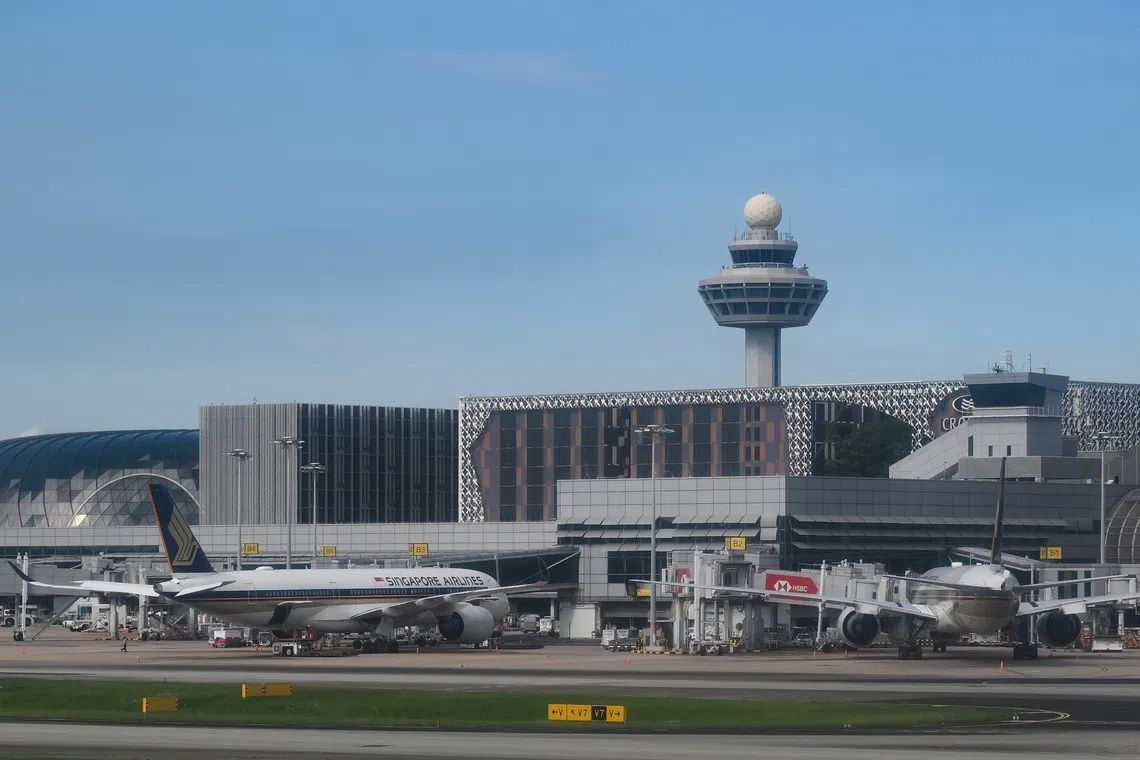
A 25-year-old British national is due to appear in court after a confrontation with airport and airline personnel at Singapore's Changi Airport Terminal 1 on July 20 resulted in significant disruption and injury. The incident, which unfolded around 4.05 pm at a boarding gate, has prompted authorities to file charges reflecting the severity of the man's conduct and the operational impact on air travel through one of Asia's busiest aviation hubs.
Police received a report of a passenger creating a disturbance at the departure gate for a service destined for Kuala Lumpur. The man appeared to be under the influence of alcohol, engaging in loud and disruptive speech that disturbed fellow travellers awaiting their flight. His behaviour at the gate marked the beginning of an escalating sequence of events that would culminate in physical confrontation and a substantial flight delay affecting dozens of passengers.
When airline staff approached to address the disruption, the passenger's demeanour deteriorated sharply. He responded with hostility, directing vulgar language at the personnel attempting to manage the situation professionally. Recognising the severity of the situation and the safety concerns posed by his intoxication, the airline made the decision to prevent him from boarding, a standard protocol when passengers pose risks to aircraft security or flight operations.
The decision to offload the passenger triggered an explosive reaction. Rather than accepting the airline's determination, the man became aggressive and forcibly pushed through airline staff to gain access to the aircraft. His actions breached airport security protocols by taking him into a restricted area without proper authorisation. During this physical altercation, one staff member was knocked to the ground and sustained injuries to her left arm and wrist, requiring medical attention.
His behaviour did not cease once he encountered airport security personnel. The man continued his aggressive conduct, incorporating profanities and threatening language directed at security staff tasked with managing the situation. This prolonged disturbance resulted in a substantial 45-minute delay to the flight's departure, a significant operational disruption that affected not only the passengers on that flight but also cascading effects on Changi's tightly coordinated schedule.
For Malaysian readers familiar with regional air travel, such incidents underscore the strict security protocols enforced across Southeast Asian airports. Changi Airport, consistently ranked among the world's best facilities, maintains rigorous standards to ensure passenger safety and operational efficiency. Violations of these protocols carry serious legal consequences across the region, reflecting the critical importance placed on aviation security and staff safety.
The charges being pursued encapsulate the full scope of the man's misconduct. The first charge relates to causing annoyance while intoxicated in a public place, a provision designed to protect the travelling public from disruptive behaviour. The second charge addresses his verbal abuse, acknowledging the use of threatening, abusive, or insulting language directed at staff. The third charge is the most serious, concerning his unauthorised entry into a protected airport area, a matter of direct security significance.
Potential penalties for these offences demonstrate the seriousness with which Singapore's legal system regards airport security violations. For the intoxication-related disturbance, conviction could result in a fine of up to S$1,000, imprisonment for up to six months, or both penalties combined. The verbal abuse charge carries a maximum fine of S$5,000, reflecting the gravity of threatening and abusive conduct toward service personnel.
The unauthorised entry charge carries the heaviest potential consequences, with conviction possibly resulting in a fine reaching S$20,000, imprisonment up to two years, or both. This reflects the security-sensitive nature of unauthorised access to protected airport zones, where physical intrusions pose potential threats to all passengers and staff. The graduated sentencing framework encourages consideration of aggravating factors such as the physical injury sustained by staff and the operational impact through flight delays.
This incident illustrates broader challenges facing airports throughout Southeast Asia in managing intoxicated travellers and maintaining security standards. Airlines and airport authorities across the region regularly implement similar policies to prevent intoxicated passengers from boarding, recognising that impaired judgement poses risks during flight. The physical confrontation that ensued demonstrates how quickly such situations can escalate when passengers resist reasonable security decisions.
For travellers transiting through regional airports, the incident serves as a reminder that security and conduct regulations are enforced consistently and with meaningful consequences. Staff at Changi and other major hubs operate under clear protocols designed to maintain safe, orderly operations, and attempts to override these decisions through aggression will result in serious legal proceedings. The injury sustained by the airline staff member underscores that such conduct carries real human consequences beyond operational disruptions.
The scheduled court appearance on August 12 will determine whether the charges proceed to trial or result in alternative resolutions. Regardless of the outcome, the incident highlights the importance of traveller awareness regarding airport regulations and the potential ramifications of intoxicated behaviour in what are inherently high-security environments.

