A Hong Kong court has delivered a stern verdict against a British woman who attempted to extort a substantial sum from a fellow Briton by leveraging accusations of sexual misconduct. Isabel Anonia Barbra Eudora Rose, a 26-year-old event management professional from London, received a six-year prison sentence from Judge Adriana Noelle Tse Ching at the District Court, convicted on dual charges of blackmail and perverting the course of public justice—a conviction that has significant implications for how false allegations are treated in Hong Kong's legal system.
Rose's case unfolded over a remarkably compressed timeline that underscores the severity of the judicial assessment. She arrived in Hong Kong on January 31, 2024, intending to visit a man she had encountered during a previous trip to Thailand. That same evening, she claimed he had sexually assaulted her at his Central district apartment. The speed with which the situation escalated from alleged assault to monetary demands would prove crucial to the court's determination that the rape allegation was fabricated from the outset.
The evidence presented to the court painted a picture fundamentally at odds with Rose's version of events. Immediately following the encounter, the two individuals exchanged messages that Judge Tse found inconsistent with the narrative of sexual violence. When Rose stated "You basically raped me," the man's response—acknowledging he had misread her signals and apologising for rushing her—suggested a situation involving miscommunication rather than assault. The defendant's own subsequent query about whether he was merely annoyed that she had declined full intercourse seemed to acknowledge a negotiation around consent rather than an absence of it.
Forensic evidence further complicated Rose's narrative. Medical examination revealed bruising on her neck but crucially detected no genital injuries, a finding that contradicted her characterisation of violent sexual assault. The judge determined that while intimate contact had occurred, penetrative intercourse had not taken place. This distinction became pivotal in establishing that the rape allegation lacked factual foundation, particularly given Rose's own messaging about the events.
The transformation of the situation into an extortion scheme materialised with striking clarity through the documented communications. Initial discussions regarding compensation began reasonably—the man agreed to reimburse Rose £2,000 for accommodation and travel expenses as requested. However, this modest agreement rapidly escalated when Rose demanded £5,000, then suggested she was owed vastly more through cryptic messages implying ongoing claims. Though the explicit £100,000 demand did not appear in retrievable text records, the judge concluded Rose had communicated this figure through ephemeral messages—disappearing texts or voice notes she subsequently deleted—that would leave no digital trail.
The mechanics of the blackmail revealed deliberate coercion. Rose informed the man that unless he provided half the demanded sum immediately and the remainder the following day, she would report him to police. This threat structure transformed what might have been a dispute about financial obligations into criminal extortion. The man's protestations that he lacked the capacity to produce such funds fell on deaf ears as Rose intensified her demands, demonstrating what the court characterised as calculated pressure.
Judge Tse's characterisation of Rose's conduct was unsparing. The defendant had, in the judge's assessment, cynically weaponised the man's kindness, naivety, and romantic interest to advance a scheme targeted at his finances from the moment of her arrival in Hong Kong. The rape allegation itself was not an unfortunate consequence of genuine confusion but rather a deliberate construction designed to coerce payment. Rose's report to police on February 3 therefore represented not the protective action of an assault victim but rather a calculated escalation in her blackmail strategy.
The sentencing framework reflected the gravity with which Hong Kong's judiciary regards such offences. Judge Tse established a five-year starting point for the blackmail conviction alone, subsequently ordering that one year of the perversion of justice conviction run consecutively, resulting in the six-year total sentence. This decision underscores judicial recognition that falsely invoking the criminal justice system to facilitate extortion represents a particularly egregious form of misconduct that compromises the system's integrity.
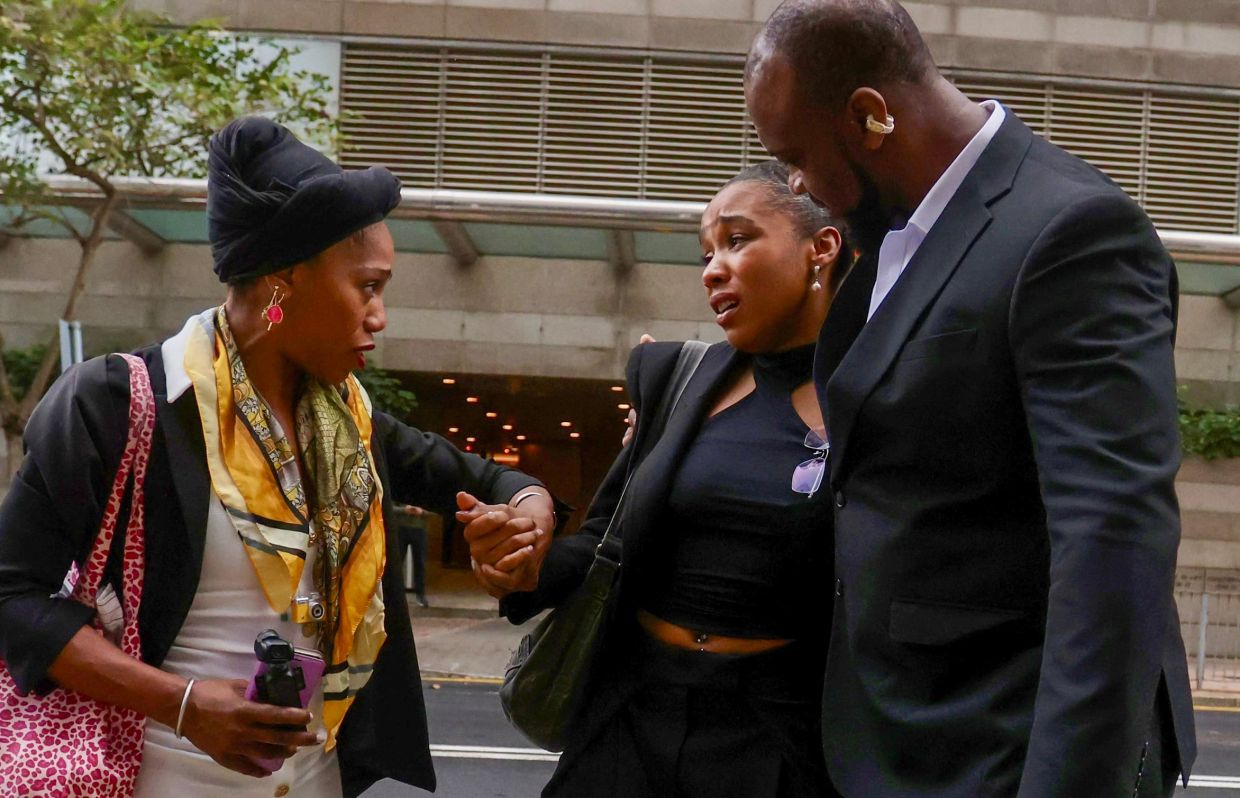
Rose's reaction following the guilty verdict in March—breaking down in tears and subsequently telling the South China Morning Post that "none of it makes sense"—presented a starkly different narrative from the one accepted by the court. She insisted she had genuinely reported rape and expressed bewilderment that the assault allegations had apparently vanished from consideration within 24 hours. Her claim that police officers advised her they would treat the blackmail allegations more seriously suggests possible friction between different investigative priorities, though judicial findings have now definitively resolved which allegations bore evidential weight.
This case carries broader implications for how jurisdictions like Hong Kong navigate the intersection of sexual assault allegations and criminal prosecution. While the conviction demonstrates judicial willingness to pursue false accusers vigorously, it also highlights the vulnerability of accusation-based systems to manipulation. The speed with which Rose progressed from allegation to extortion demands, combined with the forensic and testimonial evidence establishing no assault occurred, suggests a premeditated scheme rather than a victim's trauma response. For Malaysian observers, the case serves as a cautionary example of how legal systems must balance protection for genuine assault victims with mechanisms to address deliberately false accusations that weaponise serious criminal allegations for personal gain.
The broader Southeast Asian context matters here. As discussions around sexual assault protections intensify across the region, cases like Rose's demonstrate that robust due process protections and evidentiary standards remain essential to distinguish between genuine victims requiring justice and bad-faith actors exploiting serious allegations for criminal purposes. Hong Kong's handling of this matter—prioritising evidence over initial accusations—provides a model for how accountability can extend to those who deliberately fabricate sexual assault claims. Rose's imprisonment reflects not a failure of justice systems to protect victims, but rather the system's capacity to identify and punish those who exploit sexual assault allegations as instruments of extortion.

