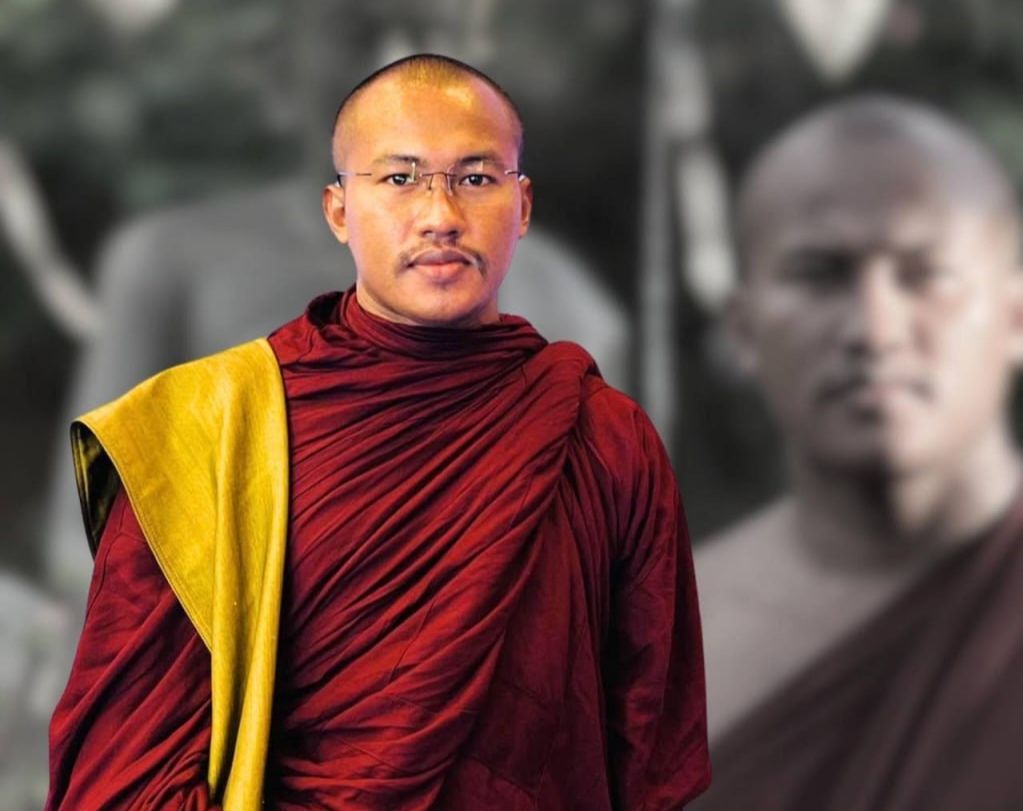
Fifty Cambodian civil society organisations, labour unions and grassroots community groups have collectively demanded the immediate release of citizen journalist Chea Vuthy, whose conviction this week has triggered widespread concern about the state of freedom of expression in the Southeast Asian kingdom. The former monk was sentenced on August 19 by the Phnom Penh Municipal Court to 18 months imprisonment and a fine of approximately $500 for incitement charges stemming from comments he made in an August 2025 private Messenger group chat comprising roughly twenty individuals.
The scale of the organized response underscores deepening anxieties within Cambodia's civil society about the scope and application of incitement laws. In their August 20 joint statement coordinated by the Cambodian League for the Promotion and Defense of Human Rights (LICADHO), the coalition articulated fundamental concerns that prosecuting speech within intimate private forums sets a dangerous precedent for what constitutes actionable criminal conduct. The conviction represents a particularly troubling interpretation of criminal liability, they contended, since the message never reached beyond the restricted group and was never publicly disseminated by Vuthy himself.
The disputed comments centred on Cambodia's ongoing border tensions with Thailand, specifically addressing the situation facing people displaced by cross-border military activity. Vuthy did not deny authoring the private message, according to court records, but he explicitly contested the characterization of his remarks as incitement worthy of criminal prosecution. His legal team has signalled an intention to appeal, arguing that the evidential threshold for establishing incitement was not satisfied and that the severity of the sentence bears no reasonable relationship to the alleged transgression.
For Malaysian and broader Southeast Asian observers, the case illuminates a troubling pattern emerging across the region: the expansion of criminal speech laws into digital spaces where traditional notions of public discourse have become increasingly blurred. The Malaysian context proves particularly relevant, given this nation's own history of balancing security concerns with press freedoms. Cambodia's prosecution demonstrates how vaguely drafted or broadly interpreted incitement statutes can ensnare private communications, a concern that resonates with debates about online expression throughout ASEAN.
The rights coalition's primary challenge to the conviction hinges on proportionality under international human rights law. Article 19 of the International Covenant on Civil and Political Rights, which Cambodia has ratified, permits restrictions on expression only when they serve legitimate aims—such as national security or public order—and when such restrictions are necessary and proportionate responses. The organisations argue that an eighteen-month custodial sentence for a private message addressing displacement concerns vastly exceeds any reasonable proportionality threshold and cannot be justified as necessary protection for state security or any other protected interest.
Vuthy's arrest in April at his residence at Wat Por Veal pagoda in Battambang province involved plainclothes provincial police, followed by forced defrocking and immediate pretrial detention. The speed and manner of his apprehension, combined with the forcible removal of his monastic status, suggests to observers that authorities acted with unusual severity. He currently languishes in Phnom Penh's Police Judicial Prison. An appeal court previously rejected his bail request in June, effectively ensuring his continued detention throughout trial proceedings.
The humanitarian dimension of Vuthy's activism deserves particular attention. Prior to his arrest, the 27-year-old worked as a citizen journalist focusing on environmental degradation, illegal deforestation and human rights violations—work that carries significant risk in countries where such investigations frequently clash with powerful commercial and political interests. His reporting represented precisely the type of accountability journalism that civil society organisations consider essential for transparent governance, yet his detention now silences this voice at a moment when displacement crises demand documentation.
This prosecution forms part of a troubling cluster of convictions tied to Cambodia-Thailand border commentary. Authorities have previously convicted other individuals for similar online speech about the border situation: a chef received an identical eighteen-month sentence in May, while a deputy school director was sentenced to two years in June for border-related social media posts. This pattern suggests something beyond prosecution of isolated individuals—rather, it indicates a coordinated approach to suppressing public discussion of the border dispute itself, which raises questions about whether authorities are using incitement laws as instruments of political control rather than protection of legitimate state interests.
The coalition demanding Vuthy's release represents impressive breadth within Cambodian civil society, encompassing human rights organisations like LICADHO, CCHR and ADHOC; media freedom groups including the Cambodian Center for Independent Media and the Cambodian Journalists Alliance Association; labour unions through the Center for Alliance of Labor and Human Rights; and electoral monitoring bodies such as COMFREL. This unified position transcends typical organisational silos and suggests deep consensus that the conviction crosses a line regarding acceptable exercise of state power.
Government response has remained defensive. Ministry of Information spokesperson Tep Asnarith invoked judicial independence, claiming the ministry plays no role in courtroom decisions and suggesting that civil society organisations insufficiently appreciated the factual and legal complexities. However, this formalistic response sidesteps the substantive concern: whether Cambodia's legal system is applying incitement statutes in ways compatible with the nation's international human rights obligations. The appeal process offers one avenue for reconsidering the conviction's proportionality, yet broader reform of how incitement laws are drafted and applied may ultimately prove necessary.
For Southeast Asian journalists and activists, the Vuthy case carries cautionary implications. It demonstrates that private communications attract criminal liability in contexts where courts interpret incitement expansively, and that connections to political sensitivities—like border disputes—can transform routine commentary into prosecutable offences. Malaysia, Thailand, Vietnam and other regional neighbours have grappled with similar tensions between security imperatives and expression rights. Vuthy's treatment serves as a reminder that protecting civil society space requires constant vigilance and that international human rights standards must remain more than rhetorical commitments.

