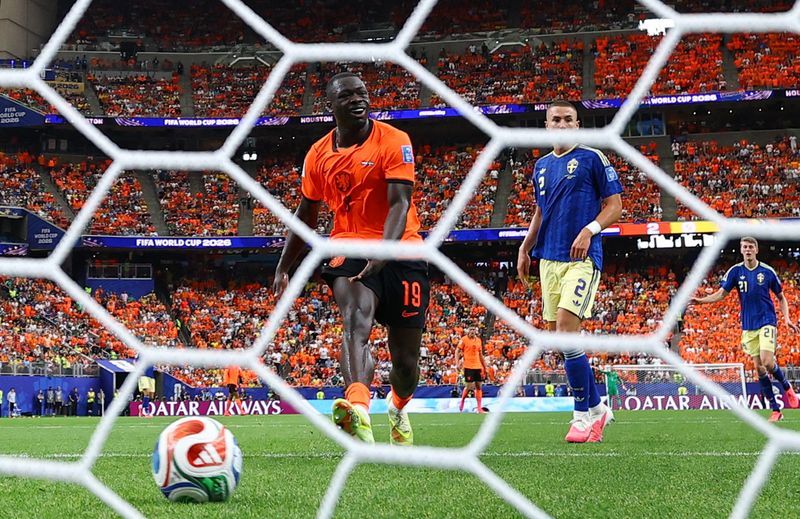
Ronald Koeman's tactical nous was questioned after the Netherlands' uninspired 2-2 draw with Japan, but the Dutch coach's selection decisions for Saturday's fixture against Sweden proved entirely vindicated when his side delivered a commanding 5-1 victory that moved them atop their tournament group. The transformation underscores a fundamental truth in football management: fortunes can shift dramatically within a single match, with critics swiftly becoming admirers once results turn in a coach's favour. For Koeman, the masterstroke was elevating 24-year-old Brian Brobbey to the centre of the Dutch attack, a decision that would prove to be the catalyst for an impressive display of attacking football.
Brobbey wasted no time justifying the faith placed in him, notching two goals within the opening 17 minutes against the Swedes and setting the tone for a rampant performance that thoroughly exposed Sweden's defensive vulnerabilities. The clinical finishing and intelligent movement demonstrated why Koeman had identified the striker as the solution to a nagging problem that has preoccupied Dutch football planning: finding a worthy successor to Memphis Depay, who has been sidelined by injury and remains their record international scorer. With Depay's absence creating an obvious void in the attack, Brobbey's commanding display against Sweden presented a timely opportunity to stake his claim as the preferred option moving forward.
The path to this moment, however, has been characterised by uncertainty and career setbacks for Brobbey. He had become largely peripheral to Dutch squad planning during the qualifying campaign for the 2026 World Cup, overlooked in favour of other attacking options and effectively exiled from international consideration for an entire year. His recall to the national team setup in March signalled a change in thinking, though few could have predicted that he would emerge as the focal point of the Dutch attack so quickly. The turnaround has been facilitated largely by his move to English football, where a season at Sunderland in the Premier League has been transformative in expanding his capabilities as a striker.
When asked about his evolution as a player, Brobbey articulated a clear understanding of how his game has developed. His comments to reporters at the Dutch training facility earlier in the tournament revealed a striker who has transcended the traditional battering-ram archetype and instead become a more multifaceted offensive weapon. Beyond the physical contests against centre-backs, he has refined his ability to time intelligent runs from deep positions, create separation through clever movement patterns, and provide support play that extends beyond simple target-man duties. This transformation from a one-dimensional to a genuinely rounded forward has been the missing ingredient in his development.
The attacking support system Brobbey operates within also plays a crucial role in his effectiveness. The creative contributions from Cody Gakpo operating along the left flank, combined with the penetrative runs offered by fullback Denzel Dumfries on the right side, generate a consistent stream of opportunities for the lead striker. The addition of Crysencio Summerville to the squad adds another creative dimension to the Dutch attack, further enriching the quality of service available to whoever occupies the central striker role. This tactical framework provides an ideal platform for a striker of Brobbey's profile to thrive, and his performance against Sweden demonstrated his capacity to capitalise on such supply.
Brobbey's clinical finishing stands in contrast to the uncertainty that surrounds Depay's current form. Having returned from a prolonged injury layoff, the veteran striker has not yet recovered the sharpness and explosiveness that characterised his best seasons. The physical toll of extended rehabilitation and the inevitable rust that accompanies months away from competition have created an opening for Brobbey to establish himself as the first-choice option. For a squad preparing for major tournament football, having a striker in peak physical condition and full confidence is substantially more valuable than relying upon a senior player who is still rebuilding fitness levels.
The selection decision also reflects a broader strategic shift in how the Netherlands approaches its succession planning at the attacking apex. Rather than continuing to lean upon Depay or identifying a stopgap solution, Koeman has demonstrated faith in Brobbey as the foundation upon which the Dutch will build their attacking play at this tournament and potentially beyond. This generational transition has been anticipated within Dutch football circles for some time, given Depay's advancing years and the necessity of establishing a long-term plan for the position.
From a tactical perspective, Brobbey's physical profile combined with his improved technical execution creates a template that suits the modern demands placed upon elite strikers. He possesses sufficient strength to hold up play when required, but has also developed the movement and positioning intelligence to exploit spaces in behind defensive lines. This flexibility enables Koeman to operate various attacking systems depending on matchup requirements and opposition characteristics, rather than being constrained to a single tactical approach.
Looking ahead, Brobbey's two-goal performance against Sweden has substantially strengthened his position within the squad hierarchy and demonstrated that Koeman's decision to elevate him deserves the acclaim it has received. The combination of his improved technical arsenal, the supporting cast available to him, and his demonstrated clinical finishing in high-pressure circumstances all suggest that the Dutch have found a worthy heir to Depay's mantle. Whether he can maintain this trajectory through the remainder of the tournament will be the ultimate test, but the evidence from Saturday's dominant display indicates that Brobbey possesses the talent and temperament to shoulder the responsibility that Koeman has placed upon his shoulders.
%22%2F%3E%3C%2Fpattern%3E%3C%2Fdefs%3E%3Crect%20width%3D%22100%25%22%20height%3D%22100%25%22%20fill%3D%22url(%23ph5r0sjg)%22%2F%3E%3Crect%20width%3D%22100%25%22%20height%3D%22100%25%22%20fill%3D%22url(%23ph5r0sjp)%22%2F%3E%3Ctext%20x%3D%2250%25%22%20y%3D%2250%25%22%20text-anchor%3D%22middle%22%20dominant-baseline%3D%22central%22%20fill%3D%22rgba(255%2C255%2C255%2C0.95)%22%20font-family%3D%22Georgia%2C%20'Times%20New%20Roman'%2C%20serif%22%20font-weight%3D%22700%22%20font-size%3D%22170%22%20letter-spacing%3D%22-0.02em%22%3EMalaysia%3C%2Ftext%3E%3C%2Fsvg%3E)
%22%2F%3E%3C%2Fpattern%3E%3C%2Fdefs%3E%3Crect%20width%3D%22100%25%22%20height%3D%22100%25%22%20fill%3D%22url(%23phllcpg)%22%2F%3E%3Crect%20width%3D%22100%25%22%20height%3D%22100%25%22%20fill%3D%22url(%23phllcpp)%22%2F%3E%3Ctext%20x%3D%2250%25%22%20y%3D%2250%25%22%20text-anchor%3D%22middle%22%20dominant-baseline%3D%22central%22%20fill%3D%22rgba(255%2C255%2C255%2C0.95)%22%20font-family%3D%22Georgia%2C%20'Times%20New%20Roman'%2C%20serif%22%20font-weight%3D%22700%22%20font-size%3D%22226%22%20letter-spacing%3D%22-0.02em%22%3EMarcos%3C%2Ftext%3E%3C%2Fsvg%3E)