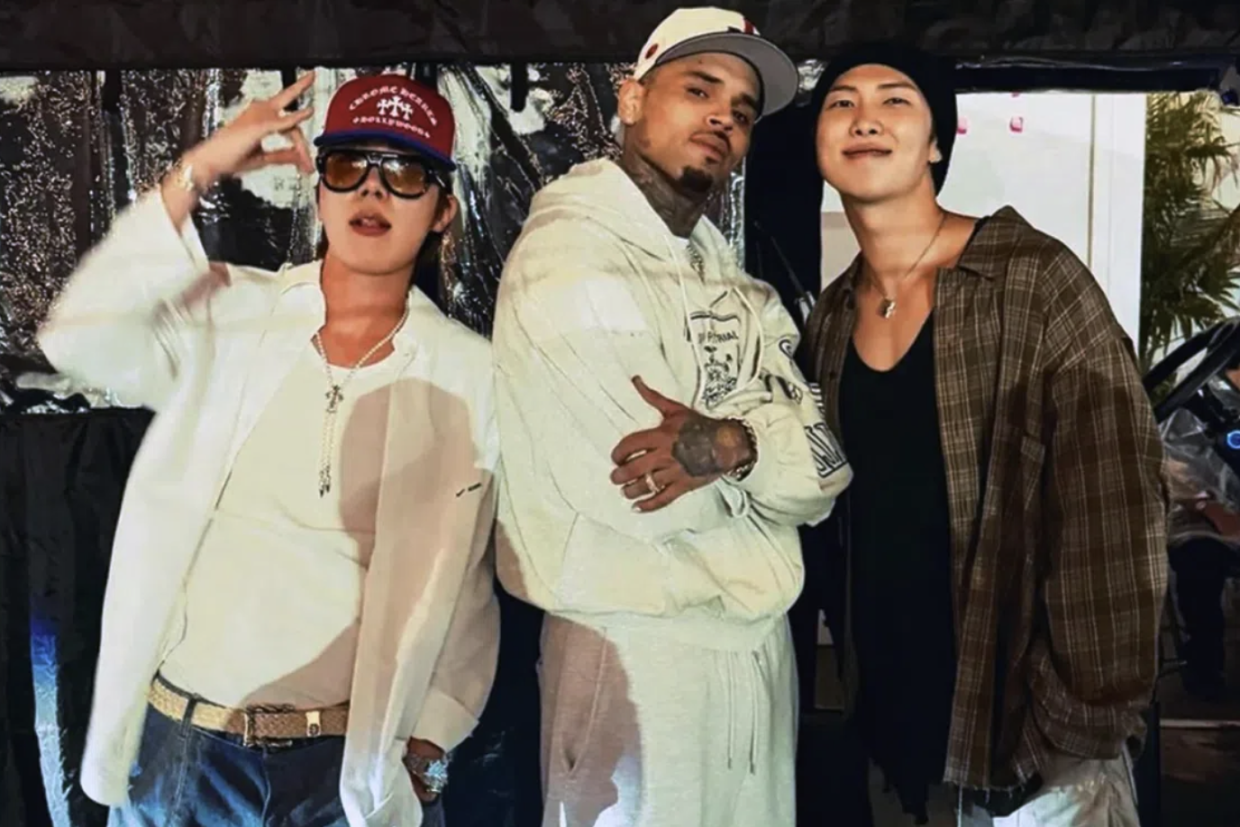
The K-pop phenomenon BTS has become embroiled in controversy after two of its most prominent members were photographed attending a concert by American rapper Chris Brown, igniting a fierce debate about celebrity responsibility and moral accountability within the entertainment industry. The controversy centred on BTS leader Kim Namjoon (RM) and member Jung Hoseok (J-Hope) being pictured with Brown following an August 13 event, a disclosure that prompted swift and divided reactions from the group's massive global fanbase known as Army.
Chris Brown carries a deeply troubled history of legal troubles spanning over a decade. His most notorious incident involved a 2009 conviction for domestic violence against then-girlfriend Rihanna, an offence that has remained a defining element of his public profile worldwide. Yet the troubling episodes did not end there. In 2016, law enforcement arrested Brown after allegations that he had threatened a woman with a gun at his Los Angeles residence, though he was subsequently released on bail. The pattern of concerning behaviour continued, with Brown facing accusations in 2018 of conspiracy in a sexual assault case involving guests at his home, proceedings that ultimately concluded following a settlement agreement.
The legal complications extended internationally when Brown faced detention in Paris in 2019 following a rape allegation, charges that were later dismissed and led to his release. More recently, in 2022, prosecutors investigated allegations that Brown had drugged and assaulted a woman aboard a yacht in Miami, with the accuser expressing genuine fear for her safety during the alleged incident. Additionally, a Los Angeles court determined in a civil matter that Brown bore financial responsibility, awarding USD12.9 million to the sister of his housekeeper following an incident where his dog attacked her. This extensive catalogue of allegations and convictions forms the backdrop against which the BTS members' attendance became controversial.
The online reaction from Army members proved immediate and emotionally charged, with many expressing genuine distress at what they perceived as their idols tacitly endorsing someone with such a documented history of harming women. Several fans articulated that the incident had fundamentally altered their perception of the group, particularly those with personal experiences of sexual violence or domestic abuse. One Army member shared publicly that her own history as a sexual assault survivor made it impossible for her to continue supporting artists who appear to stand alongside accused abusers, declaring emphatically that her identity as a woman superseded her identity as a fan.
However, substantial portions of the BTS fanbase mobilised in defence of the members, arguing that attending a concert should not be interpreted as moral endorsement and suggesting that celebrities retained the same personal freedoms as ordinary people. This perspective prompted sharp counterarguments from critics, who emphasised that the obligation to refuse supporting documented abusers extended far beyond personal freedom, particularly for individuals wielding the extraordinary cultural influence that BTS possesses. Social media users particularly on platform X engaged in lengthy discussions about how celebrity silence and tacit participation in normalising perpetrators of violence perpetuated systems that allowed abuse to continue without consequence.
One particularly incisive critique highlighted the distinction between passive non-involvement and active support, noting that fans defending the artists were simultaneously communicating to their own networks—particularly those who had survived domestic violence or abuse—that such considerations were secondary to celebrity worship. Critics emphasised that the massive platform commanded by BTS meant their choices carried proportionally greater weight in shaping cultural narratives around violence and accountability than those of ordinary concert attendees. The responsibility inherent in influencing millions of young people globally, many of whom look to these artists as role models, formed a central pillar of the argument against the members' attendance.
The incident also drew comparisons to other artists who have taken public stands against working with or supporting individuals with histories of violence. Swedish singer Zara Larsson, who has previously collaborated with BTS, became referenced in discussions when users highlighted a past interview where she explicitly stated that she had blocked numerous abusers on the music streaming platform Spotify, specifically naming Chris Brown as an example of an artist she refused to support. This pointed contrast underscored the selective nature of moral boundaries and raised questions about consistency in how the entertainment industry addresses perpetrators of violence.
The controversy arrives amid an already contentious period for BTS, as the group simultaneously faced criticism from environmental advocates regarding a recent collaborative advertisement with Google's artificial intelligence system Gemini. The joint project, which aired on the Las Vegas Sphere and aimed to showcase technological and artistic possibilities, drew fan objections centred on concerns about the substantial environmental toll associated with artificial intelligence development and deployment. This layered controversy suggests a growing appetite among younger audiences for greater accountability from entertainment figures regarding both personal conduct and broader corporate partnerships that might conflict with stated values around sustainability and social responsibility.
The incident raises broader questions about how entertainment audiences should navigate the gap between appreciating artistic output and addressing the personal conduct and choices of performers. For the Malaysian and Southeast Asian context, where BTS maintains an exceptionally devoted fanbase and where younger audiences significantly influence cultural conversations, the episode demonstrates how decisions made by entertainment figures can generate significant reverberations across the region's social media landscape. The debate ultimately reflects evolving expectations that celebrities leverage their platforms not simply for commercial or entertainment purposes, but as custodians of cultural values—a responsibility that BTS's fanbase clearly expects the group to take seriously.

