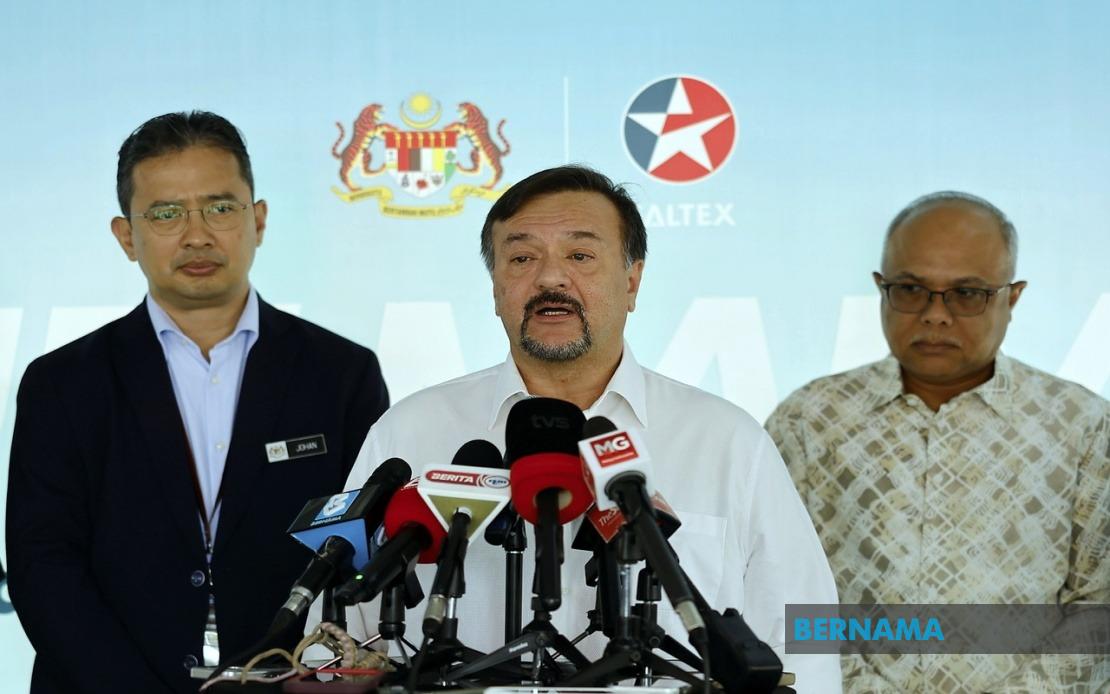
Malaysia's preparation for the 2027 Budget has formally commenced, with the Ministry of Finance and partner agencies conducting nationwide engagement sessions to solicit input from across government structures. Finance Minister II Datuk Seri Amir Hamzah Azizan disclosed the start of this consultation process, which represents the initial phase of what will culminate in the budget's presentation to Parliament in October. The systematic approach undertaken by the government underscores its intention to ensure the upcoming fiscal framework incorporates diverse perspectives from stakeholders within the federal administration.
Amir Hamzah emphasized that the government is proceeding methodically in constructing the 2027 Budget, prioritizing alignment with Malaysia's overarching policy objectives. Rather than rushing through preliminary discussions, the Ministry of Finance is deliberately sequencing its engagement efforts to gather comprehensive insights that will ultimately shape spending priorities and revenue measures. This measured tempo reflects confidence that there is sufficient time before the parliamentary submission deadline to refine proposals based on departmental feedback and policy alignment considerations.
The MADANI Economy framework remains the philosophical cornerstone of the 2027 Budget, according to the Finance Minister. This conceptual architecture, which seeks to simultaneously expand economic opportunity at the highest end of the income spectrum while fortifying support systems and possibilities for those at the bottom, serves as the guiding principle for resource allocation decisions. The dual emphasis on raising the "ceiling" and "floor" of economic activity represents an attempt to balance competitiveness enhancement with inclusive growth—a challenge that has occupied Malaysian policymakers for years as the nation navigates middle-income pathways toward high-income status.
Beyond the MADANI framework itself, several recently crystallized policy initiatives are directing the government's fiscal thinking. The recently articulated 13th Malaysia Plan establishes medium-term developmental priorities, while the National Semiconductor Strategy positions Malaysia within regional and global technology supply chains at a critical juncture of geopolitical realignment. Simultaneously, the National Energy Transition Roadmap reflects the government's commitments to climate-conscious economic transformation. These interlocking policy documents create a complex policy landscape that the 2027 Budget must accommodate and support through targeted fiscal measures.
Amir Hamzah's remarks, made while observing the BUDI Diesel programme at a petrol station in Putrajaya, reflected the government's broader commitment to sustaining movement toward developed-nation status by 2030. This 2030 target has become an increasingly significant benchmark within Malaysian policy discourse, implied in various government statements as the definitive date by which Malaysia should achieve high-income economy status. The budget's design must therefore advance incremental progress toward this objective while managing immediate fiscal constraints and maintaining macroeconomic stability.
Understanding the scale of previous budgets provides context for expectations surrounding the 2027 allocation. Budget 2026 commanded RM419.2 billion in total resources, distributed across RM338.2 billion in operating expenditure—covering recurring government functions and payroll—and RM81 billion dedicated to development spending on infrastructure, capacity-building, and new initiatives. Additionally, the government optimized RM50.8 billion in investments channeled through government-linked investment companies, Federal statutory bodies, and public-private partnership arrangements. This substantial mobilization of capital across multiple channels demonstrates the fiscal complexity involved in contemporary Malaysian budget management.
The engagement sessions now underway represent an administrative necessity in contemporary budgeting. Rather than the Finance Ministry unilaterally determining allocations, the consultation approach allows spending departments to articulate their resource requirements against the backdrop of government priorities. This process generates dialogue between fiscal planners and program administrators, frequently revealing misalignments between stated policy objectives and available resources. For Malaysian readers concerned with budget outcomes, these early sessions establish whether their sectors of interest—whether education, healthcare, infrastructure, or defense—have successfully advocated for adequate provisions.
The timing of these consultations is noteworthy from a governance perspective. By initiating engagement sessions in early July for an October presentation, the government allows approximately three months for synthesis, negotiation, and refinement. This window requires disciplined project management to prevent delays that might compress the parliamentary review period. In Malaysia's bicameral system, sufficient time for legislative examination of the budget is considered important, particularly given the significance of budget debates as occasions for opposition scrutiny and government accountability.
For Malaysian businesses and investors, the budget consultation phase carries indirect significance. The policy direction signaled through budget preparation—whether toward greater subsidies, higher taxation, regulatory changes, or infrastructure investment—begins to crystallize during these engagement sessions. Companies seeking to understand the government's spending intentions and likely policy moves benefit from monitoring official statements about the consultation process. The emphasis on the MADANI Economy framework, for instance, suggests continued government involvement in attempting to balance market mechanisms with targeted support for specific populations or sectors.
The government's insistence that it remains committed to a consistent policy framework suggests that the 2027 Budget will represent evolution rather than revolutionary change. The continuation of the MADANI Economy approach indicates that the foundational philosophical approach to economic management—distinguishing the current government from its immediate predecessor—will persist. This provides a degree of predictability for stakeholders, though the specific distribution of resources within this framework remains to be determined through the ongoing consultation process.
Regional observers watching Malaysia's budgeting process may note the country's attempt to simultaneously pursue competitiveness enhancement and inclusive growth at a time when many Southeast Asian economies face similar tensions. The prominence given to the National Semiconductor Strategy reflects broader regional positioning as technological competition intensifies, particularly in advanced manufacturing. Malaysia's budget choices regarding semiconductors, energy transition, and infrastructure will influence its competitive standing within ASEAN and the wider Indo-Pacific region.
As the consultation sessions progress through coming weeks, the Finance Ministry will synthesize input from across government into a coherent fiscal framework. The challenge lies in accommodating competing departmental priorities within a finite resource envelope while maintaining the government's declared commitment to fiscal responsibility and its vision for national development. The October presentation will reveal how successfully this balancing act has been achieved and what specific priorities the government has elevated within its broader policy architecture.

