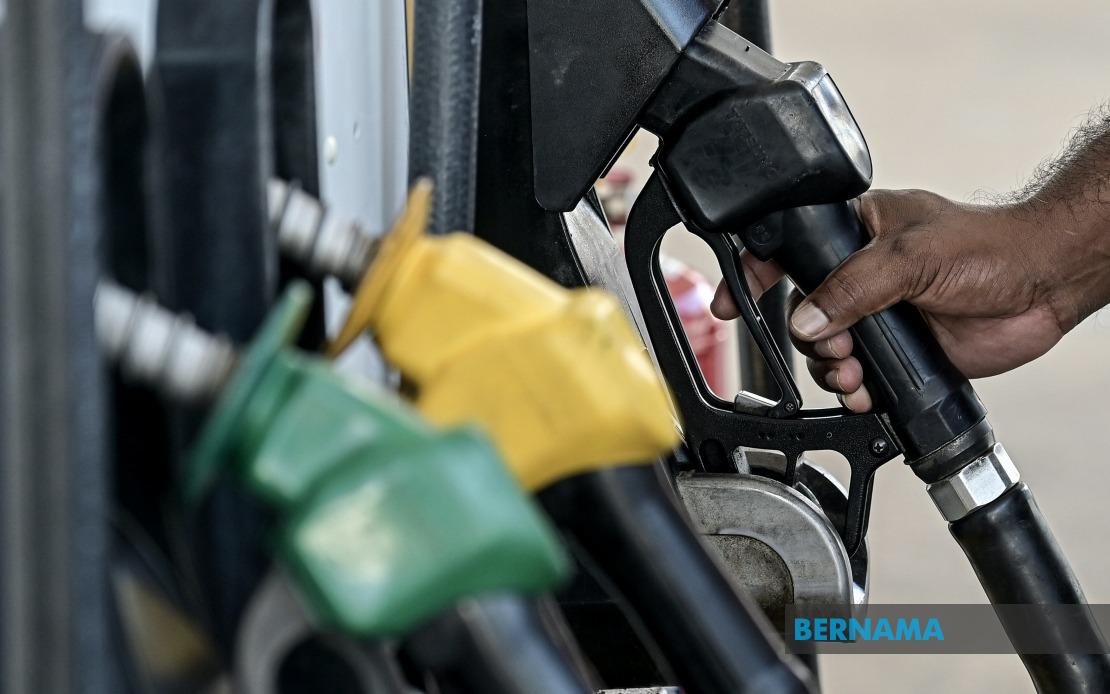
Malaysia's Ministry of Finance has announced the commencement of its restructured BUDI MADANI Diesel initiative starting July 1, a programme designed to provide subsidised fuel access to around 700,000 private vehicle owners nationwide. The expansion represents a significant policy shift, tripling beneficiary numbers from the earlier BUDI Diesel Individu scheme that assisted only 180,000 recipients in Peninsular Malaysia through direct monthly cash transfers. Under the new framework, eligible private diesel vehicle owners in Peninsular Malaysia will number approximately 400,000, while the combined participation from Sabah, Sarawak, and Federal Territory of Labuan is expected to reach 300,000 owners.
The core mechanism of BUDI Diesel establishes a fixed price point of RM2.10 per litre for qualifying private vehicle owners, effectively shielding consumers from volatile market-rate fluctuations. This pricing strategy reflects the government's commitment to managing cost-of-living pressures, particularly affecting households dependent on private diesel vehicles for daily transportation. The subsidised rate operates alongside a parallel initiative for commercial and goods transport operators, who will access fuel at RM2.15 per litre through the Subsidised Diesel Control System (SKDS), benefiting approximately 70,000 commercial and transport vehicles across East Malaysia and Labuan.
A notable expansion under BUDI MADANI extends eligibility to company-registered private pickup trucks and jeeps, provided certain compliance conditions are satisfied. This broadening reflects recognition that small commercial vehicle operators and tradespeople dependent on such vehicles face significant fuel cost burdens. The policy modification acknowledges the diverse economic roles of diesel vehicles beyond traditional private passenger transport, encompassing informal commercial activities and enterprise operations that sustain economic activity throughout Malaysia.
Early implementation data demonstrates operational smoothness during the pilot phase. Between the soft launch on June 27 and noon on June 30, approximately 80,000 transactions were processed in Peninsular Malaysia, representing consumption of roughly 3.2 million litres valued at nearly RM7 million at the initial rate of RM2.15 per litre. Critically, the MyKad verification infrastructure at fuel stations functioned without significant friction, a crucial factor for programme viability given the requirement to authenticate beneficiary eligibility at the point of sale. Neither consumers nor fuel company operators reported material technical difficulties, suggesting the digital infrastructure underpinning the subsidy mechanism has achieved adequate robustness.
The government has introduced an incentive mechanism to facilitate vehicle registration transfers, waiving ownership transfer fees up to RM100 for diesel vehicles for three months commencing July 1. This provision targets individuals who operate vehicles registered under family members' names, a common arrangement in Malaysian households. To support this initiative, Road Transport Department (JPJ) counters will extend weekend operations from July 4 through 26, maintaining 8 am to 5 pm hours at all state offices and UTC branches, reducing administrative friction for affected vehicle owners seeking to regularise registration status.
A sophisticated eligibility transfer mechanism addresses practical household dynamics where registered vehicle owners may not serve as primary drivers. The system permits initial BUDI Diesel beneficiaries to designate subsidy eligibility to immediate family members including spouses, parents, children, or siblings, contingent on official verification procedures. This one-off transfer arrangement enables the original beneficiary quota to transfer to a designated recipient who may then utilise their own MyKad to purchase subsidised fuel, acknowledging that actual vehicle usage patterns within households frequently diverge from registration documentation. Nearly 1,000 such transfer applications had been processed by mid-morning on June 30, indicating substantial uptake of this flexibility mechanism.
Pickup and jeep owners classified as company-registered entities may apply for supplementary allocations of up to 100 litres monthly through the BUDI MADANI portal, subject to programme terms and verification. By 9 am on June 30, more than 22,000 applications had been submitted through this portal, suggesting significant interest among this vehicle category. The portal application approach provides administrative efficiency whilst maintaining documented records of eligibility determinations and quota allocations.
For Malaysian households and businesses, the BUDI Diesel programme represents material cost relief, particularly given diesel fuel's significance in transportation and logistics operations. Private vehicle owners face predictable fuel expenses at RM2.10 per litre regardless of international crude price movements, providing budgeting certainty absent in market-rate environments. This stability assumes particular importance during periods of global energy market volatility, when international oil prices may spike unexpectedly, affecting consumer purchasing power across multiple economic sectors.
The policy framework addresses a fundamental tension in subsidy economics: balancing fiscal sustainability against cost-of-living support. By targeting subsidies to registered vehicle owners verifiable through MyKad systems, the government narrows the beneficiary class compared to universal subsidies, improving programme efficiency whilst concentrating support on identifiable populations. However, the 700,000-person target still represents substantial fiscal commitment, requiring careful budget management to prevent unintended macroeconomic consequences.
Regional dimensions merit consideration, particularly given East Malaysia's separate vehicle population treatment. The 300,000 beneficiaries across Sabah, Sarawak, and Labuan represent substantial coverage of diesel vehicle ownership in these territories, acknowledging geographic and logistical factors that render fuel costs proportionally more significant for East Malaysian residents and businesses. Differential pricing for commercial vehicles (RM2.15 versus RM2.10 for private vehicles) reflects policy judgments about subsidy distribution, though the rationale distinguishing these categories warrants ongoing evaluation.
The programme's success hinges upon several implementation factors beyond technical infrastructure. Fuel station compliance with eligibility verification procedures, consumer awareness of entitlements and quota restrictions, and administrative processing capacity within JPJ and related agencies will collectively determine whether programme objectives materialise. Monitoring mechanisms and real-time transaction data will prove essential for identifying bottlenecks or unanticipated implementation challenges requiring policy adjustment.

