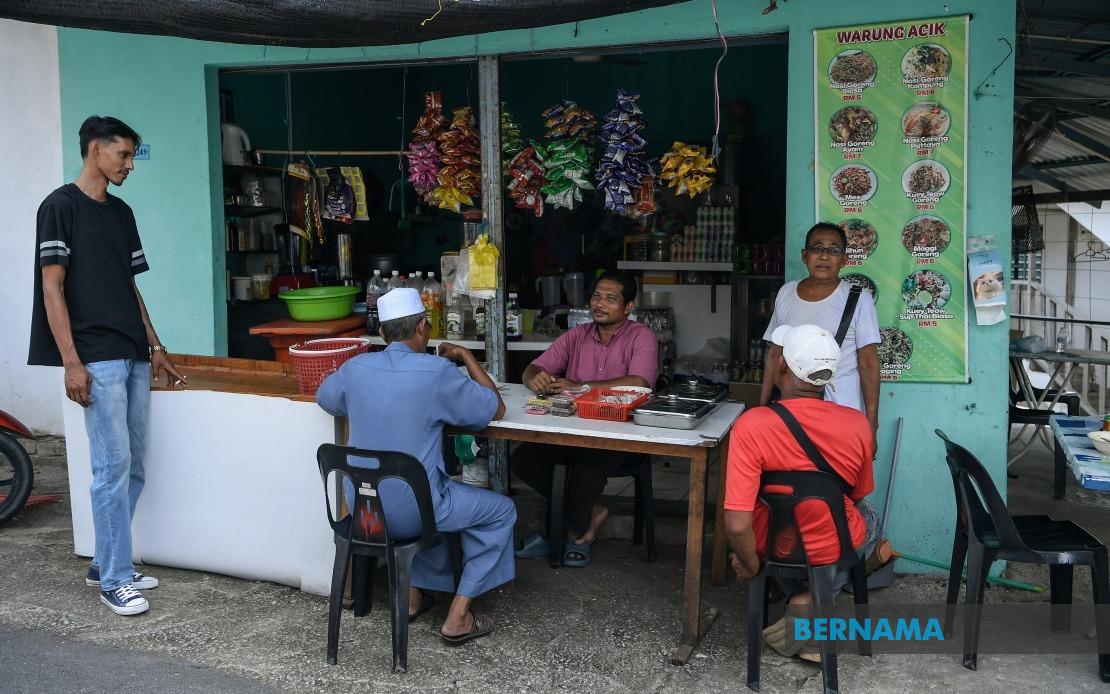
The residents of Bukit Malut in Langkawi are mounting a determined campaign to dispel what they describe as decades of unfounded allegations that have branded their settlement as a haven for Myanmar refugees. Speaking to journalists on August 6, community leaders and long-time inhabitants expressed frustration over a pattern in which their neighbourhood becomes the focal point of public suspicion whenever reports emerge of illegal border crossings in the region. The residents argue that these accusations have created a false and damaging narrative that fails to withstand scrutiny when examined against verifiable facts about their location and composition.
Mohamad Fadzli Abdullah, who chairs the Bukit Malut Neighbourhood Watch, laid out the geographical and operational realities that make his community an unlikely destination for clandestine refugee operations. The settlement sits in close proximity to three major enforcement agencies: the Malaysian Maritime Enforcement Agency, the Royal Malaysian Customs Department, and the Royal Malaysian Navy. The presence of these institutions, with their mandate to monitor maritime activities and intercept illegal border crossings, creates an environment where covert operations would face significant detection risks. Mohamad Fadzli argued that the waters surrounding Bukit Malut are among the most closely watched in the region, making it virtually impossible for refugee landings to occur without triggering immediate official response.
The neighbourhood watch chairman also addressed rumours that the area operates under some form of restricted access or heightened security that marks it as unusual. He stressed that Bukit Malut remains accessible to the general public and that the security presence visible to residents reflects standard government oversight rather than any indication of hidden illicit activity. Instead, he attributed the persistence of negative perceptions to misinformation that circulates without verification, particularly through social media channels where sensational claims often gain traction regardless of factual basis. This disconnect between lived reality and public perception has become a defining feature of Bukit Malut's relationship with the broader Langkawi community.
The demographic composition of Bukit Malut presents a portrait quite different from the image of an uncontrolled settlement harbouring undocumented populations. Approximately 85 percent of residents are fishermen who depend on maritime livelihoods and maintain daily contact with port authorities and enforcement officials. The remainder comprise traders, car rental operators, civil servants, uniformed personnel, and university graduates working across various professional sectors. This economic diversity and the presence of government employees suggests a community deeply integrated into Malaysia's formal structures rather than one operating outside legal frameworks. The fishing industry itself creates inherent accountability, as fishermen require permits, licensing, and regular interaction with maritime authorities.
Hashanah Zakaria, a 42-year-old resident with more than two decades of residence in Bukit Malut, offered a personal perspective on how the stigma extends beyond abstract reputation damage. She described the impact on her child, who attends boarding school in Langkawi and has faced social pressure due to the settlement's negative image. Despite these challenges, Zakaria consciously encourages her child to dismiss the allegations and concentrate on academic pursuits. Her testimony reveals how reputational damage permeates family life and educational experiences, creating psychological barriers that affect young people growing up in the community. She appealed to the public to base judgments on direct observation rather than inherited assumptions, inviting Langkawi residents to visit and assess conditions firsthand.
Abas Salam, at 62 years old and among the earliest settlers of Kampung Tanjung Lembung within Bukit Malut, provided historical perspective spanning more than three decades. He was part of the pioneering generation that literally built the settlement from minimal resources, constructing homes, a mosque, and a religious school through community effort and limited external assistance. Throughout this extended period of residence, Salam asserted he has never encountered any Myanmar refugees living in the area. His account suggests that the narrative of refugee settlement emerged independently of documented reality, instead becoming a form of collective misperception that took on a life of its own. The tangible improvements in living conditions that have occurred over the decades, including better educational opportunities for subsequent generations, stand as testimony to legitimate community development rather than an uncontrolled situation.
Salam expressed particular frustration with the racial and religious dimensions of the stigma, specifically the assumption that residents might be Rohingya rather than Malaysian citizens. By asserting his identity as a Kedah Malay-Muslim and legitimate Malaysian citizen, he highlighted how the allegations carry undertones of exclusion and questions about belonging. The claim that residents are somehow foreign or unintegrated appears to contradict the verifiable fact that the overwhelming majority are Malaysian nationals with generational ties to the region. This identity dimension adds urgency to the residents' campaign, as the stigma implicitly questions their legitimacy within the Malaysian body politic.
The broader context of these allegations reflects regional anxieties about maritime security and irregular migration that have generated considerable public concern throughout Southeast Asia. Langkawi, as a major tourism destination and maritime gateway, understandably attracts official attention regarding border management. However, this legitimate institutional focus appears to have transformed into a form of collective blame directed toward a particular residential community. The residents' position suggests that public discourse about migration and security risks has become conflated with neighbourhood reputation, creating a situation where geographic proximity to maritime enforcement concerns becomes equated with community culpability.
The campaign by Bukit Malut residents represents a broader struggle over narrative authority in contexts where security concerns intersect with social stigmatization. When official agencies maintain active presence in an area to prevent smuggling and illegal border crossings, the visible security apparatus can paradoxically generate suspicion about the communities it is meant to protect. The residents appear to recognize that addressing these perceptions requires not merely denying specific allegations but rather articulating an alternative narrative grounded in everyday reality, demographic data, and the investments in education and community institutions that characterize genuine settlement development. Their push for public acknowledgment and the end to unfounded stigmatization reflects a demand for recognition that security and social well-being are not contradictory but fundamentally compatible objectives.

