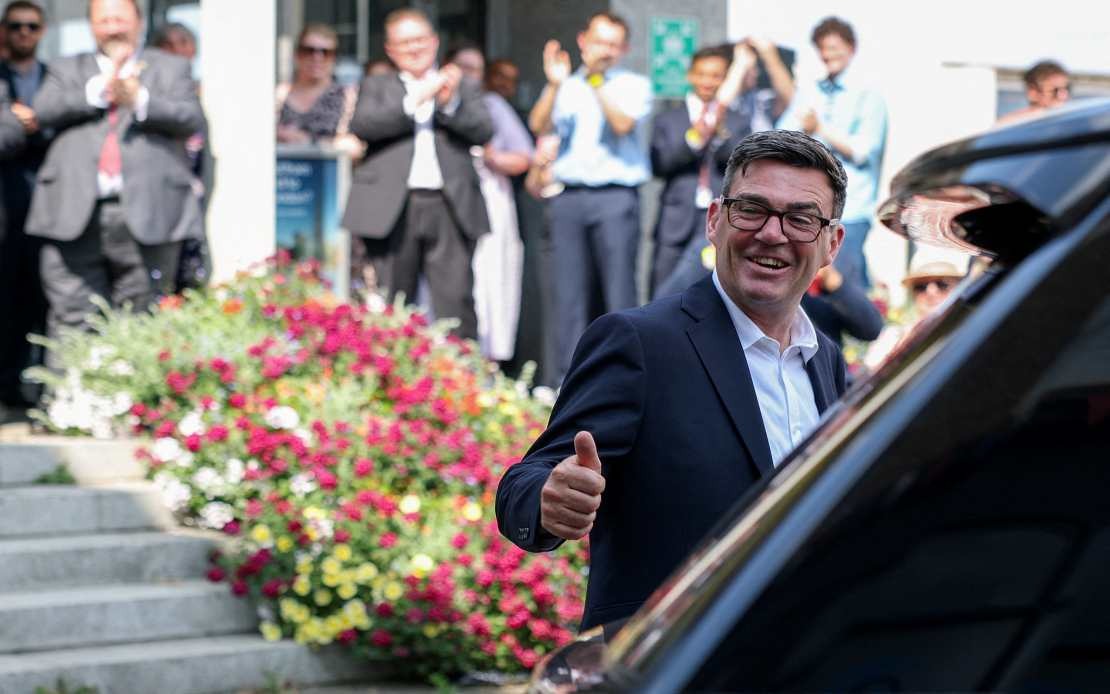
Andy Burnham has assumed the office of prime minister on Monday, stepping into a role that carries the weight of Britain's recent political turbulence. The former mayor of Greater Manchester enters Downing Street with a central message centered on restoring public trust in government and providing what he characterises as "breathing room" for ordinary households grappling with financial pressures. His ascension marks a significant moment for the Labour party and British politics more broadly, coming merely weeks after his return to Parliament and less than a month into his tenure as party leader.
The new prime minister will outline his vision for governance in his inaugural address following a formal meeting with King Charles III. Burnham intends to frame this juncture as one demanding both "reflection and resolution," signalling that Britain must confront its difficulties with candour whilst demonstrating the capacity to overcome them. This framing appears designed to distinguish his approach from recent predecessors who have faced criticism for appearing disconnected from public concerns or lacking clear direction.
One of Burnham's most pointed remarks will acknowledge a uncomfortable reality: the United Kingdom has cycled through seven prime ministers in the past decade alone. This observation serves as both diagnosis and prescription for his government. By explicitly recognising this instability, he signals that his administration will prioritise consistency and deliberate policymaking, contrasting sharply with the perception of chaos that has come to characterise recent British governance. Senior figures within his circle have indicated that he will argue political stability must translate into tangible gains for citizens beyond mere rhetorical promises.
Burnham's trajectory to the premiership has been notably unconventional. He obtained the Labour leadership without facing a contested election, a reflection of both his profile and the party's circumstances following Keir Starmer's departure. This compressed timeline has left observers with limited visibility into the full scope of his agenda, though certain priorities have already crystallised. Devolution of power away from London constitutes a cornerstone of his vision, suggesting he intends to reshape the relationship between central government and regional authorities throughout the kingdom.
Among his most immediate actions will be dismantling Starmer's digital identity programme, a decision reflecting his conviction that resources must be redirected toward alleviating household financial strain. This move signals a strategic recalibration of priorities, with cost-of-living support elevated to paramount importance. During his opening week, Burnham is anticipated to introduce measures designed to improve daily life for British households, potentially encompassing interventions on energy pricing and other essential services.
The question of energy policy has become particularly contentious. Reports suggest the new administration may permit expanded oil and gas extraction in the North Sea, a prospect that has alarmed environmental advocates. These campaigners have reminded the government of Labour's 2024 manifesto commitment against issuing new North Sea drilling licences, contending that expanded extraction would not meaningfully reduce energy bills and would compromise environmental commitments. This tension between cost-of-living relief and climate responsibility will likely define early policy disputes within his administration.
Another pressing challenge awaiting Burnham concerns Thames Water, the troubled utility saddled with approximately £20 billion in debt. The prime minister faces a decision regarding whether temporary nationalisation might stabilise the company and avert a catastrophic collapse into special administration. Having previously signalled openness to greater public control of critical infrastructure, Burnham may view such intervention as consistent with his broader philosophy. Thames Water's creditors have indicated willingness to engage with government ministers on rescue arrangements, creating space for negotiated solutions.
Following his Downing Street address, Burnham will announce his Cabinet selections, an exercise that will illuminate his strategic vision and political calculations. Particular scrutiny will attach to his choice of chancellor, a position widely regarded as the second most powerful office in British government. Two names have circulated prominently: Ed Miliband, currently serving as Energy Secretary, and Shabana Mahmood, holding the Home Secretary portfolio. Each candidate brings distinct strengths and would signal different emphases within the new administration.
For Malaysian and regional observers, Burnham's assumption of office carries implications extending beyond Britain's shores. The United Kingdom remains a significant trading partner and investor in Southeast Asia, with policy decisions in London affecting regional commerce and diplomatic relationships. A government prioritising stability and cost-of-living relief may adopt different trade and foreign investment approaches than its predecessor, potentially reshaping British engagement with ASEAN nations. Additionally, how Burnham navigates tensions between economic growth and environmental responsibility could influence international climate negotiations and regional sustainability initiatives.
The political context within which Burnham operates differs markedly from that confronting his recent predecessors. Having endured multiple rapid leadership changes and associated policy reversals, the British electorate appears to crave consistency and demonstrated competence. Burnham's emphasis on stability rather than revolutionary change may reflect this public sentiment. However, governing under such expectations carries its own risks, as any failure to deliver tangible improvements could quickly erode the confidence he seeks to rebuild.
Burnham's appointment also represents a generational shift in British politics, with implications for how his government engages with the various crises inherited from previous administrations. From crumbling public services to regional inequality to the ongoing consequences of Brexit, the incoming prime minister confronts an daunting agenda. His early decisions regarding energy policy, infrastructure investment, and public service reform will establish whether his promises of "breathing room" and stability translate into substantive improvements in British life, or whether his tenure follows the pattern of accelerated decline that has characterised recent years.

