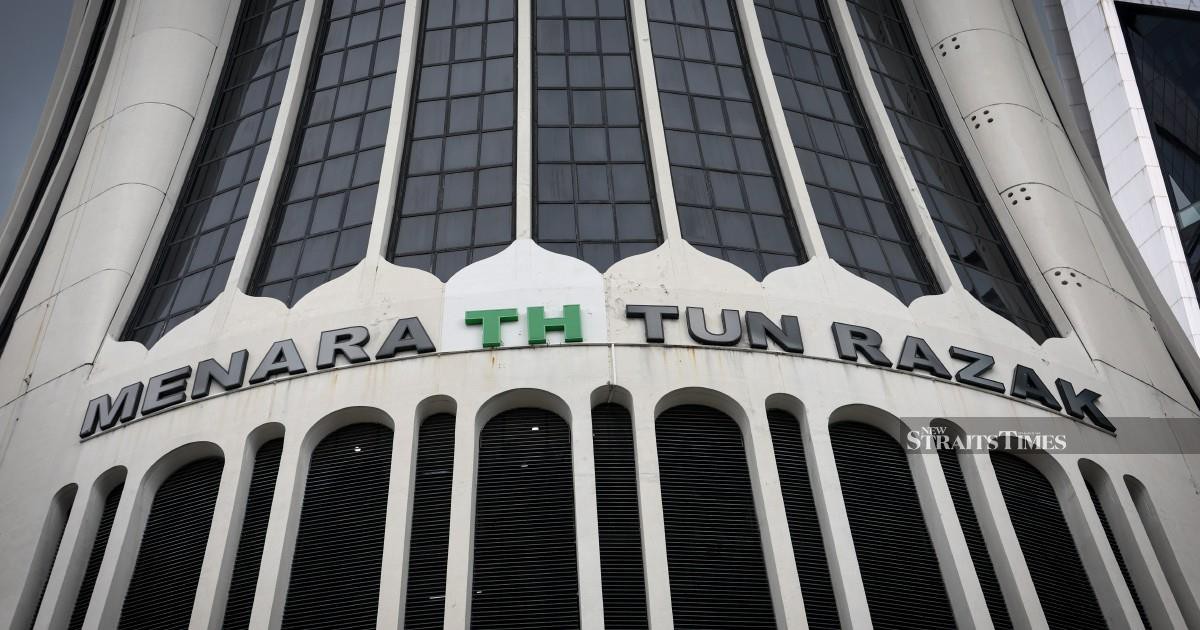
The anti-corruption transparency collective C4 has intensified pressure on Malaysia's audit establishment, demanding a comprehensive review of the National Audit Department's operations following the emergence of a stark RM4.8 billion variance in competing assessments of Lembaga Tabung Haji's financial position. The discrepancy, which became apparent when comparing findings from the Royal Commission of Inquiry's formal report against the audit department's own financial analysis of the pilgrimage fund, has reignited concerns about the effectiveness and independence of Malaysia's primary financial oversight institutions.
This development arrives at a particularly sensitive moment for TH, a government-linked entity that manages savings and investments for Malaysian pilgrims preparing for the Hajj. The fund has faced mounting scrutiny over recent years following revelations about alleged mismanagement and investment losses that substantially eroded accumulated reserves. The presence of such a significant numerical divergence between two authoritative bodies examining the same institution's records suggests fundamental problems in how Malaysia's financial monitoring systems operate and communicate findings to the public and policymakers.
C4's intervention reflects broader institutional anxieties about whether existing audit frameworks possess adequate capacity, resources, and independence to identify and flag financial irregularities before they metastasize into systemic threats. The group's decision to formally petition for departmental review indicates that stakeholders increasingly view this as not merely a technical accounting matter but as evidence of deeper structural weaknesses requiring decisive intervention at the highest governance levels. Such gaps between official audits typically signal either inadequate investigation methodologies, insufficient access to records during examination periods, or coordination failures between investigating bodies operating under different mandates.
The National Audit Department, established to serve as Malaysia's guardian against wasteful and irregular public spending, operates under a framework theoretically designed to guarantee independence from political interference. However, this incident raises uncomfortable questions about whether current institutional architecture adequately supports such independence in practice, or whether the department possesses sufficient investigative clout when examining large, complex entities like TH that operate with partial commercial autonomy while retaining significant government connections and public mandate. The magnitude of the RM4.8 billion variance suggests this is not a minor computational error but rather a substantial gap in financial assessment methodology or information access.
For Malaysian citizens and pilgrims contributing to TH's schemes, such revelations carry direct personal significance. The fund holds billions in accumulated savings belonging to hundreds of thousands of account holders who expect their contributions to be managed with scrupulous care and transparency. When audit processes produce divergent conclusions spanning nearly RM5 billion, confidence in institutional safeguards naturally deteriorates. Contributors have legitimate cause to question whether their money faces adequate protective oversight, whether management decisions are being subjected to rigorous scrutiny, and whether corrective mechanisms exist to address identified problems rapidly.
The implications extend beyond TH itself to encompass Malaysia's broader governance architecture. Substantial audit discrepancies raise systemic concerns about whether similar gaps might exist in other government agencies and linked entities that operate with less public visibility than TH has recently attracted. If two different official investigative mechanisms can produce findings diverging by RM4.8 billion regarding a single entity's financial position, this suggests potential vulnerabilities across the entire constellation of public sector financial oversight. The situation demands urgent clarification about whether the variance reflects differing investigation scopes, timing mismatches in data collection, or fundamental methodological disagreements about appropriate valuation and accounting treatments.
Regional observers monitoring Malaysia's institutional development will likely view this episode as indicative of ongoing tension between formal independence and practical effectiveness in anti-corruption frameworks. Southeast Asia has witnessed multiple contexts where audit institutions operate under theoretically robust legal mandates yet struggle to translate independence into tangible investigative outcomes. The C4 intervention represents civil society attempting to bridge this gap by maintaining pressure on institutions to demonstrate genuine accountability capacity rather than accepting procedural independence at face value.
The watchdog group's call for departmental review necessarily encompasses examination of audit personnel recruitment standards, investigative training and methodology, resource allocation toward complex financial investigations, and institutional capacity for coordinating findings with other investigating bodies. Whether Malaysia's audit apparatus has been adequately resourced to handle sophisticated financial instruments and investment structures that TH employed represents another crucial accountability question. If the department lacks specialists capable of evaluating complex investment portfolios and derivative positions, this would explain investigative gaps and suggest that budget and staffing augmentation must accompany any structural reforms.
Moving forward, the government faces pressure to demonstrate not only that it acknowledges the audit discrepancy but that it is implementing concrete measures ensuring future institutional performance meets public expectations. This might encompass establishing protocols requiring different audit bodies to coordinate their methodologies and share preliminary findings to identify potential gaps before releasing final reports. It could also involve enhancing the National Audit Department's statutory authority to compel document production and management testimony, thereby reducing investigative friction. Additionally, creating explicit mechanisms for public communication when major divergences emerge between official investigations would enhance transparency and citizen confidence.
The broader significance of C4's intervention lies in its signal that Malaysian civil society remains actively engaged in monitoring institutional performance and willing to escalate pressure when concerning patterns emerge. This ongoing accountability pressure, operating independently from formal institutional channels, provides a necessary counterweight to complacency within bureaucratic structures. Whether the government ultimately heeds these recommendations by implementing substantive departmental reforms will substantially determine whether this episode catalyzes genuine institutional strengthening or merely generates temporary political discomfort before systems revert to established patterns.

