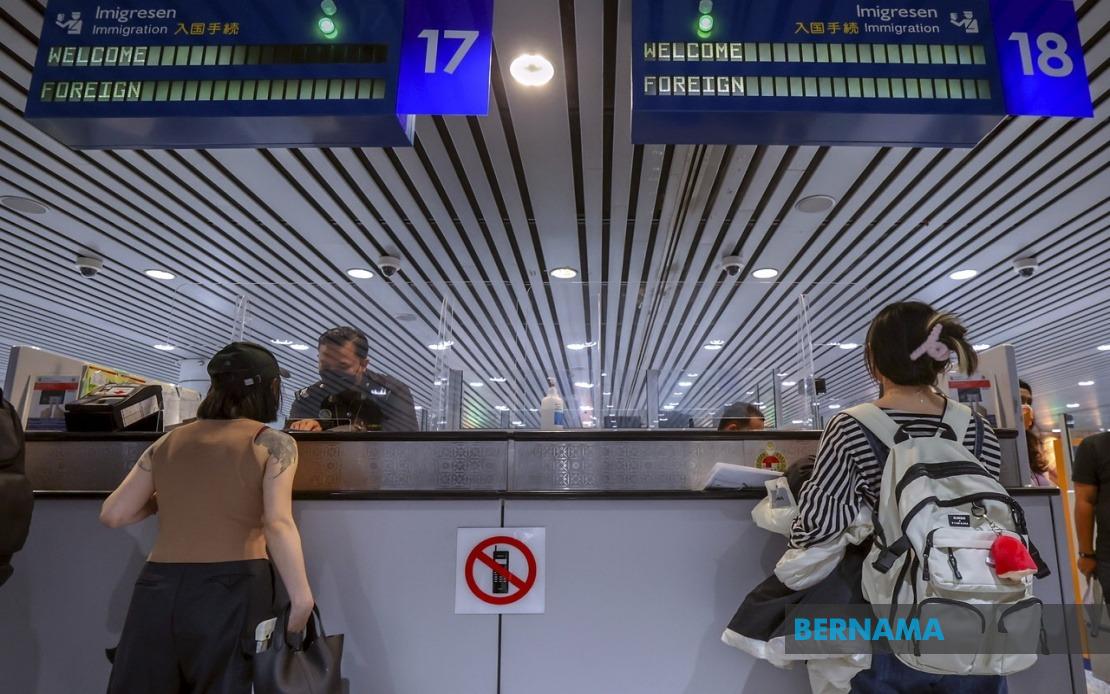
Malaysia's government has moved decisively to overhaul security operations at its primary international gateway and border checkpoints, with the Cabinet approving a sweeping 17-point action plan designed to address persistent vulnerabilities that have allowed contraband and suspicious individuals to slip through official screening. The Home Ministry and Transport Ministry jointly presented the framework at yesterday's Cabinet meeting, signalling heightened concern about the integrity of the nation's frontline defences against trafficking and security threats.
The security overhaul reflects mounting pressure on authorities following a series of embarrassing incidents that have exposed gaps in personnel vetting and cargo control. Most notably, a Malaysian pilot was arrested at Soekarno-Hatta International Airport in Indonesia with approximately 25 kilograms of MDMA, highlighting the alarming reality that aviation workers with access to secure areas and aircraft may themselves pose smuggling risks. This incident, coupled with other high-profile cases involving Malaysians suspected of drug trafficking, has prompted the government to acknowledge systemic weaknesses requiring urgent remedial action across multiple fronts.
The implementation strategy unfolds across three distinct phases, with immediate measures taking precedence. Six priority actions have been identified for rapid deployment to strengthen existing defences before more ambitious systemic changes are rolled out. The approach reflects a pragmatic recognition that comprehensive transformation takes time, but critical vulnerabilities demand instant attention. Authorities will focus first on short-term tactical improvements, followed by medium-term technology and resource investments, and eventually broader long-term institutional reforms.
The first immediate priority centres on enhanced risk-based screening, moving beyond routine procedures to apply intelligence-driven targeting of flights, passengers, crew members and baggage flagged as potentially problematic. This represents a shift toward more sophisticated profiling rather than blanket checks, potentially improving both security effectiveness and passenger flow efficiency. The second measure addresses a critical blind spot: strengthening access controls and vetting procedures for the thousands of airport workers who circulate daily in restricted areas. This includes flight crews, airline personnel, ground handlers, terminal operators, vendors and contractors—categories frequently overlooked despite their proximity to aircraft and cargo.
Drug screening of aviation personnel comprises the third immediate action, requiring enhanced pre-employment checks, periodic testing and random screening of pilots, cabin crew and related staff. Given that the recent Indonesian arrest involved a licensed pilot, this measure directly targets the vulnerability exposed by that case. The remaining three quick-win initiatives involve bolstering physical security presence at terminals, establishing formal channels for inter-agency intelligence sharing, and creating a dedicated technical committee linking the Home Ministry and Transport Ministry to oversee implementation and coordinate responses.
These six measures represent what authorities frame as low-hanging fruit—achievable gains that can be realised within months rather than years. They form the foundation of a broader strategic vision that extends beyond KLIA to reshape how Malaysia manages all international entry points. The government acknowledges that security requirements vary significantly across locations, with implementation tailored to reflect threat assessments and operational characteristics unique to each gateway.
The medium-term phase emphasises technology adoption, asset procurement and workforce development. This reflects recognition that human vigilance alone cannot adequately manage the volume and complexity of international travel flows. Advanced screening equipment, biometric systems, data analytics capabilities and enhanced training programmes will likely feature prominently as the plan matures. Simultaneously, the ministries recognise that isolated improvements at individual airports cannot succeed without systemic integration.
The long-term vision encompasses fundamental transformation of how Malaysia manages border security and information flows. This includes establishing secure channels for real-time intelligence sharing between aviation authorities, customs agencies, immigration services and law enforcement bodies—a coordination challenge that has historically hindered comprehensive border management. Good governance principles are explicitly mentioned, suggesting the government intends to embed accountability mechanisms and oversight procedures ensuring that enhanced security powers are exercised lawfully and proportionately.
For Malaysia's aviation industry and travelling public, the plan carries significant implications. Enhanced crew screening and cargo inspections may initially create minor delays and inconvenience, but authorities emphasise commitment to balancing security imperatives against passenger experience and commercial viability. The government recognises that excessive friction at border processing can deter tourism and international business travel—concerns particularly acute for an economy dependent on regional connectivity and global trade flows. The messaging stresses professional implementation grounded in respect for individual rights and data protection, addressing concerns that security crackdowns sometimes overstep into invasive or discriminatory practices.
The KLIA focus reflects the airport's status as Malaysia's primary international hub and most visible security gateway. Success there will demonstrate capacity to execute the plan comprehensively, building confidence for subsequent rollout to secondary airports, seaports, and land borders. The approach also signals that authorities recognise no single security measure suffices; effective border management requires layered defences, coordinated intelligence, rigorous personnel standards, and technology-enabled screening working in concert.
Government spokesman Datuk Seri Fahmi Fadzil emphasised Cabinet commitment to immediate action, underscoring that security concerns have escalated sufficiently to demand executive attention. The timing reflects broader regional patterns, as Southeast Asian nations grapple with transnational drug trafficking, terrorism financing, and organised crime exploiting transportation networks. Malaysia's willingness to acknowledge weaknesses and implement corrective measures may also signal reassurance to international partners and aviation regulators concerned about security standards at regional hubs.
The plan's success ultimately depends on sustained political commitment beyond the current Cabinet meeting. Implementation of such comprehensive reform requires adequate funding, specialised training, technology acquisition, and inter-agency cooperation that often proves challenging in practice. The designation of six immediate priorities provides measurable milestones against which progress can be assessed, while the longer-term vision offers strategic direction for ongoing enhancement of border security capabilities.

