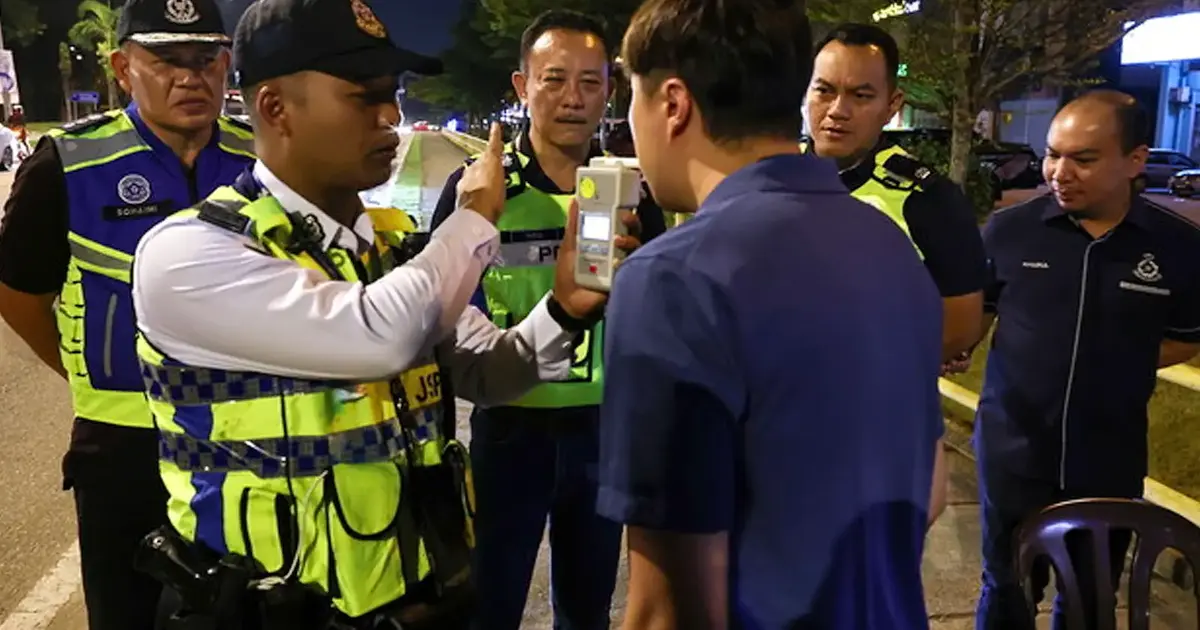
Malaysia's cabinet has given the green light to a new compensation framework designed to provide financial redress to victims of drink driving incidents, marking a significant shift in how the country addresses the aftermath of alcohol-related traffic offences. Transport Minister Loke Siew Fook revealed the cabinet's backing for the initiative, which will layer court-imposed compensation requirements onto the existing battery of criminal penalties that drink drivers already face.
The introduction of this mechanism addresses a longstanding gap in Malaysia's road safety framework. Presently, individuals injured or suffering losses from drink driving incidents must pursue separate civil litigation to recover damages, a process that is often costly, time-consuming, and inaccessible to victims who lack resources or legal knowledge. By embedding compensation obligations directly into court sentences, the new scheme would streamline the path to restitution and ensure that accountability extends beyond fines and jail time to include meaningful financial reparation.
Loke's announcement signals recognition within the government that drink driving remains a persistent public health threat on Malaysian roads. Statistics consistently demonstrate that alcohol-impaired driving contributes disproportionately to fatal and serious injury crashes, yet victims of such incidents frequently bear the economic burden of medical expenses, lost wages, vehicle repairs, and psychological trauma without formal channels for recovery. The compensation mechanism represents a policy attempt to shift that burden back onto those responsible for the harm they cause.
The framework operates by empowering courts to impose compensation orders as part of sentencing decisions in drink driving cases. Judges will have discretion to assess the extent of victim losses—encompassing medical costs, property damage, rehabilitation expenses, and other quantifiable harms—and mandate that convicted offenders make restitution. This approach integrates principles of restorative justice into the criminal process, requiring wrongdoers to acknowledge and repair the material consequences of their actions rather than simply serving time or paying fines to the state.
For Malaysian road users, particularly those in urban areas where drink driving incidents cluster around entertainment and hospitality districts, the policy holds direct implications. Victims who previously faced legal battles to extract compensation from offenders now benefit from a presumptively enforceable court order, backed by the authority of the judiciary and the enforcement mechanisms of the criminal justice system. This substantially improves the likelihood of actual payment and reduces the need for victims to hire attorneys and navigate civil courts independently.
The cabinet's endorsement also reflects international best practice in victim-centred justice frameworks. Many developed nations have adopted similar compensation models, recognising that holding offenders financially accountable serves multiple functions: it provides tangible support to victims during recovery, deters potential offenders by increasing the true cost of drink driving, and reinforces social norms around personal responsibility for harm caused. Malaysia's adoption of this approach positions the country alongside regional and global peers in prioritising victim welfare alongside offender punishment.
Implementing the scheme will require careful coordination between the judiciary, law enforcement, and victim support services. Courts will need clear guidelines on compensation assessment methodologies to ensure consistency and fairness across cases. Transport and justice ministry officials will need to establish protocols for victim identification and notification, ensuring that those harmed have opportunities to present evidence of losses before sentencing. Additionally, enforcement mechanisms must be robust enough to collect compensation payments from offenders, potentially requiring wage garnishment or asset seizure in cases where offenders prove unwilling to pay.
The timing of this initiative aligns with broader efforts to tighten road safety standards in Malaysia. Recent years have seen legislative enhancements around seat belt enforcement, motorcycle safety standards, and commercial vehicle regulations. The compensation mechanism complements these measures by addressing not just the regulatory and criminal dimensions of road safety, but also the victim support dimension that has historically received less policy attention. By ensuring that harm is repaired, the government signals that road safety is not merely an enforcement issue but a matter of social responsibility and victim protection.
Stakeholders in the transport and legal sectors will be observing how this policy transitions from cabinet endorsement to implementation. Questions remain about specific details: whether compensation will apply to all drink driving convictions or only serious cases, how victim losses will be quantified for pain and suffering, and what happens when offenders lack means to pay. These operational details will determine whether the mechanism functions as an effective remedy or becomes a procedural formality.
For Malaysia's insurance and legal communities, the compensation framework may also have downstream effects. If courts routinely impose substantial compensation orders, the interaction between criminal compensation and civil insurance claims will require clarification to prevent double recovery or unfair loss-shifting between parties. Insurers and legal practitioners will need to develop new practices and protocols to address these scenarios.
The cabinet's decision ultimately reflects a maturing approach to road safety policy that extends beyond punishment to encompass victim restoration. As Malaysia continues to grapple with traffic fatality rates that rank among the highest in the region, complementary strategies like this compensation mechanism contribute to a multi-faceted response designed to protect road users, hold offenders accountable, and support those harmed by reckless driving decisions.

