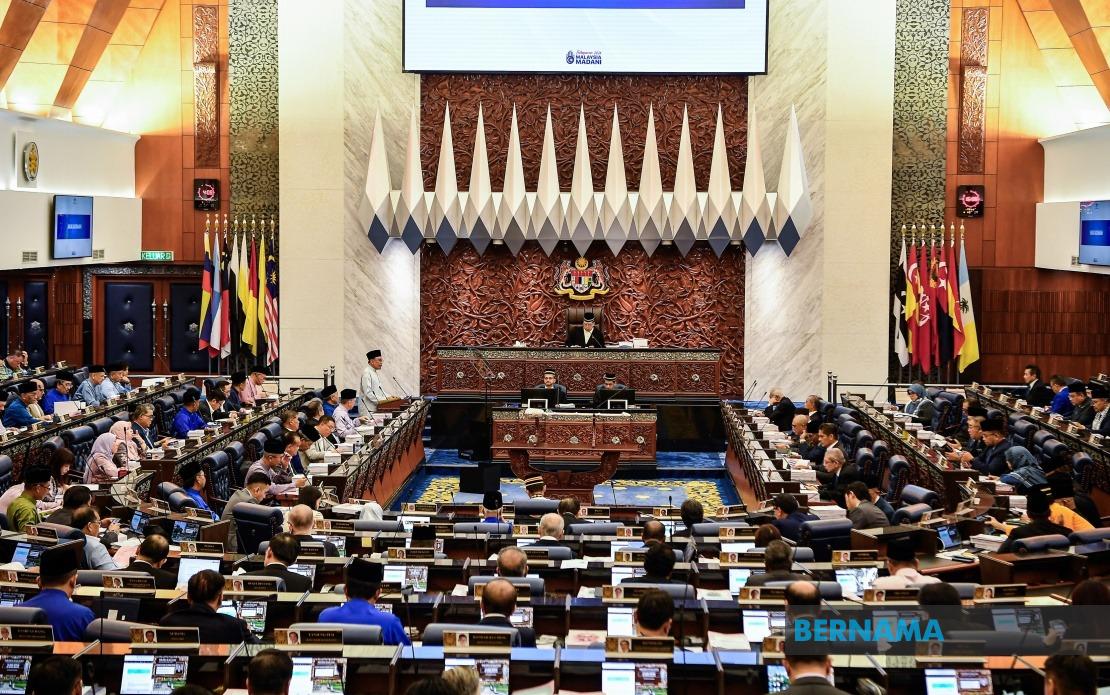
Malaysia's government has taken a significant step toward judicial reform by endorsing constitutional amendments that will grant Parliament meaningful oversight in the appointment of the Public Prosecutor. The Cabinet's decision on July 8 represents a landmark shift in how Malaysia structures its legal and prosecutorial institutions, addressing long-standing concerns about the separation of powers between advisory and enforcement functions within the judiciary. This institutional restructuring, part of the MADANI Government's broader reform programme, seeks to insulate the nation's prosecution system from potential political influence while maintaining proper channels of accountability.
The proposed amendments distinguish between two critical legal roles that have historically been intertwined in Malaysia's governance framework. The Attorney General will continue serving as the King's chief legal adviser and counsel to the Cabinet and individual ministers, a fundamentally advisory position. The Public Prosecutor, by contrast, will exercise independent prosecutorial authority—deciding which cases to pursue, how to present evidence, and when to enter plea agreements. By separating these functions through constitutional change, Malaysia is aligning itself with international best practices observed in comparable democracies where prosecutorial independence is considered essential to rule of law.
Parliament's enhanced role represents the most visible change for the Malaysian public and demonstrates a commitment to democratic oversight of judicial appointments. Under the amended framework, candidate names will be submitted to the Speaker of the Dewan Rakyat for presentation to the full House. A specially constituted Select Committee comprising eleven members drawn equally from government and opposition benches will then scrutinise these candidates thoroughly, examining their qualifications, experience, judicial philosophy, and fitness for the role. This bipartisan approach to vetting is designed to prevent the appointment process from becoming a purely partisan exercise and to build public confidence that the best candidate will be selected regardless of political affiliation.
Following parliamentary scrutiny, the Dewan Rakyat will forward its recommendations to the Judicial and Legal Service Commission, which will advise the Yang di-Pertuan Agong on the final appointment. This multi-layered process creates genuine checks and balances, ensuring that no single body—whether executive, legislative, or judicial—can unilaterally determine who holds this powerful position. The involvement of the JLSC as the penultimate decision-making body preserves the independence of the judicial appointment process while incorporating parliamentary input, striking a careful equilibrium between different branches of government.
The legislative journey leading to this moment reflects substantial deliberation and consensus-building across Malaysia's political spectrum. The Constitution (Amendment) (No. 2) Bill 2026 was first read in the Dewan Rakyat on February 23, with parliamentary approval for detailed committee examination secured by early March. The Special Select Committee on Constitutional Amendments subsequently convened seven sessions to review the proposals, hear from government and opposition lawmakers, consult legal scholars, and engage with civil society organisations. This methodical approach stands in contrast to rushed constitutional changes and demonstrates the government's commitment to achieving broad-based support for such fundamental reforms.
The committee's report, tabled on June 22, incorporated feedback from multiple stakeholders and informed the Cabinet's decision to strengthen protections for prosecutorial independence. The specific amendment to Clause 18 of Article 145A represents a refinement based on expert advice and public input, carefully calibrating the balance between institutional safeguards and accountability mechanisms. Rather than imposing a single vision, the government absorbed various perspectives and adjusted its proposals accordingly—a process that enhances the legitimacy of the final product.
For Malaysian citizens and regional observers, these amendments carry profound implications for the administration of criminal justice. A prosecutor operating with genuine independence from political pressure can pursue cases based on evidence and legal merit rather than executive convenience or partisan calculation. This independence is particularly crucial in high-profile cases involving national security, anti-corruption investigations, and matters touching on government conduct. When the public perceives that prosecutions are driven by politics rather than law, the entire justice system suffers erosion of confidence. Conversely, when prosecutorial decisions command public trust, the legitimacy of convictions and acquittals alike is strengthened.
Southeast Asia has witnessed concerning trends in recent years where prosecutorial systems become tools of political control, with selective prosecution used to eliminate political opponents or protect favoured figures. Malaysia's reform effort positions the country against this trajectory, demonstrating institutional commitment to independence even when political actors might benefit from exploiting prosecutorial power. The bipartisan composition of the scrutiny committee particularly reinforces this commitment, as opposition MPs have every incentive to prevent a government-friendly prosecution service from operating unchecked.
The government's acknowledgement of competing considerations—balancing independence against accountability—reflects sophisticated constitutional thinking. A prosecutor cannot operate entirely beyond scrutiny, as unchecked discretionary power could enable abuse in different ways. The parliamentary role, exercised through a select committee with cross-party representation, provides accountability without interfering in specific cases. This represents a mature approach to institutional design that respects both separation of powers and democratic accountability.
Implementation timelines suggest the amended framework could take effect relatively soon, with parliamentary debate scheduled for the Dewan Rakyat's second meeting in the fifth session of the fifteenth Parliament on July 13. Once parliamentary debate concludes and necessary approvals are obtained, the constitutional amendment will require ratification procedures to enter into force. The civil service, particularly the Attorney General's Chambers and the Prosecution Division, will need to adjust internal structures and procedures to reflect the new institutional separation.
International observers, including democracy advocates and judicial independence organisations, will likely view Malaysia's reform positively as evidence of institutional self-correction and commitment to rule-of-law principles. In an era when democratic backsliding occurs across the globe, a government voluntarily constraining its own power through constitutional amendment demonstrates confidence in democratic institutions. This move also positions Malaysia favourably within ASEAN regarding judicial governance standards and may influence regional peer discussions about best practices in criminal justice administration.
The successful passage of these amendments depends on continued parliamentary support beyond the Cabinet's endorsement. The cross-party committee structure has already facilitated consensus-building, but the full Dewan Rakyat debate will provide opportunity for additional scrutiny and potentially further refinement. The government's willingness to consider stakeholder input—as evidenced by amendments made after committee deliberation—suggests openness to reasonable improvements that emerge during subsequent debate.
Ultimately, the constitutional amendments represent Malaysia's bet that institutional independence, transparency, and democratic accountability reinforce rather than undermine effective prosecution. By creating space for professional prosecutors to pursue cases on legal grounds while subjecting appointments to parliamentary scrutiny, Malaysia is investing in a prosecution system that can command public confidence across partisan divides. This approach reflects understanding that sustainable justice systems rest not merely on formal rules but on genuine institutional independence and democratic legitimacy—foundations that this reform effort systematically strengthens.

