The Malaysian Cabinet has moved decisively to address escalating concerns about airport security, directing the Ministry of Home Affairs and Ministry of Transport to deliver a detailed remedial strategy within a fortnight. Home Minister Datuk Seri Saifuddin Nasution Ismail disclosed the directive during a visit to the Eastern Sabah Security Zone, emphasizing that the government views recent security incidents as damaging to Malaysia's international reputation and requiring immediate intervention.
Saifuddin characterised the accumulating incidents as evidence of breaches in airport security controls, stating that the Cabinet's intervention reflects the seriousness with which national leadership regards these vulnerabilities. The directive signals a coordinated effort across multiple government agencies to identify gaps in existing protocols and implement corrective measures. The two-week timeframe underscores the urgency officials attach to the matter, suggesting that the Cabinet perceives the current situation as potentially undermining confidence in Malaysian aviation infrastructure.
The catalyst for this heightened scrutiny centres on several high-profile cases involving Malaysian nationals. Most prominently, the arrest of a Malaysian pilot following the discovery of approximately 25kg of MDMA at Indonesia's Soekarno-Hatta Airport last week has crystallized concerns about how effectively airport personnel screen passengers and detect contraband. This incident, occurring at a neighbouring hub airport rather than on Malaysian soil, nonetheless highlights the interconnected nature of regional aviation networks and the potential for Malaysian citizens to become liabilities to bilateral relationships if they violate foreign laws whilst passing through international gateways.
Beyond immediate security enhancement, the government is pursuing a parallel diplomatic initiative aimed at reversing negative travel assessments from key nations. Saifuddin revealed that Malaysia has been actively lobbying countries such as Japan and Switzerland to reconsider restrictive travel advisories affecting eastern Sabah's coast. These advisories, typically issued in response to piracy concerns and cross-border security challenges in the maritime zone, have constrained tourism and business activity in the region. The minister indicated that some nations have already responded positively to Malaysian government briefings, amending their guidance based on improved ground-level security conditions.
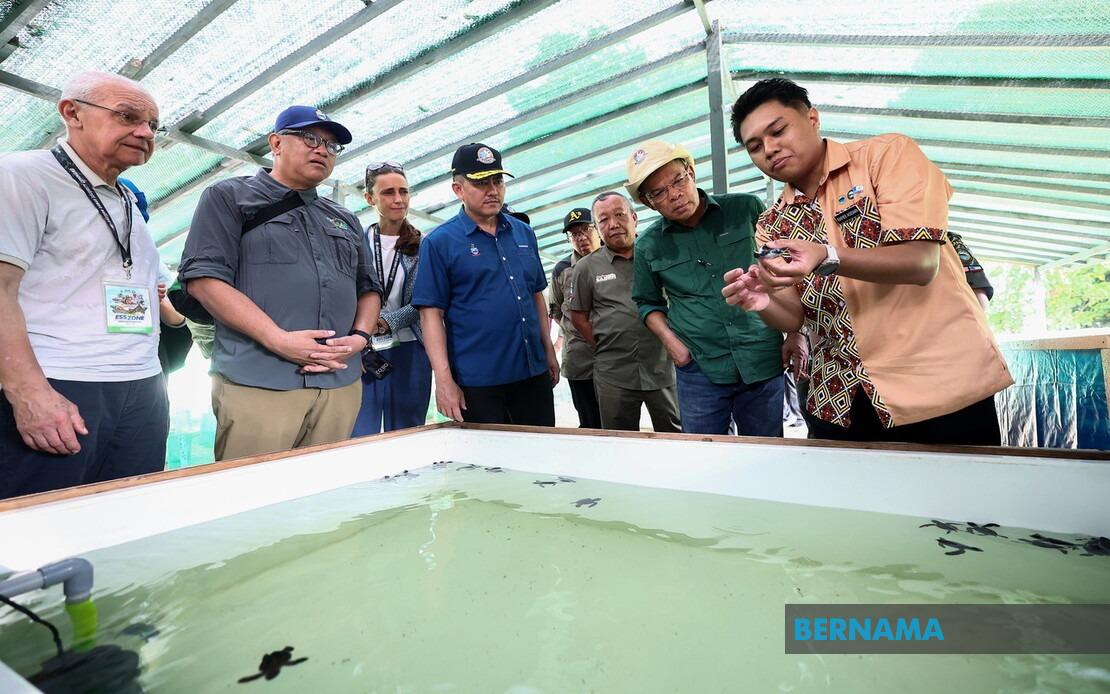
To reinforce this diplomatic campaign, the government organised a familiarisation visit for fourteen diplomatic representatives, bringing them to strategic locations and tourism destinations within the Eastern Sabah Security Zone. This initiative reflects a sophisticated understanding that perception often drives policy: by providing foreign officials with direct observation of improved stability and security measures, Malaysia aims to generate more favourable official narratives that will feed into revised travel advisory decisions. The logic is straightforward—experienced observers on the ground will communicate authentic assessments back to their capitals, potentially influencing governmental stances that have hindered economic development in the region.
The Eastern Sabah Security Command, operating across this strategically vital maritime zone for thirteen years, has accumulated an impressive enforcement record that lends credibility to claims of improved security. Between January and 30 June of this year, ESSCOM conducted nearly 900,000 inspections and arrested 307 individuals. During the same period, enforcement operations yielded 38 seizures valued at RM23.37 million, demonstrating sustained capacity to interdict contraband and illicit activity across land and sea borders. These metrics suggest that existing security apparatus possess both resources and operational competence, though recent airport-related incidents imply that vulnerabilities may lie in specific procedural or coordination gaps rather than systemic resource deficiencies.
The federal government's substantial financial commitment to the Eastern Sabah Security Zone further substantiates its determination to maintain territorial security. Over thirteen years of ESSCOM operations, the government has allocated RM723 million for asset acquisition, operational expenses, and logistical support. This cumulative investment demonstrates that airport and maritime security have been treated as priority national interests warranting consistent funding even amid competing budgetary pressures. The challenge now lies in ensuring that resources directed toward external security perimeters translate into equally robust internal controls at airport facilities themselves.
For Malaysian readers and businesses, the Cabinet's intervention carries meaningful implications. Enhanced airport security measures, once implemented, may temporarily increase passenger processing times and create minor inconveniences at departure and arrival. However, the alternative—reputation damage stemming from security breaches—carries far greater economic and diplomatic costs. International airlines consider security assessments when determining route profitability and scheduling, while multinational corporations evaluating regional hub locations weigh perceived vulnerabilities heavily. Malaysia's competitive position as a Southeast Asian aviation and commerce centre depends on maintaining world-class security standards that instil confidence among international travellers and freight forwarders.
The incidents prompting Cabinet action also highlight evolving drug trafficking patterns that exploit aviation infrastructure. The quantity of MDMA seized at a nearby airport suggests organised networks leveraging Malaysia's strategic location and sophisticated transport networks to move contraband regionally. This reality indicates that airport security enhancements must address not only traditional threats but also the sophisticated logistics operations of criminal syndicates. The comprehensive plan ordered by Cabinet should therefore encompass intelligence-sharing protocols with regional aviation authorities and enhanced screening technologies capable of detecting increasingly concealed contraband.
Looking forward, the success of Malaysia's two-pronged strategy—strengthening internal security while rehabilitating international perceptions—will determine whether the country can sustain its aviation prominence. The diplomatic initiative to relax travel advisories offers near-term benefits for Sabah's tourism economy and regional stability, whilst robust security improvements provide lasting assurance to the international community. The government's demonstrated willingness to confront security vulnerabilities head-on, rather than minimise them, itself constitutes valuable messaging that responsible stewardship of national infrastructure remains a core priority.

