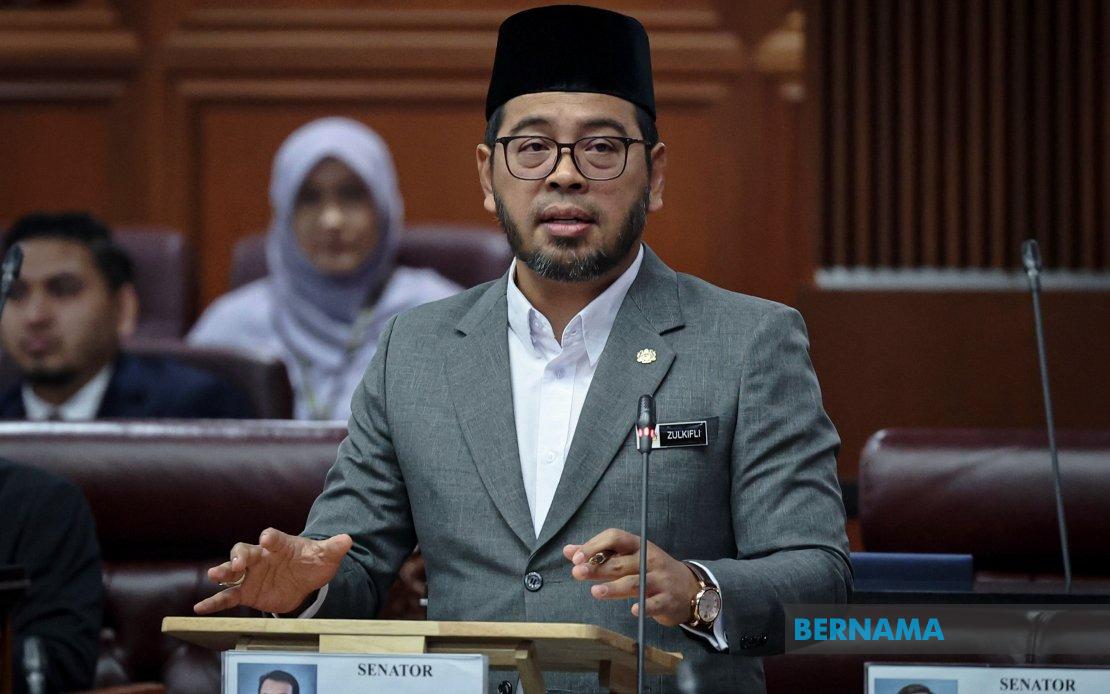
The Cabinet will examine whether to release publicly the final report of the Royal Commission of Inquiry into Tabung Haji (TH) before reaching a conclusion on the matter, Minister in the Prime Minister's Department (Religious Affairs) Dr Zulkifli Hasan announced in the Dewan Negara on July 22. This decision comes amid public confusion and claims regarding the disposal of TH's strategic holdings, prompted by Senator Datuk Seri Prof Dr Noor Inayah Ya'akub's parliamentary question about the circumstances surrounding the fund's restructuring.
Zulkifli moved swiftly to refute narratives suggesting that the former Treasury secretary-general had personally or improperly sold TH's valuable assets. He characterised such accusations as false and misleading, reframing the 2018 transaction as a carefully orchestrated bailout designed to prevent the collapse of a major financial institution that predominantly serves Malaysia's Muslim population. The transaction, he emphasised, represented a rescue operation necessitated by years of mismanagement rather than a commercial disposal of assets.
The backdrop to this restructuring reveals a institution in severe financial distress. When auditors and Bank Negara Malaysia conducted their examinations in 2018, they uncovered an alarming asset-liability gap of RM10.9 billion, signalling that the fund's liabilities substantially exceeded its assets. This discovery coincided with a confidence crisis that prompted approximately RM6 billion in rapid depositor withdrawals over a compressed timeframe, straining TH's liquidity position further. Attempts to secure external financing through standby loans proved unsuccessful, leaving the government with limited options.
The financial stakes extended far beyond TH's immediate troubles. Had the institution been permitted to fail, the Malaysian government would have faced exposure to roughly RM74.5 billion in guaranteed deposit liabilities, an enormous contingent obligation that would have strained federal finances considerably. This reality informed what Zulkifli characterised as a collective Cabinet decision taken in 2018, rather than an action initiated by any single official. The transfer of TH's underperforming and problematic assets to the government-owned special purpose vehicle Urusharta Jamaah Sdn Bhd (UJSB) represented, in his framing, a structured intervention to preserve depositor interests and institutional stability.
The rescue strategy has produced tangible results that Zulkifli presented as evidence of success. TH's deposit base, the most critical indicator of stakeholder confidence, has expanded significantly from RM69.4 billion in 2019 to over RM95.1 billion by mid-2025. This recovery demonstrates that confidence in the institution has been substantially restored following the restructuring. The profit distribution rate, another key metric of institutional health, has climbed from 1.25 per cent in 2018 to 3.5 per cent for 2025, marking the highest return offered to depositors in eight years and indicating improved operational efficiency.
Beyond these headline figures, the minister highlighted benefits accruing to pilgrims and their families. The hajj pilgrimage, one of TH's core functions serving Malaysian Muslims fulfilling their religious obligations, has seen its cost frozen for three consecutive years spanning 2024 through 2026. This achievement is particularly notable given persistent global inflation affecting travel, accommodation, and services. The maintenance of stable pilgrimage costs despite inflationary pressures reflects improved financial management and efficiency gains achieved through the restructuring process.
The proposal to make the RCI report public reflects broader questions about transparency and institutional accountability in Malaysia's governance architecture. The existence of the inquiry itself indicates serious governance concerns warranting independent investigation. However, the decision to release findings to the general public involves considerations about institutional morale, legal implications, and the potential for selective interpretation of technical audit findings by constituencies with different political interests. The Cabinet's deliberative approach suggests recognition that such a disclosure carries weight beyond mere information sharing.
For Malaysian Muslims dependent on TH for hajj financing and investment services, the trajectory outlined by Zulkifli offers reassurance that institutional safeguards have functioned. The return to profitability, expansion of the deposit base, and improved returns on savings accounts represent material improvements in personal financial security. The frozen pilgrimage costs become particularly significant given that hajj represents a major household expense for many families attempting to fulfill the fifth pillar of Islam.
The clarification of the asset transfer mechanism as a Cabinet-level rescue operation rather than an improper sale by individual officials carries important implications for governance transparency and ministerial accountability. By anchoring the decision in collective Cabinet responsibility, Zulkifli simultaneously removes the implication of personal misconduct while ensuring that the broader administration accepts accountability for the restructuring outcomes. This positioning invites scrutiny of the decision-making process itself rather than the probity of individual actors.
The government's willingness to have an independent Royal Commission investigate TH's affairs suggests serious engagement with accountability mechanisms. Whether that investigation's findings are subsequently made public will test the administration's commitment to transparency. The Cabinet's pending decision on report release will be watched carefully by depositors, parliamentary observers, and institutional stakeholders seeking clarity on what occurred during TH's near-collapse and the mechanisms employed to engineer its recovery.

