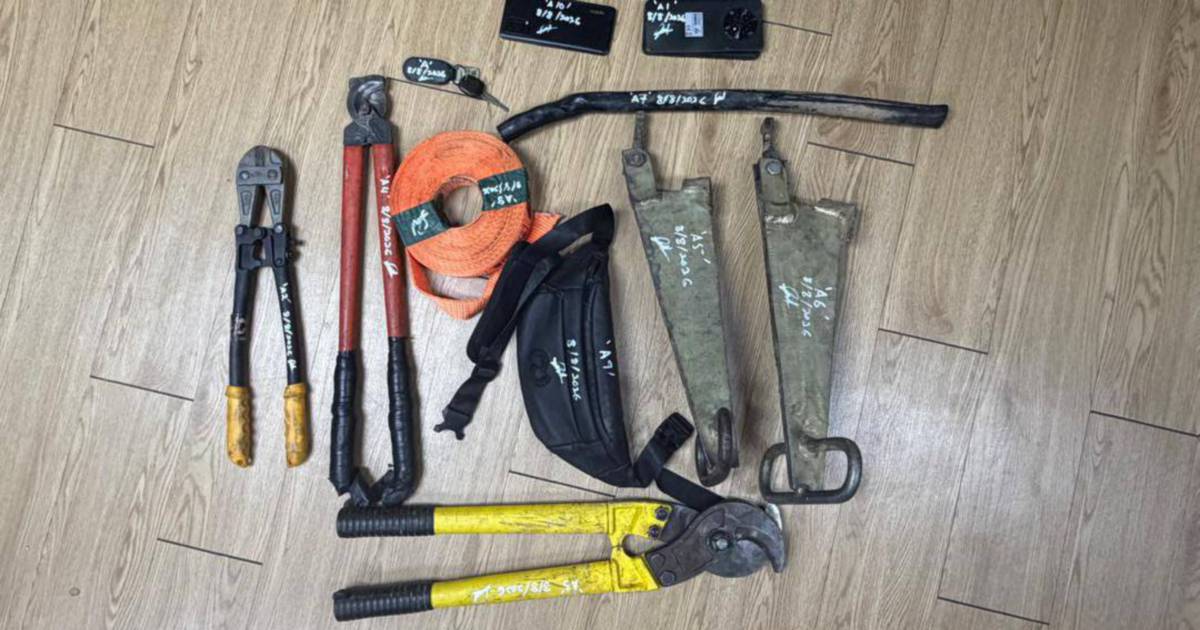
A cable theft suspect led Melaka police on an extended pursuit spanning approximately 50 kilometres before his vehicle collided with a support cable structure in Sungai Chohong, Jasin, in the early hours of today. The incident marks another chapter in the ongoing battle against copper and cable theft across Malaysian towns, a problem that has escalated in recent years as thieves target infrastructure to sell materials for scrap value.
The chase began when officers attempted to intercept the suspect, who was believed to be involved in cable-related thefts in the Melaka region. Rather than comply with police signals, the driver accelerated and evaded authorities, triggering an intensive pursuit through various routes in the state. The extended nature of the operation underscores both the determination of the suspect to escape apprehension and the commitment of police personnel to maintain pursuit despite the risks and distances involved.
The critical moment came when the fleeing vehicle lost control and struck a support cable in the Sungai Chohong area of Jasin. The impact provided the opportunity for police to finally apprehend the suspect at the scene. While details regarding the specific cables allegedly stolen remain under investigation, such thefts have become a significant concern for utility companies and local authorities throughout the country.
Cable and copper theft represents a persistent criminal enterprise affecting telecommunications infrastructure, electrical supply lines, and construction sites. Thieves target these materials because they command reasonable prices in the scrap metal market, with organised syndicates often coordinating multiple theft operations across districts. The relatively low risk of detection when cables are stolen from remote or less-monitored locations makes such crimes attractive to criminal elements operating on tight profit margins.
The impact of such thefts extends beyond immediate financial losses. When cables are removed from critical infrastructure, they can disrupt telecommunications services, compromise electrical safety in residential areas, and delay essential utility repairs. Communities may experience sudden power outages or communication blackouts when major cable theft occurs, creating inconvenience and potential danger for residents and businesses reliant on uninterrupted service.
Melaka, being an industrialised state with significant economic activity, has experienced its share of infrastructure-related crimes. The state's position as a transit hub with multiple highways and logistics routes creates environments where stolen materials can be quickly transported to buyers or scrap dealers. Police operations targeting cable theft suspects therefore require coordination across multiple jurisdictions and rapid response capabilities.
The circumstances of this arrest highlight the challenges law enforcement faces when pursuing fleeing suspects over extended distances. Officers must balance the imperative to apprehend the suspect with public safety considerations on busy roads and highways. The dramatic conclusion, where the vehicle struck infrastructure during escape, demonstrates the unpredictability and danger inherent in high-speed pursuits.
The investigation into this case will likely extend beyond the initial arrest. Police will seek to establish connections between this suspect and other cable theft incidents, potentially uncovering networks of thieves operating within Melaka and neighbouring states. Such investigations often reveal links to organised crime groups that specialise in stripping and selling stolen materials to recycling facilities or black-market dealers.
Utility companies and local authorities have increased efforts to protect critical infrastructure through enhanced security measures, surveillance systems, and reporting mechanisms. However, the determined efforts of determined criminals to circumvent these protections demonstrate that technological and physical security alone cannot fully solve the problem. Community vigilance, rapid police response, and prosecution of offenders remain essential components of a comprehensive strategy.
The arrest of this suspect may provide valuable intelligence for law enforcement agencies seeking to dismantle cable theft networks. Interrogation and forensic analysis of the vehicle could reveal the locations targeted by the suspect, accomplices involved in the operation, and the distribution channels through which stolen materials were sold. Such information can lead to subsequent arrests and the disruption of broader criminal enterprises.
For residents and businesses in Melaka and surrounding areas, this arrest sends a signal that police remain actively engaged in combating infrastructure-related crimes. However, the persistence of such incidents suggests that underlying economic factors driving theft, combined with demand for stolen materials in the scrap market, continue to fuel criminal activity. Addressing the root causes of cable theft will require sustained enforcement efforts, stronger regulations around scrap metal sales, and economic alternatives for individuals tempted by the quick profits of such crimes.

