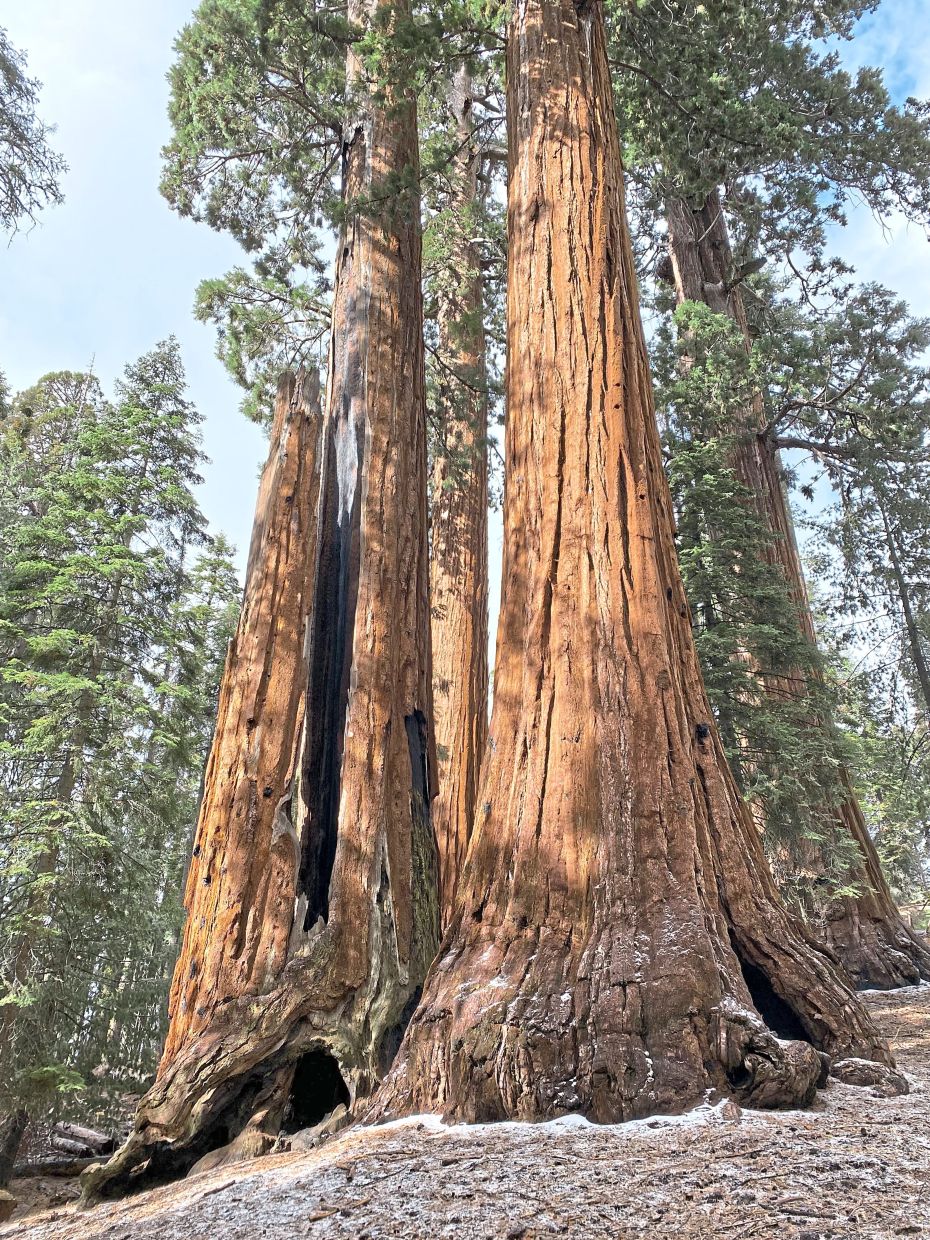
California has mobilised one of its most ambitious environmental restoration efforts in response to a mounting crisis threatening the world's largest living trees. The Giant Sequoia Lands Coalition, a partnership of eight government agencies and scientific institutions, is undertaking large-scale forest management work across the Sierra Nevada to prevent a repeat of the catastrophic wildfires that devastated giant sequoia populations five years ago. The stakes could not be higher: the 2020 and 2021 fire seasons killed approximately 20 per cent of the world's giant sequoia trees, a loss that left environmental managers and scientists deeply shaken about the future of these ancient species that have survived for millennia.
Giant sequoias are nature's superlatives in multiple dimensions. Standing as tall as 91.5 metres and capable of living for 3,000 years, they represent the largest living trees on Earth by volume. Yet despite their massive size and remarkable longevity, they have proven startlingly vulnerable to the unprecedented fire conditions now gripping California's mountains. The 2020 and 2021 blazes demonstrated that even these giants, with their thick spongy bark that evolved to withstand fire, could be overwhelmed by the sheer intensity of modern wildfires. Kevin Conway, state forests programme manager for Cal Fire, California's primary firefighting agency, captured the profound sense of loss and responsibility that gripped the conservation community: the fires forced managers to confront uncomfortable questions about their own role in creating conditions that made catastrophe possible.
The restoration coalition, formally called the Giant Sequoia Lands Coalition, represents a remarkable convergence of disparate institutions united by common purpose. Its eight primary members include Cal Fire, California State Parks, the National Park Service, Tulare County, the Tule River Indian Tribe of California, UC Berkeley, the US Forest Service, and the federal Bureau of Land Management. An additional nine organisations contribute scientific expertise, funding and logistical support. Together, they oversee the 94 remaining groves of giant sequoias scattered across the landscape between Tahoe National Forest and Bakersfield, nearly all of which are preserved on public lands including Yosemite National Park, Sequoia-Kings Canyon National Park, Calaveras Big Trees State Park and Sequoia National Forest.
The restoration work has already produced measurable results. Since commencing operations in 2022, coalition crews have actively managed 44 of the 94 groves, thinning overgrown brush and smaller tree species that have accumulated to dangerous densities. The partnership has planted more than 682,000 giant sequoia seedlings in areas severely damaged by the 2020 and 2021 wildfires, offering hope for regeneration of populations that seemed devastated. Controlled burns have been conducted using techniques indigenous tribes employed for centuries. According to a report released in early May, these efforts have reduced fire danger across 9,409 hectares over the past four years, creating increasingly resilient forest conditions.
Understanding the ecological history that created this crisis requires examining how human fire suppression fundamentally altered giant sequoia ecosystems. The species evolved with fire coursing through its groves every 10 to 20 years, typically ignited by lightning strikes or deliberately set by Indian tribes as part of traditional land management practices. The cones of giant sequoias contain resin that requires fire to melt before seeds can be released—the trees are literally adapted to require flames for reproduction. However, beginning roughly a century ago, organised fire suppression efforts gradually transformed these fire-adapted forests into tinderboxes. As fire crews extinguished every blaze, small trees, brush and dead wood accumulated to unnaturally dense levels, creating a structural powder keg.
Kristen Shive, a fuels and forest specialist with the University of California Cooperative Extension Program at UC Berkeley, describes the shock of discovering ancient trees killed not by their evolved enemy fire, but by human mismanagement. When modern wildfires do enter these overgrown groves, they burn with intensity and heat far exceeding anything the species experienced historically. The spongy bark that once provided reliable protection—bark that can grow to about 60 centimetres thick and acts like insulation—proves inadequate against flames turbocharged by decades of accumulated fuel. The surveys conducted after 2020 and 2021 found trees that had survived millennia succumbing to conditions created not by nature, but by a century of well-intentioned but ultimately counterproductive fire suppression policies.
Climate change amplifies this vulnerability. California's droughts, particularly the severe dry periods of 2012 to 2016 and 2020 to 2022, have killed millions of smaller trees across the Sierra Nevada, creating additional fuel. Hotter temperatures dry out soils and vegetation to dangerous levels, intensifying the severity of wildfires when they occur. These stressors interact synergistically, creating conditions that dwarf anything the region experienced during the pre-suppression era when fires burned frequently but at manageable intensities.
The coalition's response strategy involves removing the accumulated fuel that feeds catastrophic fires. Crews have begun systematically thinning white fir, red fir, incense cedar and other overgrown smaller species that surround the giant sequoias in dense thickets. Large sugar pines and ponderosa pines killed during recent droughts are removed with chainsaws and heavy equipment. Much of this debris is piled and burned during controlled burns conducted outside fire season, safely removing fuel while mimicking the natural fire regimes these ecosystems require. Some larger timber from private lands or Cal Fire demonstration forests is sold to lumber companies, offsetting the substantial costs of thinning operations.
This approach addresses multiple objectives simultaneously. By removing competitive smaller trees, sunlight penetrates the forest canopy to levels that allow giant sequoia seedlings to establish and grow. The thinned forest structure causes wildfires to burn less intensely and less hot, protecting the remaining ancient trees. Conway emphasises that the goal is restoring forests to their natural condition—more open and sparse than the overgrown thickets that developed under fire suppression regimes—making them resistant to drought, fire and disease simultaneously. The strategy represents a fundamental philosophical shift from a century of attempting to exclude fire entirely, returning instead to fire-adapted management practices that sustained these ecosystems for thousands of years.
Steve Mietz, former superintendent of Redwood National Park and recently appointed president of Save the Redwoods League, frames the restoration challenge as a race against time. He emphasises that catastrophic fires will inevitably return to California's mountains, making prevention work urgent. Yet his tone is notably optimistic: the scientific community possesses genuine solutions and understands what must be done. This is not a hopeless situation but rather a race to implement known solutions before the next fire season arrives. The coalition's work in 2022 and early 2023 demonstrates that such ambitions are achievable with sufficient institutional commitment and funding.
Not all stakeholders have embraced the restoration approach without question. In 2022, the Earth Island Institute sued the National Park Service seeking to halt fuel reduction projects planned for Merced Grove in Yosemite, arguing that insufficient environmental analysis had been conducted. However, a federal district court dismissed the case, and in 2023, the Ninth Circuit US Court of Appeals upheld that decision. The legal clarity enables the coalition to accelerate its work. Merced Grove has faced threats from six separate wildfires over the past 15 years, making it a priority for restoration. Thinning and controlled burn operations commenced last year and will continue through the current season.
The giant sequoia restoration effort carries significance extending beyond California's borders. For Southeast Asian observers watching global climate change and environmental management challenges, the sequoia project illustrates both the dangers of suppressing natural disturbance regimes and the possibility of large-scale ecological restoration involving genuine multi-stakeholder collaboration. The coalition model—bringing together government agencies, scientific institutions, indigenous communities and environmental groups—offers a template for addressing conservation crises that require coordinated action across jurisdictional boundaries. As California demonstrates how to restore fire-adapted ecosystems degraded by a century of well-intentioned mismanagement, other regions facing similar challenges might draw valuable lessons about the importance of understanding evolutionary history when designing modern environmental policy.

