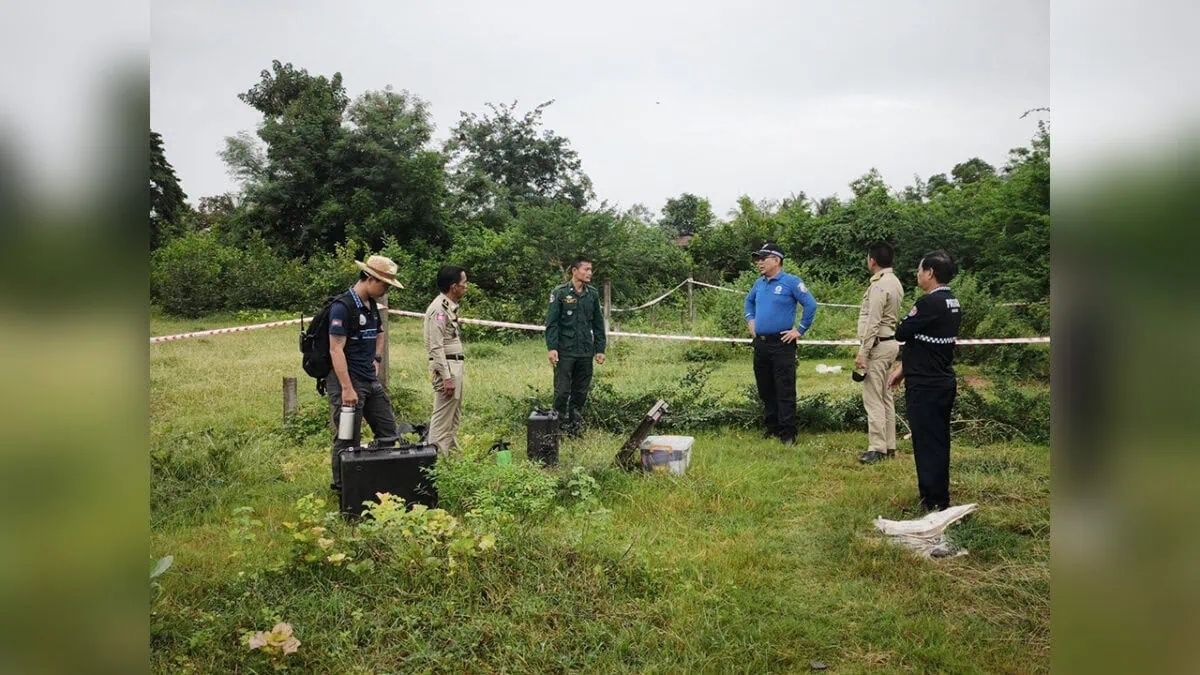
Cambodia's law enforcement apparatus has mobilized to investigate the deaths of two children discovered in Banteay Meanchey province, marking a significant criminal inquiry that has drawn the involvement of multiple state agencies and international child protection organizations. The discoveries on July 28 triggered parallel investigations that authorities have characterized as unrelated but equally serious matters requiring full forensic and criminal examination.
The first body recovered that morning was a 15-month-old child discovered in a pond within Mongkol Borei district around 8am. Simultaneously in Teuk Thla commune, authorities located the remains of a five-year-old who had been reported missing three days earlier on July 25. The near-concurrent discoveries in different locations within the same province prompted rapid mobilization of investigative resources, with the Cambodian National Police coordinating with the Child Protection Unit to examine both incidents independently while maintaining unified oversight standards.
The involvement of multiple institutional actors reflects Cambodia's structured approach to serious crimes affecting minors. The homicide investigation team from the Child Protection Unit has partnered with provincial police authorities and the Minister of Interior's Department of Technical and Scientific Police to conduct forensic analysis and preliminary investigative work. This multi-agency coordination suggests both cases are receiving high-priority status within Cambodia's security framework, with specialized units deployed specifically because of the victims' ages and the presumed criminal circumstances.
Forensic examinations and initial investigative protocols have led authorities to formally classify both deaths as child homicides. While the cases are treated as separate matters unrelated to one another, the official determination that both constitute homicides rather than accidents or unexplained deaths represents a critical juncture in the investigation process. Such classifications typically trigger enhanced investigative protocols, expanded resource allocation, and heightened prosecutorial attention within Cambodia's criminal justice system.
Child Protection Unit director James McCabe issued a statement emphasizing the commitment of Cambodian authorities and partner organizations to conduct comprehensive investigations. McCabe stated that investigators are deploying all necessary resources and capabilities to pursue both homicide cases to completion, signaling that the inquiries will not be hastily concluded or deprioritized despite potential resource constraints or competing demands on law enforcement.
The director further indicated that anyone determined to have involvement in either child's death would face prosecution through Cambodia's courts. This public commitment carries significant implications for investigative methodology and prosecutorial strategy, effectively announcing that authorities will pursue criminal accountability through the formal judicial system rather than through alternative mechanisms or unofficial channels that sometimes characterize investigations in the region.
For Malaysian and Southeast Asian observers, these investigations underscore the ongoing challenges that Cambodia and neighboring countries confront regarding child safety and protection infrastructure. The region has experienced increasing scrutiny regarding child trafficking, exploitation, and violence, with international organizations and donor nations consistently identifying gaps in protective capacity and investigative capability. Cambodia's mobilization of specialized units and public commitment to thorough investigations may reflect both genuine institutional commitment and awareness of international attention to child welfare issues.
The decision to involve the Child Protection Unit alongside national police suggests Cambodia recognizes that child homicide investigations require specialized expertise distinct from conventional criminal investigation. This institutional approach mirrors international best practices but also highlights the reality that many developing nations in Southeast Asia struggle to maintain specialized capacity for complex cases involving vulnerable populations. The partnership model deployed here may indicate efforts to strengthen such capacity through international collaboration.
Authorities have restricted disclosure of operational details pending investigation completion, a standard protocol that protects investigative integrity and avoids prejudicing potential prosecutions. However, the decision to issue public statements and involve international figures like McCabe in official communications demonstrates that Cambodian authorities are balancing operational security with transparency regarding serious crimes affecting children—a practice increasingly expected by regional and international stakeholders monitoring rule of law development.
The cases carry broader implications for child protection discourse in Southeast Asia, where networks of exploitation and violence sometimes operate across borders and involve multiple jurisdictions. If either investigation reveals transnational dimensions or reveals patterns consistent with trafficking or coordinated abuse, the implications would extend beyond Cambodia to affect regional policy and enforcement coordination. Conversely, if investigations establish localized circumstances involving known individuals, the cases will provide data points for understanding violence within family and community contexts across the region.
For families in Cambodia and the broader region, these investigations represent efforts by state institutions to pursue justice for victims who cannot advocate for themselves. The reaffirmation of police commitment to securing justice, while necessarily ceremonial in character, also signals institutional recognition that child homicide cases carry moral weight and investigative priority. Whether such commitments translate into resolution, prosecution, and conviction will ultimately determine the effectiveness of Cambodia's response and the confidence that regional populations place in state institutions responsible for protecting vulnerable children.

