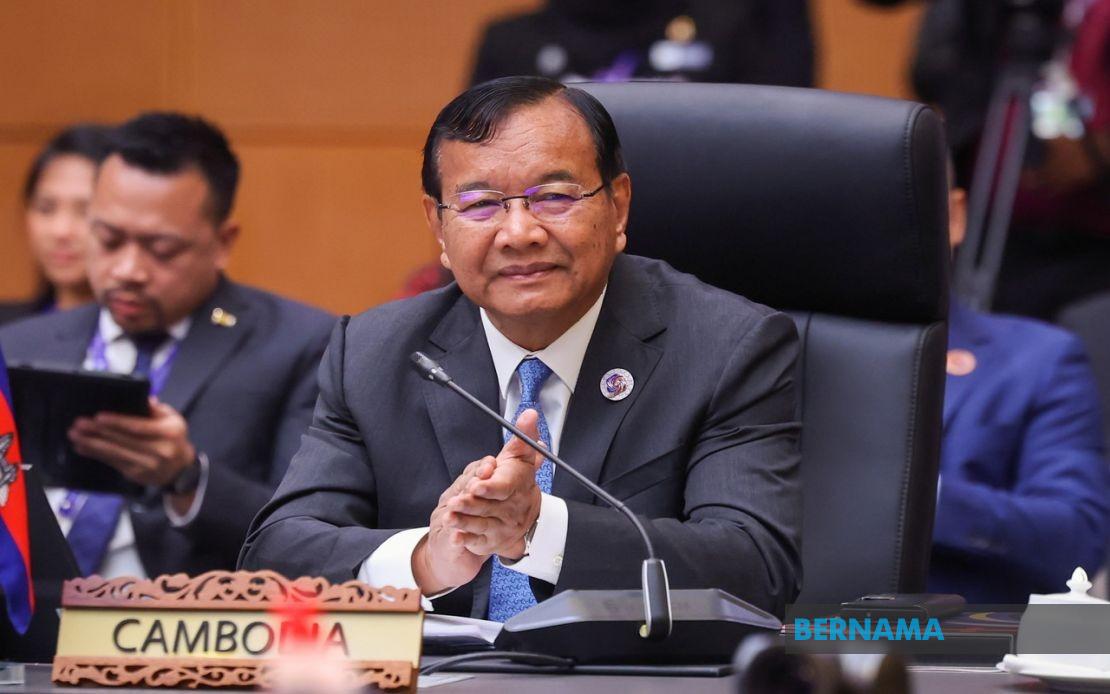
Cambodian Deputy Prime Minister and Foreign Minister Prak Sokhonn touched down in Malaysia on August 3, beginning a two-day official visit that underscores the deepening diplomatic engagement between the two Southeast Asian nations. His arrival at Kuala Lumpur International Airport Terminal 1 in the afternoon was marked by a formal reception, with Cambodian Ambassador to Malaysia Ouk Chandara and Malaysian Government chief ceremony officer Datuk Rozainor Ramli present to greet the visiting delegation. The timing of this visit reflects a concerted effort by both governments to sustain the momentum of their strategic partnership during a period of significant regional transitions.
The agenda for Sokhonn's stay encompasses several high-level engagements designed to crystallise Malaysia-Cambodia cooperation across multiple domains. Before diving into substantive bilateral matters, protocol demands that the visiting dignitary first calls upon Prime Minister Datuk Seri Anwar Ibrahim, a customary courtesy that nevertheless signals the importance both capitals place on this relationship. This preliminary engagement sets the diplomatic tone for subsequent discussions and allows for an exchange of views on broader regional and bilateral concerns at the highest level of government.
The centrepiece of Sokhonn's visit is his participation in the 3rd Meeting of the Cambodia-Malaysia Joint Commission for Bilateral Cooperation, scheduled to convene in Kuala Lumpur on the second day. This institutional mechanism serves as the primary framework through which both nations assess progress on their bilateral agenda. During this session, officials will conduct a comprehensive review of implementation outcomes related to minutes and agreements concluded in the second JCBC meeting, essentially taking stock of what has been accomplished and identifying areas where momentum has stalled or requires acceleration. Such structured review processes are essential for maintaining accountability and ensuring that high-level political commitments translate into tangible results across sectors.
Parallel to the joint commission proceedings, Sokhonn will hold bilateral discussions with Malaysian Foreign Minister Datuk Seri Mohamad Hasan. These one-on-one talks typically provide space for more candid exchanges on sensitive or strategic matters that might not be suitable for the broader commission setting. Given Sokhonn's dual portfolio as both Deputy Prime Minister and Foreign Minister, these conversations carry considerable weight and suggest that Malaysia intends to engage Cambodia at the most senior diplomatic levels on issues of mutual concern.
The economic relationship between the two countries has demonstrated robust expansion, particularly in recent years. Malaysia and Cambodia achieved bilateral trade growth of 27.4 per cent year-on-year in 2025, with total trade reaching RM5 billion, equivalent to approximately USD1.17 billion. This trajectory reflects increasing commercial integration and the capacity of Malaysian and Cambodian businesses to identify mutually beneficial opportunities. The figure is particularly noteworthy given regional economic headwinds and the competitive dynamics of Southeast Asian trade.
Malaysia's investment footprint in Cambodia further illustrates the depth of economic interdependence. As of 2024, Malaysia's cumulative foreign direct investment in Cambodia totalled USD3.20 billion, channelled through 162 registered projects spanning various sectors including manufacturing, services, and infrastructure development. This investment volume positions Malaysia as Cambodia's third-largest foreign investor, a status that reflects both historical commercial ties and confidence in Cambodia's economic trajectory. For Malaysian enterprises, Cambodia represents an increasingly important production base and market, particularly as regional supply chains reconfigure.
The significance of Malaysia's third-place ranking among Cambodia's foreign investors merits contextualisation within the broader regional investment landscape. While larger investors from China, Vietnam, and Thailand dominate Cambodia's inbound investment flows, Malaysia's sustained commitment through 162 separate projects indicates a diversified engagement strategy rather than concentration in a single sector or enterprise. This diversification provides resilience to the bilateral economic relationship and creates multiple constituencies within each country with vested interests in maintaining stable ties.
For Malaysia, Cambodia represents both an investment destination and a critical neighbour whose stability and prosperity directly affect regional peace and prosperity. The country's geographic proximity to Malaysia's eastern flank, combined with shared maritime boundaries and cultural linkages, makes Cambodia's trajectory a matter of enduring Malaysian strategic interest. Maintaining robust bilateral relations serves Malaysian interests in regional stability, economic opportunity, and diplomatic influence within ASEAN frameworks.
The visit also occurs within a broader context of Southeast Asian diplomatic realignment. With regional powers adjusting to shifting global power dynamics, ASEAN members are intensifying bilateral relationships to strengthen their collective position and individual agency. Malaysia's engagement with Cambodia through high-level visits and institutional mechanisms like the JCBC reflects this strategic imperative, demonstrating commitment to deepening ties with fellow members while managing regional relationships thoughtfully.
For Cambodia, Malaysia represents an important economic partner and a gateway to opportunities within Malaysia's developed economy and its connections to global markets. The 27.4 per cent trade growth achieved in 2025 suggests that Cambodian businesses are increasingly able to compete in Malaysian markets and that Malaysian investors see genuine opportunities for profit and growth across Cambodia's economy. This mutually beneficial dynamic provides a foundation for sustained engagement even as both nations navigate domestic political and economic challenges.
The outcomes of Sokhonn's visit, particularly the conclusions of the JCBC meeting, will likely address trade facilitation, investment promotion, tourism development, and regional security cooperation. Infrastructure connectivity, labour mobility, and people-to-people exchanges typically feature prominently in bilateral agendas between developed and developing ASEAN members, and Malaysia-Cambodia discussions are unlikely to diverge from this pattern. The formal minutes and agreed statements emerging from these meetings will provide signals regarding priorities each side intends to emphasise in the coming period.
Looking ahead, the successful execution of this visit and productive outcomes from the joint commission meeting will contribute to consolidating Malaysia-Cambodia ties at a moment when regional relationships require consistent nurturing. Both nations face domestic pressures and external uncertainties; deepened bilateral cooperation on economic and security matters provides valuable insurance against disruption. The visit thus represents more than ceremonial diplomacy—it reflects substantive strategic calculations by both governments regarding the value of stable, prosperous bilateral relations in an increasingly complex regional environment.

