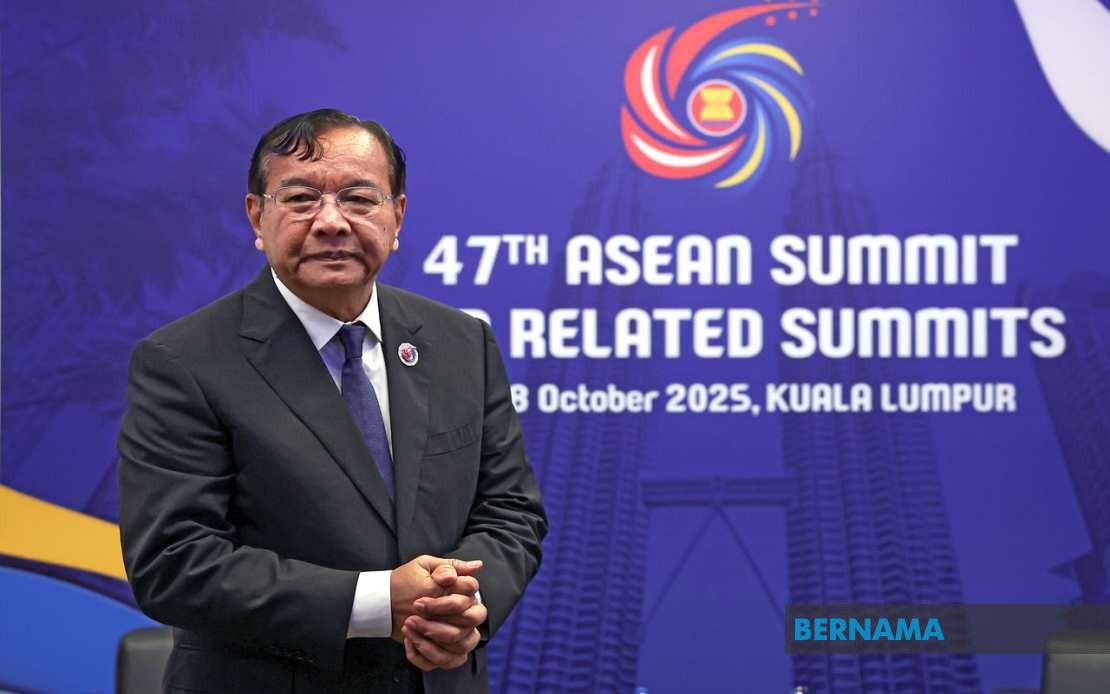
Cambodian Deputy Prime Minister and Foreign Minister Prak Sokhonn has begun an official two-day visit to Malaysia, marking a significant diplomatic milestone as the two countries prepare to resurrect their bilateral cooperation mechanism. The resumption of the Malaysia-Cambodia Joint Commission for Bilateral Cooperation (JCBC) represents a tangible step towards strengthening one of Southeast Asia's foundational partnerships, particularly given the historical significance of the relationship and the broader regional context of deepening ASEAN integration.
The third JCBC meeting, scheduled for Tuesday in Kuala Lumpur, will be jointly chaired by Foreign Minister Datuk Seri Mohamad Hasan and his Cambodian counterpart. This gathering assumes particular importance as it occurs following a two-decade dormancy—the previous meeting took place in Siem Reap in 2006—suggesting that both governments have identified renewed strategic value in formalising their engagement through this institutional framework. The timing also carries symbolic weight, as Malaysia and Cambodia approach their 70th anniversary of diplomatic relations in 2027, an occasion that will likely feature prominently in bilateral celebrations and collaborative initiatives.
During his stay, Prak Sokhonn is scheduled to meet Prime Minister Datuk Seri Anwar Ibrahim on Monday, providing a senior-level platform for both leaders to reaffirm their commitment to the partnership and discuss matters of shared concern. Such courtesy calls serve an essential function in diplomatic protocol, allowing heads of government to establish personal rapport and set the political tone for institutional engagements like the JCBC. The discussion between Anwar and Prak Sokhonn will likely touch upon regional security challenges, economic cooperation, and the role both nations play within ASEAN's architecture.
The practical outcomes of the JCBC meeting will be captured in Agreed Minutes, to be signed by both foreign ministers upon conclusion of the deliberations. These documents typically enumerate specific cooperative initiatives, establish working groups on priority sectors, and provide a roadmap for future bilateral engagement across multiple domains. The institutional memory embedded in these agreements helps ensure continuity and accountability, allowing both governments to track progress and adjust strategies as circumstances evolve.
Economic ties between Malaysia and Cambodia have demonstrated impressive dynamism in recent years, providing a concrete foundation for political cooperation. Bilateral trade surged 27.4 per cent year-on-year in 2025, reaching RM5 billion (US$1.17 billion), with Malaysian exports comprising the bulk of this exchange at RM4.13 billion (US$970 million). This asymmetry in trade flows reflects Malaysia's more developed industrial base and its role as a supplier of manufactured goods, raw materials, and technical services to Cambodia's growing economy. Conversely, Malaysian imports from Cambodia, valued at RM880 million (US$200 million), primarily consist of agricultural products and low-cost manufactured items, illustrating the complementary nature of the two economies.
Beyond trade, Malaysian investment has become a significant factor in Cambodia's economic development. As of 2024, Malaysia's cumulative foreign direct investment in Cambodia reached US$3.20 billion (RM13.07 billion) across 162 registered projects, positioning Malaysia as the third-largest foreign investor in the Kingdom. This substantial financial commitment reflects confidence in Cambodia's long-term growth prospects and underscores the depth of Malaysian business engagement in the country. These investments span diverse sectors including manufacturing, real estate, hospitality, and financial services, creating employment opportunities and transferring technical expertise across the border.
The resumption of the JCBC after such an extended hiatus reflects shifting geopolitical dynamics within Southeast Asia and a mutual recognition that formalised bilateral mechanisms enhance predictability and facilitate problem-solving. During the two decades when the commission lay dormant, both countries maintained diplomatic relations and economic ties, but the absence of a high-level institutional framework may have limited the scope and coherence of cooperative efforts. The decision to revive the JCBC signals that both governments now prioritise structured engagement and wish to elevate bilateral relations beyond transactional interactions.
For Malaysia, engagement with Cambodia holds particular significance given the two nations' shared ASEAN membership and their role in shaping regional consensus on key issues. Cambodia's position as a bridging nation between Vietnam, Thailand, and Laos gives it strategic importance in Malaysia's broader Southeast Asian foreign policy. Similarly, Malaysia's advanced economy, technical capabilities, and regional influence make it an attractive partner for Cambodia's development ambitions. The JCBC provides a vehicle through which both countries can articulate these complementary interests and coordinate action on transnational challenges such as terrorism, human trafficking, and environmental degradation.
The economic data undergirding this diplomatic engagement demonstrates that bilateral relations rest on a foundation of genuine mutual benefit. Malaysian companies operating in Cambodia contribute to job creation and skills development, while Cambodian workers find employment opportunities in Malaysia's manufacturing and service sectors. Trade flows, meanwhile, generate government revenue through tariffs and taxes, funding public services in both countries. When coupled with diplomatic cooperation on regional and global issues, these economic ties create powerful incentives for both governments to maintain peaceful and productive relations.
Looking ahead, the successful reconvening of the JCBC may catalyse further institutional innovation and deepening of cooperation. Both countries could establish sectoral working groups focused on priority areas such as infrastructure development, digital economy integration, educational exchange, and cultural preservation. Enhanced people-to-people contact through expanded visa arrangements, scholarship programmes, and tourism initiatives could strengthen the human dimension of the relationship. Additionally, Malaysia and Cambodia might explore opportunities for joint investment in third countries, leveraging their combined resources and expertise to pursue regional development projects.
The geopolitical context surrounding this visit also merits consideration. Within ASEAN, Cambodia has traditionally maintained a pragmatic foreign policy balancing relationships with major powers while prioritising economic development. Malaysia, as a middle power with significant economic and military capabilities, can offer Cambodia partnership on infrastructure and development without the strategic complications that accompany engagement with regional or global superpowers. This positioning makes Malaysian partnership particularly attractive to Cambodian policymakers seeking diversified relationships and reduced dependency on any single external actor.
The diplomatic visit and JCBC resumption also serve as a reminder of ASEAN's foundational commitment to institutionalised engagement and dialogue as mechanisms for resolving differences and advancing shared interests. In an era of great power competition and regional tensions, the bloc's emphasis on consensus-building and formalised cooperation provides a stabilising influence. Malaysia and Cambodia's decision to revitalise their bilateral commission exemplifies this commitment and demonstrates that ASEAN states continue to invest in mechanisms that facilitate peaceful resolution of disagreements and collaborative problem-solving.
As Malaysia and Cambodia approach their 70th anniversary of diplomatic relations, this two-decade hiatus in the JCBC appears increasingly anomalous. The resumption of the commission signals intent to transition towards a more dynamic and institutionalised bilateral relationship, one capable of responding to evolving economic opportunities and geopolitical challenges. With strong economic fundamentals, complementary development needs, and shared regional interests, the Malaysia-Cambodia partnership appears poised for a new phase of productive engagement.

