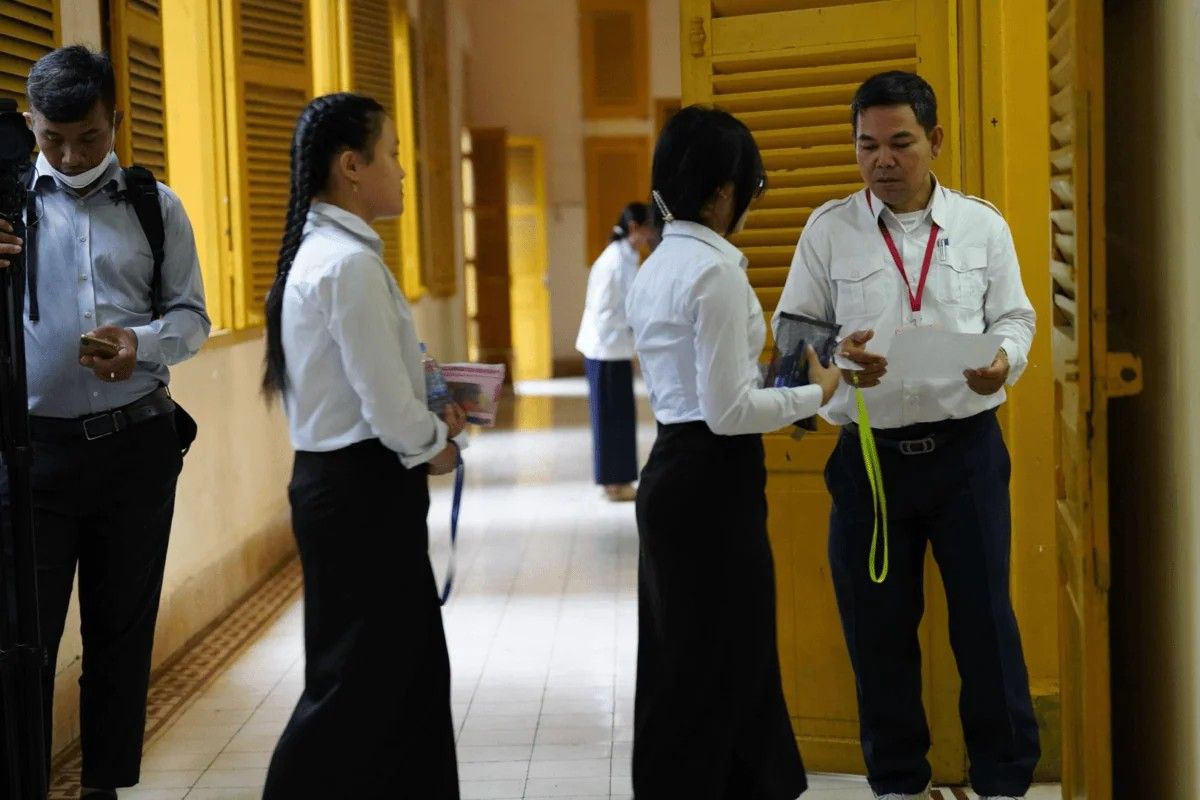
Cambodia's Grade 12 graduation examinations opened on August 10 with more than 150,000 students across the Kingdom sitting for their high school finals, marking a return to more regular conditions than the previous year's troubled administration. The examinations, held in established centres nationwide, represent a symbolic moment of educational continuity for the Southeast Asian nation as it works to overcome the disruptions caused by cross-border military incidents that dominated the previous examination cycle.
The student cohort taking the exams this year includes over 37,000 candidates in the science stream and more than 130,000 in the social sciences track, reflecting Cambodia's continued emphasis on developing a broad-based educated workforce. These figures underscore the scale of Cambodia's educational system and the logistical complexity involved in administering nationwide assessments across diverse geographical regions, from the capital to remote provincial areas.
Hang Chuon Naron, the Minister of Education, Youth and Sport, presided over the opening ceremony in Phnom Penh and drew explicit contrasts with the previous year's examination period. The 2025 exams had taken place on August 28, occurring precisely one month after the initial armed clashes erupted along the Cambodia-Thailand border, creating conditions marked by anxiety, displacement, and educational disruption. This year's administration, by comparison, is expected to unfold under considerably less stressed circumstances, allowing students to concentrate on their assessments without the immediate backdrop of military conflict.
The minister acknowledged the extraordinary circumstances that students in conflict-affected areas had endured during the previous examination season. He recounted visiting communities where young people had been forced to study in makeshift conditions, with some students attending classes while sitting on tractors as their families fled advancing armed forces in Oddar Meanchey province. Despite these severe hardships, the minister highlighted one student who had achieved an 'A' grade and subsequently gained admission to a quality higher education institution, offering a narrative of resilience that reflected broader educational aspirations within Cambodia.
However, the shadow of the previous year's military incursion continues to hang over Cambodia's education sector. Twenty-five schools in border provinces remain physically occupied by Thai forces, preventing approximately 1,500 to 2,000 students from accessing their regular classrooms and study facilities. This situation represents an ongoing violation of Cambodia's territorial integrity and educational sovereignty, with young people denied normal schooling conditions. The Royal Government of Cambodia has formally demanded that all occupied schools be returned and that students be permitted to resume regular classes, but diplomatic efforts have yet to resolve the issue.
Currently, only students from Banteay Mean Rith Lower Secondary School in Oddar Meanchey province are receiving instruction through temporary classroom arrangements set up in camps, allowing some degree of educational continuity for these displaced learners. The establishment of such alternative facilities demonstrates government commitment to maintaining access to schooling even under constrained circumstances, though they represent a poor substitute for permanent, properly equipped educational infrastructure. For other students whose schools remain under Thai occupation, the gap in their formal education persists as an unresolved humanitarian and educational concern.
The Education Ministry has implemented stricter security protocols to prevent examination irregularities that plagued the previous year's assessments. In 2025, examination papers for mathematics had been leaked prior to the examination date, compromising the integrity of the assessment and creating unfair advantages for some students. This year's examination administration benefits from more rigorous organisational measures, enhanced enforcement mechanisms, and increased observer participation from multiple stakeholder organisations to ensure transparent and fair assessment procedures.
The Anti-Corruption Unit has deployed more than 4,000 observers throughout examination centres nationwide, matching the deployment levels from the previous year but with renewed emphasis on detecting and preventing malpractices. This observer presence serves as a deterrent against irregularities while also providing independent verification of examination administration standards. The scale of observer deployment relative to the number of examination centres demonstrates the government's determination to safeguard the credibility of the assessment process and protect the legitimacy of results that will shape students' educational and professional futures.
For Malaysian and broader Southeast Asian observers, Cambodia's examination situation illustrates the broader vulnerabilities that educational systems face during periods of regional instability. The displacement of schools due to military occupation, the logistical challenges of conducting fair assessments during conflict, and the need for enhanced oversight mechanisms all reflect lessons relevant to other countries in the region where border tensions or internal conflicts periodically disrupt normal operations. Cambodia's efforts to maintain educational continuity despite these challenges offer insights into educational resilience and the determination of governments to prioritise student outcomes even amid adversity.
The resumption of Grade 12 examinations under more favourable conditions represents progress in Cambodia's post-conflict educational recovery, though the underlying territorial and humanitarian issues remain unresolved. As 150,000 students sit for their finals this year, their examination results will shape access to university places and career pathways, making the integrity and accessibility of the assessment process fundamentally important. The contrast between this year's examinations and last year's administration conducted amid active military conflict underscores how regional security dynamics directly impact educational opportunities for young people, with implications extending throughout Cambodia's social and economic development trajectory.

