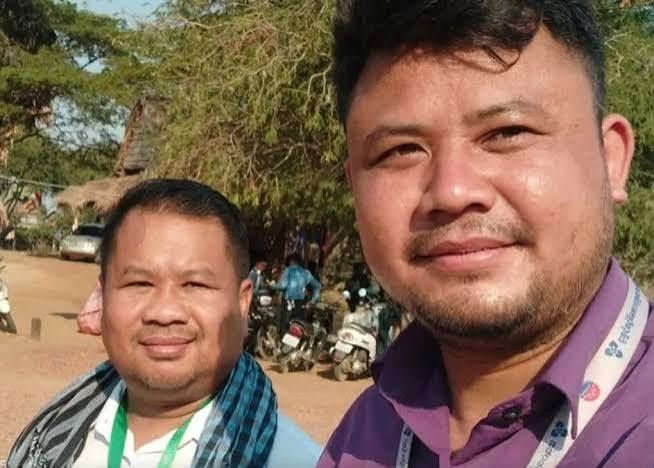
Cambodia's highest court has moved to rule on the appeal of two journalists convicted of treason for publishing photographs documenting border conflicts with Thailand, a decision that arrives amid intensifying scrutiny of whether the nation's judiciary operates independently from political pressures. Phorn Sopheap of Battambang Post TV Online and Pheap Pheara of TSP 68 TV Online face 14-year prison sentences handed down by Siem Reap Provincial Court in December, following their arrest in July while returning from assignment to the disputed border region. The pair maintain they had proper authorisation to access the area where they captured images that were subsequently uploaded to Facebook, and they are petitioning the Supreme Court to overturn both the conviction and the lengthy custodial sentences.
The photograph that ignited the controversy depicted anti-personnel mines along the borderline, images that Thai news organisations subsequently circulated widely. The publication bolstered Thailand's assertion that Cambodia had installed fresh explosive devices in the frontier region, potentially responsible for injuring Thai military personnel on patrol. Cambodia's government categorically denied deploying land mines in the dispute, citing its obligations under international treaties prohibiting such weapons. Officials instead attributed the discovered ordnance to residual military hardware remaining from the protracted civil conflict that concluded during the latter 1990s, when rival factions finished their destructive struggle for control of the nation.
The border confrontation that unfolded in the middle of 2024 created a humanitarian catastrophe across both nations. Hundreds of thousands of civilians were displaced from their homes as fighting intensified in July and again in December, creating acute refugee pressures in border provinces of both countries. Casualties mounted across the conflict zone, with approximately one hundred soldiers and civilians killed before a ceasefire agreement took effect in December. Though active military operations have halted since that agreement, underlying animosities persist and sporadic tensions continue to simmer in the region, with the possibility of renewed violence remaining a concern for residents and governments alike.
The treason conviction itself represents a troubling development in Cambodia's legal environment, particularly given the vagueness of the charge. Siem Reap Provincial Court determined that the journalists had committed the offense of transmitting data to a foreign power in breach of national security statutes. This legal characterisation transforms routine journalistic work—documenting events and sharing information with the public—into a criminal act. A lower appellate court confirmed the conviction in March, rejecting arguments that the photographers possessed legitimate authorization to operate in the military zone and had acted within professional journalistic norms.
International journalism organisations have mobilised to contest the prosecutions. More than a dozen national and international press freedom bodies jointly called for the government to abandon its case after the appellate court's March determination upheld the guilty verdicts. The New York-based Committee to Protect Journalists has specifically denounced Cambodia for deploying deliberately imprecise national security legislation to criminalise ordinary newsgathering and reporting activities. This pattern of utilising sweeping security laws to prosecute journalists is characteristic of authoritarian governance structures that seek to maintain control over public information and suppress inconvenient reporting.
The timing of the Supreme Court decision carries additional significance because it coincides with mounting evidence of political repression under Cambodia's current administration. Just days before the journalists' appeal hearing, the same court upheld a conviction of Rong Chhun, a 56-year-old opposition figure, on incitement charges arising from his meetings with villagers displaced by government-backed development schemes. Rong Chhun was sentenced to prison following a trial that international observers widely characterised as serving political rather than judicial purposes. The government secured this conviction by leveraging vague charges of encouraging social disorder, a tactic that mirrors the treason prosecution of the journalists by weaponising ambiguous legal provisions.
These overlapping prosecutions are occurring under Prime Minister Hun Manet, who assumed office in August 2023 following his father Hun Sen's three-decade authoritarian rule. Although Hun Manet studied in the United States and holds an American education, his tenure has demonstrated negligible movement toward democratic liberalisation or enhanced respect for fundamental freedoms. The absence of meaningful reform suggests that governmental repression mechanisms persist largely unchanged, with security and control remaining paramount objectives regardless of generational transitions in leadership. Human Rights Watch has directly attributed these convictions to Cambodia's courts lacking genuine independence from the ruling political party, a characterisation the government vigorously contests while claiming its Supreme Court operates with full autonomy.
Cambodia's dismal international standing in press freedom metrics underscores the country's trajectory toward tighter information controls. Reporters Without Borders ranked Cambodia 161st out of 180 nations in its 2025 World Press Freedom Index, categorising the country among those facing "very serious" restrictions on journalistic activity. This placement reflects decades of systematic efforts to constrain media independence, suppress critical voices, and criminalise unfavourable reporting through legal mechanisms. The positioning indicates that Cambodia operates at the lower end of global press freedom standards, sharing company with notably authoritarian regimes rather than with nations maintaining genuine democratic accountability.
The ramifications of the Supreme Court decision extend beyond the two individual journalists and their sentences. A ruling upholding the convictions would validate the government's interpretation that national security statutes can legitimately prosecute journalists for documenting public events, particularly those touching on sensitive military matters. Such precedent would effectively criminalise substantial categories of legitimate reporting, forcing news organisations to self-censor rather than risk prosecution. Conversely, overturning the convictions would represent an unusual assertion of judicial independence and provide space for media organisations to operate with somewhat greater freedom from government intimidation.
For Malaysia and Southeast Asian observers, Cambodia's case illustrates the challenges that confront regional journalists navigating governments inclined to invoke national security rationales for suppressing press freedoms. The region contains multiple nations where vague security legislation permits authorities to prosecute reporting deemed politically inconvenient, creating similar climates of journalistic self-censorship and constraining public access to information about matters of genuine public concern. The treatment of Phorn Sopheap and Pheap Pheara serves as a cautionary example of how governments can transform ordinary newsgathering into criminal activity when political will and judicial deference align, a dynamic that merits careful attention from media professionals and democratic advocates throughout Southeast Asia.

