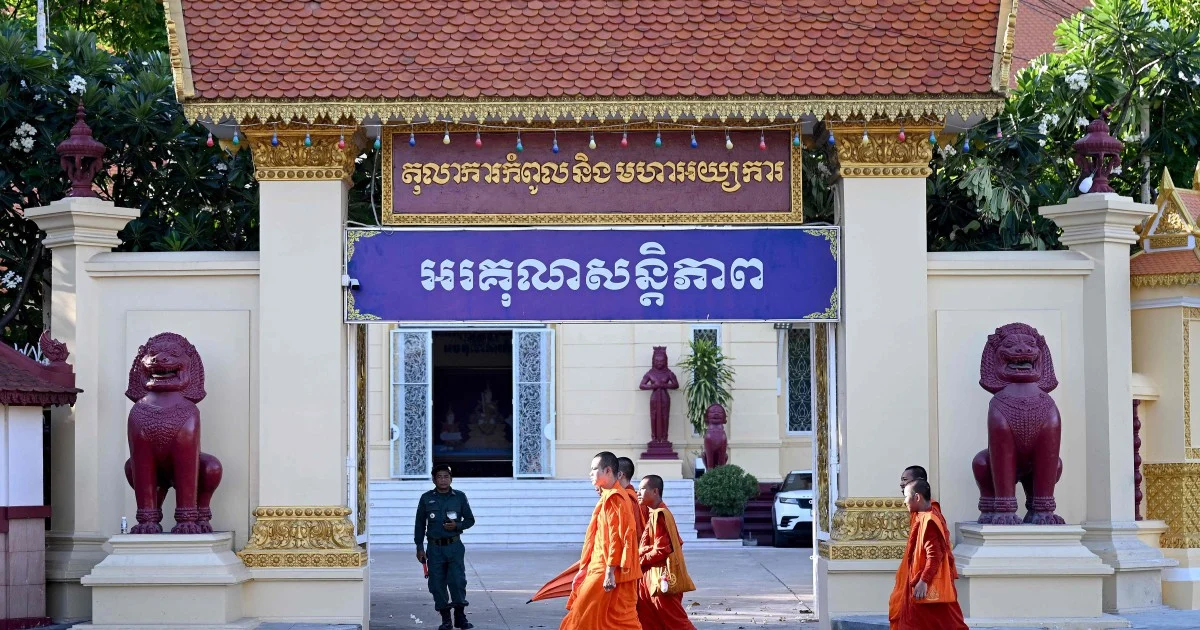
Cambodia's highest court has confirmed 14-year prison sentences for two journalists who were found guilty of treason, marking the end of their legal battle against convictions that have drawn international concern over press freedom in the kingdom. The Supreme Court's Thursday ruling effectively closes their appeal process, with a judge disclosing the decision to international media outlets. The case represents a significant test of judicial independence and exposes the precarious position of reporters operating in Cambodia, a country where media ownership is heavily concentrated and criticism of state institutions carries considerable legal risk.
The journalists' convictions centred on their decision to post a photograph that was captured in a military-controlled zone bordering Thailand, a region declared off-limits to civilians following armed skirmishes between Cambodian and Thai forces. The image apparently contained information officials deemed sensitive to national security, though legal experts have questioned whether the photograph's content genuinely warranted charges as serious as treason. This technical approach to prosecuting media activity reflects a broader pattern in Southeast Asia where governments invoke national security arguments to constrain investigative journalism and restrict public access to information about military operations.
The incident occurred amid broader tensions along the Cambodia-Thailand frontier, which has experienced periodic flare-ups in recent years over disputed border demarcation and overlapping territorial claims. The area in question has long been volatile, with both nations maintaining military installations and conducting regular patrols. By criminalising the distribution of imagery from such zones, Cambodia's authorities have effectively created a chilling effect that discourages journalists from covering border-related developments even when legitimate public interest exists. This restriction on information flow means Cambodian citizens and international observers have diminished access to reliable reporting on military and security matters.
The conviction of journalists under treason statutes rather than conventional breach-of-security charges signals how Cambodia's legal framework can be weaponised against the media. Treason carries far more severe penalties and social stigma than offences narrowly tailored to classified information protection, suggesting prosecutors pursued the harshest available charges. International press freedom organisations have criticised the original trial proceedings, questioning whether the journalists received adequate legal protections and whether their prosecution served legitimate state interests or functioned primarily as political messaging against critical voices.
For Malaysia and other Southeast Asian democracies, Cambodia's handling of this case offers uncomfortable lessons about judicial systems under strain. Malaysia has experienced its own struggles with press freedom and the application of security legislation to journalists, including invocations of the Official Secrets Act and other broad statutes that can be interpreted expansively. The Cambodian precedent demonstrates how treason laws designed for extreme cases can migrate toward everyday journalism, particularly when courts lack independence or when political pressures bear on judicial decision-making. Thailand, Vietnam, and Myanmar provide additional cautionary examples of this phenomenon across the region.
The Supreme Court's dismissal of the appeal eliminates the journalists' remaining recourse within Cambodia's formal legal system. They may petition for royal pardon, though such requests in politically sensitive cases are rarely granted. International human rights bodies have called for their release, and pressure from foreign governments and media freedom advocates may intensify, yet Cambodia's authorities have historically resisted external pressure on security-related prosecutions, viewing such intervention as foreign interference in sovereign judicial matters.
The broader implications for Cambodia's media landscape are troubling. Self-censorship among journalists is likely to intensify as newsrooms become more cautious about covering military, border, or security-related topics. Editors will presumably mandate stricter protocols before publishing sensitive content, knowing that journalistic decisions can result in career-ending criminal convictions. This protective instinct, while understandable, further narrows public discourse in a country where accountability journalism already faces substantial obstacles including political ownership of major outlets and informal pressure from powerful figures.
The case also illustrates how differing interpretations of national security shape media regulation across Southeast Asia. While legitimate secrets require protection, Cambodia's approach appears to classify information as restricted based on military sensitivity rather than genuine threats to operational capability or personnel safety. This expansive security doctrine effectively grants authorities discretion to prosecute journalists whenever their reporting touches military-controlled areas, effectively vesting editorial judgment in government officials rather than professional journalists.
Regional media organisations and press councils have begun documenting these prosecutions as part of broader patterns affecting journalistic independence. For Malaysian journalists and editors, the Cambodian case underscores why institutional protections for the press—including judicial review of security-related charges and statutory defences for good-faith reporting—matter considerably. Without such safeguards, security prosecutions can metastasise into tools of political control, as Cambodia's experience demonstrates.
The rejected appeal represents a definitive setback for the convicted journalists and signals that Cambodia's courts are unlikely to revisit the treason convictions on substantive grounds. Whether international pressure, changing political circumstances, or humanitarian considerations might eventually lead to sentence reduction or pardon remains uncertain. In the immediate term, the case will likely serve as a warning to other journalists considering coverage of military or border matters, effectively creating protected zones around certain topics and ensuring that critical reporting in these sensitive areas becomes increasingly rare within Cambodian media.

