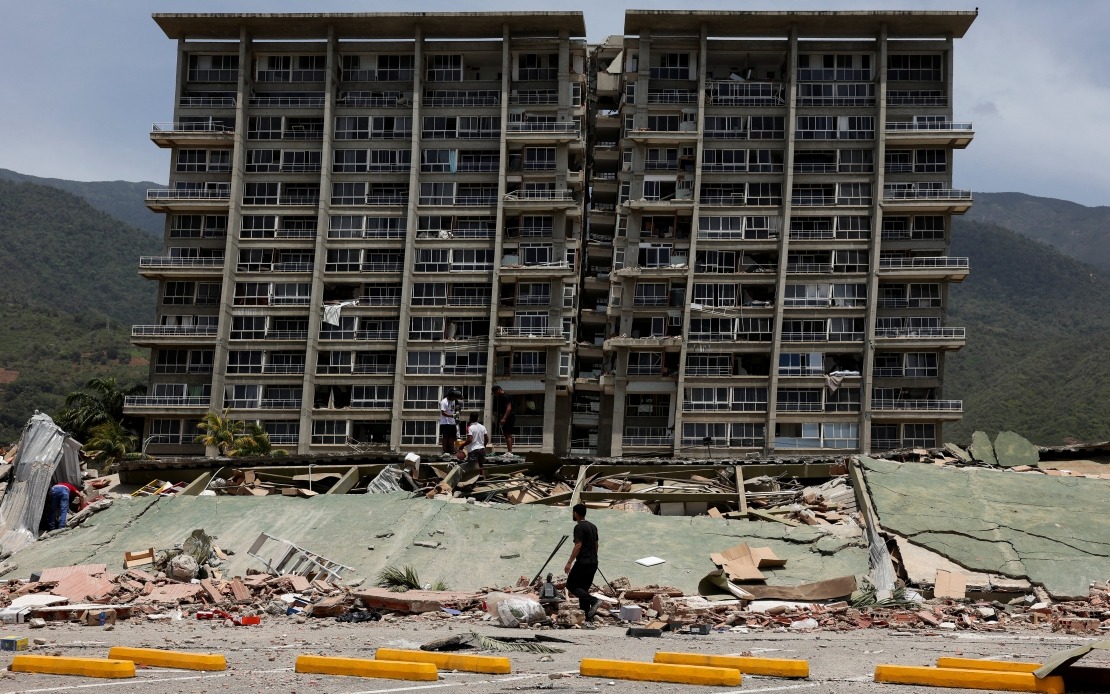
Canada has mobilized US$5 million in immediate humanitarian assistance for Venezuela as the South American nation grapples with the aftermath of devastating earthquakes that have claimed numerous lives and destroyed critical infrastructure across affected regions. The announcement by Canada's Foreign Ministry, made on June 26, represents a significant contribution to relief operations in a country already facing severe economic and humanitarian challenges. Foreign Minister Anita Anand emphasized that the scale of destruction wrought by the seismic events is deeply troubling, noting that families have lost loved ones and entire communities have been fractured by the disaster.
The full extent of damage remains unclear as rescue and assessment efforts continue across Venezuela's affected areas. Canadian officials have acknowledged that hundreds of thousands of people could potentially be impacted, though precise casualty and displacement figures have yet to be definitively established. This uncertainty underscores the urgency of rapid humanitarian response, particularly given Venezuela's pre-existing vulnerabilities stemming from its ongoing economic and political crisis. The country's healthcare infrastructure, already severely strained, faces additional pressure from sudden mass casualty requirements and the displacement of vulnerable populations.
The US$5 million will be channeled through established humanitarian organizations with proven experience operating in complex environments. These funds will directly support the delivery of essential supplies and services, including emergency food provisions, clean water access, sanitation facilities, and medical care for the injured and displaced. Beyond immediate relief operations, the assistance encompasses protection services for vulnerable groups such as children and women, as well as logistical support that enables effective coordination and distribution of aid throughout affected communities. This multi-faceted approach reflects international best practices in disaster response.
This latest Canadian contribution builds upon an earlier commitment of nearly US$4.5 million in humanitarian funding that Ottawa allocated earlier in 2024 to address pre-existing humanitarian needs in Venezuela. The cumulative Canadian investment now exceeds US$9.5 million this year alone, signaling sustained international engagement with Venezuela's humanitarian crisis. The sequential nature of these commitments suggests that Canada is calibrating its response based on evolving conditions rather than providing one-time assistance, a strategy that acknowledges the complexity and ongoing nature of Venezuela's challenges.
Canada's intervention reflects broader international concern about Venezuela's deteriorating situation, which combines natural disaster impact with structural humanitarian deficiencies. The Caribbean nation has experienced years of economic contraction, currency collapse, and mass emigration, creating a population particularly vulnerable to external shocks. Earthquakes, by their nature indiscriminate and sudden, place maximum strain on already fragile systems. Medical facilities may lack supplies, transportation networks may be compromised, and the capacity to mount effective rescue operations may be constrained by resource limitations that predated the disaster.
For Southeast Asian observers, Venezuela's experience offers instructive parallels regarding disaster preparedness and international humanitarian cooperation. Many regional nations occupy similar geographic vulnerability zones and face comparable infrastructure challenges, though often with different underlying causes. The Canadian response model—combining rapid initial funding with ongoing monitoring and calibrated subsequent assistance—demonstrates how developed nations can maintain engagement during protracted crises while remaining responsive to acute emergencies.
Canadian officials have indicated that collaboration with regional partners and humanitarian organizations will continue as the situation develops. This commitment to ongoing engagement suggests that Canada views this as the beginning of a sustained relief effort rather than a discrete intervention. As needs crystallize and priorities become clearer, Canadian officials may adjust the allocation of the US$5 million commitment to maximize impact where it is most urgently needed. This adaptive approach requires continuous communication with partners on the ground, who can provide real-time intelligence about emerging bottlenecks and shifting priorities.
The international dimension of this response is noteworthy. Canada's contribution is one among many nation-states and multilateral organizations mobilizing resources for Venezuela. Coordinating these various efforts to avoid duplication, ensure comprehensive coverage, and maximize efficiency represents a significant logistical challenge. Organizations like the United Nations and the International Committee of the Red Cross typically play convening roles, helping align different donors' strategies and ensuring that geographical gaps do not emerge where populations receive no assistance.
Venezuela's earthquake response also highlights the vulnerability of states with depleted fiscal resources. While developed nations can mobilize millions within hours, the Venezuelan government's capacity to supplement international assistance with domestic resources is severely constrained by economic collapse. This dependency on foreign aid, while essential and appropriate in emergency situations, also underscores the fragility of nations facing concurrent economic and political dysfunction. For policymakers across Southeast Asia, Venezuela's predicament serves as a cautionary tale regarding the importance of maintaining institutional capacity and fiscal resilience.
Moving forward, Canada has committed to providing detailed information about how the US$5 million will be allocated across specific sectors and geographic areas. This transparency, which has become standard practice among established donors, allows other nations and organizations to identify complementary opportunities for support and to avoid concentrating resources in already-well-served locations. The coming days will likely see a coordinated international effort to map out the earthquake's full impact and to establish frameworks for channeling aid where it achieves maximum humanitarian benefit.

