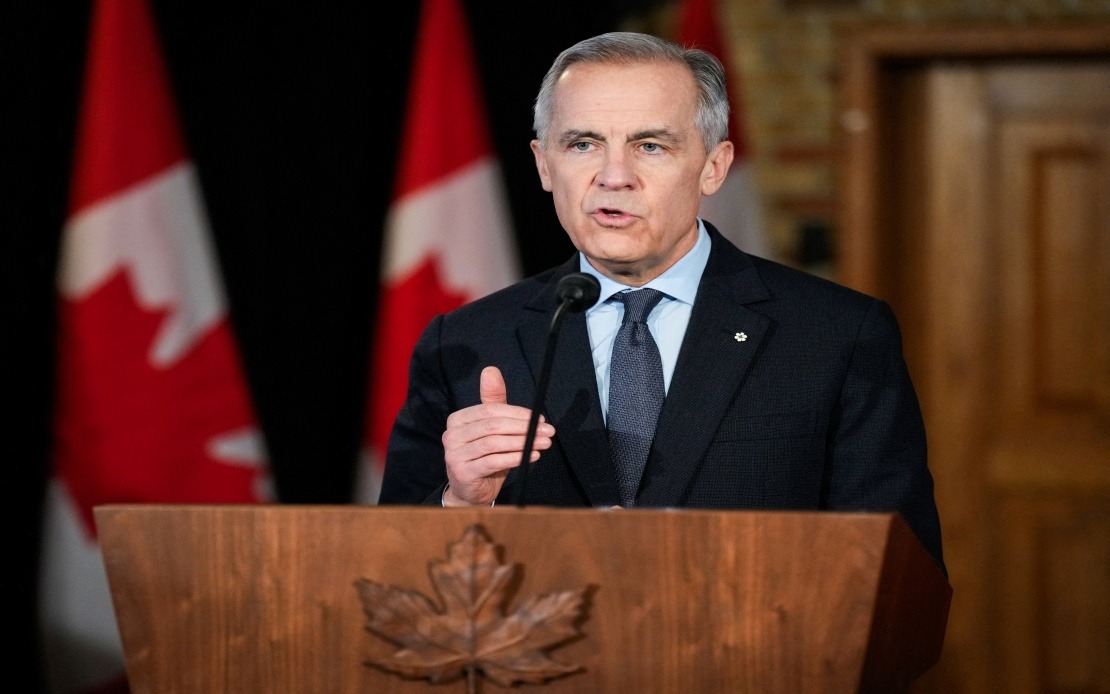
Canadian Prime Minister Mark Carney revealed on Wednesday that negotiations between Washington and Ottawa have yielded meaningful headway, though the window for finalising a trade agreement remains extraordinarily narrow. The United States has agreed to temporarily halt the implementation of punitive 50 per cent tariffs on a range of Canadian exports, with the reprieve lasting only until end of business on August 21—a deadline that underscores the urgency surrounding ongoing discussions. The extension of this pause, initially announced overnight by US President Donald Trump, represents a tactical decision by both governments to continue diplomatic efforts rather than allow trade barriers to escalate further.
The significance of this development extends beyond mere negotiating theatre. A 50 per cent tariff regime would have imposed substantial costs across Canada's export-dependent economy, affecting industries from automobiles to agricultural products and energy. The pause, therefore, provides crucial breathing room for officials in both capitals to resolve outstanding disputes. Carney's statement acknowledged that while substantial progress has materialised through these negotiations, meaningful work remains before a final agreement can be reached. This formulation—progress evident but incomplete—suggests that fundamental disagreements on key trade issues have not yet dissolved, even as both sides demonstrate commitment to avoiding an economically damaging trade war.
For Malaysian and Southeast Asian observers, the Canadian-American trade dynamics carry instructive lessons about contemporary protectionist pressures reshaping global commerce. The Trump administration's willingness to deploy tariff threats as negotiating leverage has become a defining characteristic of recent US trade policy, extending far beyond North America to encompass China, the European Union, and other trading partners. Canada, as the United States' largest trading partner, occupies a particularly vulnerable position in this landscape. The vulnerability stems not from any particular competitive threat but from geographic proximity and the Trump administration's conviction that existing trade arrangements disadvantage American interests.
The timeline pressure embedded in the August 21 deadline warrants particular attention. Short deadlines typically favour the party willing to tolerate disruption and uncertainty, which in this context appears to be the Trump administration. Canadian negotiators must now navigate a compressed negotiating schedule in which concessions may appear necessary simply to avoid economic harm. This dynamic differs markedly from traditional trade negotiations, which typically unfold across months or years with natural breaks and cooling-off periods. The artificial urgency created by tariff deadlines fundamentally alters the negotiating calculus, potentially pushing countries toward agreements they might otherwise reject if offered more deliberate negotiating periods.
Carney's emphasis on Canada's commitment to strengthening economic independence and competitiveness adds a domestic political dimension to the international negotiations. Canadian policymakers recognise that simply capitulating to American tariff demands would undermine long-term economic resilience. The government must therefore balance the immediate pain of potential tariffs against the longer-term costs of accepting trade terms that weaken Canadian industries or reduce policy autonomy. This balancing act reflects the constrained position in which smaller trading economies find themselves when negotiating with larger, more protectionist partners.
The sectors most directly affected by a 50 per cent tariff remain particularly vulnerable. Canadian automobile manufacturing, deeply integrated into North American supply chains, would face severe disruption. Agricultural exports, including beef, pork, and grains, would encounter dramatically reduced competitiveness in American markets. Energy exports, particularly crude oil and natural gas, would become substantially more expensive for American consumers and refineries accustomed to Canadian supplies. These sectoral impacts would ripple throughout the Canadian economy, affecting employment, investment patterns, and regional development prospects, particularly in provinces dependent on resource extraction and agricultural production.
The broader context of North American trade has shifted considerably since the conclusion of the United States-Mexico-Canada Agreement, which replaced the North American Free Trade Agreement. The USMCA, implemented in 2020, was supposed to provide stability and clarity for continental trade. Yet the Trump administration's recourse to tariff threats demonstrates that formal trade agreements no longer provide the durability that negotiators once envisioned. This uncertainty creates challenges for multinational corporations operating across the region, complicating long-term investment and supply chain planning. Canadian firms operating in integrated North American sectors must now account for the possibility of sudden, substantial tariff changes regardless of formal treaty commitments.
For Southeast Asian economies and other trading partners watching from the sidelines, the Canadian experience illustrates broader trends in global trade governance. The predictability and rules-based character that historically defined international commerce have been steadily eroding. Countries increasingly find themselves subject to tariff threats deployed as political tools, with negotiations conducted under artificial deadlines designed to extract concessions. This environment incentivises bilateral deals over multilateral arrangements and rewards negotiating tenacity over technical expertise. The shift carries implications for smaller Asian economies dependent on stable access to major markets, as it suggests that trade relationships will increasingly depend on political and strategic considerations rather than comparative advantage or established legal frameworks.
The August 21 deadline represents not merely a technical detail but a critical juncture in Canadian-American relations. Should negotiations succeed, both countries would likely claim victory and move forward with adjusted trade arrangements. Should they fail and tariffs activate as threatened, the economic consequences would extend well beyond bilateral commerce. Integrated North American supply chains would face disruption, consumer prices would rise throughout the region, and broader economic uncertainty would likely discourage investment and employment growth. The stakes involved in this compressed negotiating window thus reflect fundamental questions about whether trade relationships between major partners can function effectively under conditions of political uncertainty and threat.
Carney's statement, while maintaining diplomatic tone and projecting confidence in eventual resolution, carries an implicit warning about the costs of failed negotiations. The Canadian government has positioned itself as reasonable and progress-oriented while warning that further tariff increases would damage both economies. Whether this messaging proves sufficient to alter Trump administration calculations remains uncertain, particularly given that protectionist rhetoric has consistently resonated with elements of the American political base. The final days before August 21 will likely witness intensified diplomatic activity, public statements designed to influence negotiating partners, and behind-the-scenes discussions about acceptable compromise positions.

