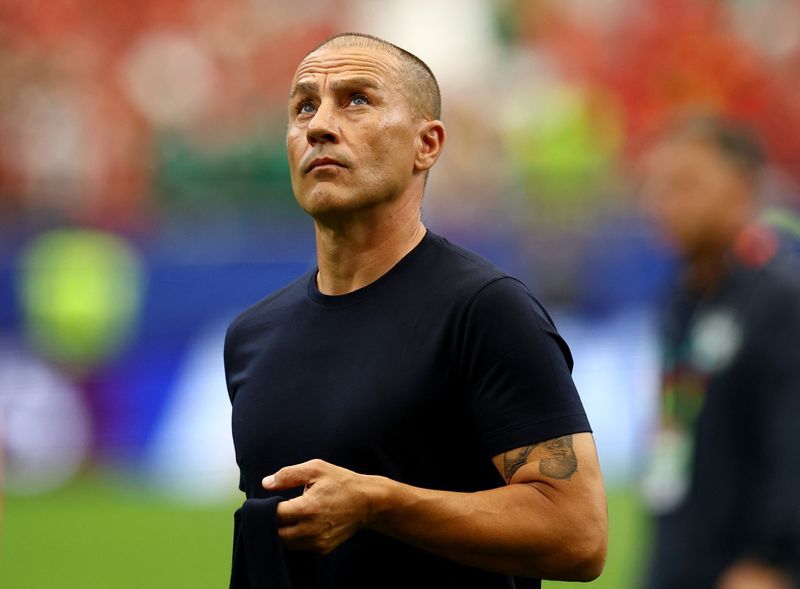
Uzbekistan's maiden World Cup campaign has hit a devastating wall following a 5-0 thrashing at the hands of Portugal in Houston on Tuesday, leaving the Central Asian nation teetering on the brink of early elimination. Coach Fabio Cannavaro, the decorated Italian tactician who lifted the World Cup with his nation in 2006, immediately stepped forward to shoulder the blame for the catastrophic result, refusing to cast aspersions on his players despite the lopsided scoreline. His acceptance of responsibility underscores the measured approach of a coach who has weathered considerable pressure since taking charge of a relatively inexperienced national team attempting to make their mark on football's grandest stage.
The scale of Uzbekistan's predicament became starkly apparent as they sit on the precipice of elimination after compiling a record of two consecutive defeats. Their opening loss to Colombia, which ended 3-1, combined with the Portuguese debacle, has left them with arithmetic hope hanging by the thinnest of threads. With only a final group-stage encounter against the Democratic Republic of Congo scheduled for Saturday, Uzbekistan must secure a victory to mathematically keep their round-of-32 qualification dream alive, though they face an uphill battle given their goal difference has been ravaged by these opening encounters.
In his post-match address to the assembled media contingent, Cannavaro struck a tone that balanced accountability with measured optimism about his squad's potential trajectory. He acknowledged his players' commitment despite the overwhelming margin of defeat, emphasizing that their effort and willingness to engage with the tactical framework he had established remained evident throughout the encounter. Rather than deflecting criticism or offering excuses rooted in squad limitations or tournament inexperience, Cannavaro positioned himself as the principal architect of the strategic failings that contributed to the rout, a managerial philosophy shaped by decades of competitive football at elite levels.
The disallowance of Azizjon Ganiev's goal at a critical juncture when Portugal led 2-0 emerged as a pivotal moment that Cannavaro identified as fundamentally altering the psychological trajectory of the match. The decision, made for an infraction during the build-up play, appeared to deflate Uzbekistan's emerging momentum and confidence at a stage when the match remained theoretically contestable. Cannavaro reflected that this reversal, coming at such a delicate moment in the encounter, dealt a blow to the collective belief within his squad that they could compete at this elevated level, effectively dampening the boldness and adventurous spirit that had characterized their approach against Colombia.
What distinguishes Cannavaro's managerial philosophy is his conscious effort to cultivate an environment where younger and less experienced players feel empowered to take risks and develop their craft despite inevitable mistakes. He articulated clearly that he had explicitly instructed his players to embrace tactical courage and resist the paralysing fear that can grip teams facing superior opposition. This developmental mindset reflects recognition that Uzbekistan, as a team navigating their World Cup debut, cannot afford to become overly conservative or defensive in their approach, as such caution would prevent the learning and growth opportunities that international competition at this level affords.
Cannavaro's framing of the tournament experience extends beyond mere platitude-offering to reflect a longer-term strategic perspective on building competitive capacity within Uzbekistan's football programme. Having witnessed comparable challenges in different footballing contexts throughout his career, he understands that early tournament defeats, while painful, carry instructive value for emerging football nations establishing their presence on the global stage. The immediate tactical lessons from facing Portugal's quality and precision could inform adjustments as the team prepares to face Congo, creating a potential avenue through which disappointment might be partially redeemed.
The Italian coach's distinction between player accountability and coaching responsibility carries particular resonance given the stakes involved. He explicitly stated that mistakes in pass execution or tactical positioning should not become sources of diminished confidence for his playing contingent, particularly given their collective inexperience in World Cup competition. This protective approach toward his squad suggests Cannavaro recognizes that external pressure and self-doubt could prove more damaging than tactical sophistication deficits when navigating their first tournament at this level.
Looking toward the Congo fixture, Cannavaro faces the psychological challenge of rebuilding his squad's belief and resilience following successive heavy defeats. The mathematical possibility of progression, while numerically improbable given current circumstances, provides sufficient scaffolding upon which to construct messaging that emphasizes professional obligation and competitive principle rather than desperation. For Southeast Asian observers tracking emerging footballing nations, Uzbekistan's World Cup campaign illustrates both the vast competitive gap separating established and ascending football powers and the arduous developmental pathway required to close that divide.
Cannavaro's willingness to assume full responsibility rather than deflect toward circumstances, referee decisions, or squad limitations establishes a model of accountability that many established coaches might avoid. His 2006 World Cup success with Italy, achieved through defensive discipline and collective organization, potentially informs his current approach of emphasizing foundational principles over tactical complexity. Whether Uzbekistan can mount a meaningful challenge against Congo will reveal whether Cannavaro's message about playing courageously without fear resonates sufficiently to inspire the character-building performance that their tournament survival now demands.